Erosion Control
Aurora Artificial Turf for Erosion Control: Local Installers
Aurora homeowners and property managers can use artificial turf to tame slopes, reduce runoff, and cut upkeep. Here are local companies worth a look.
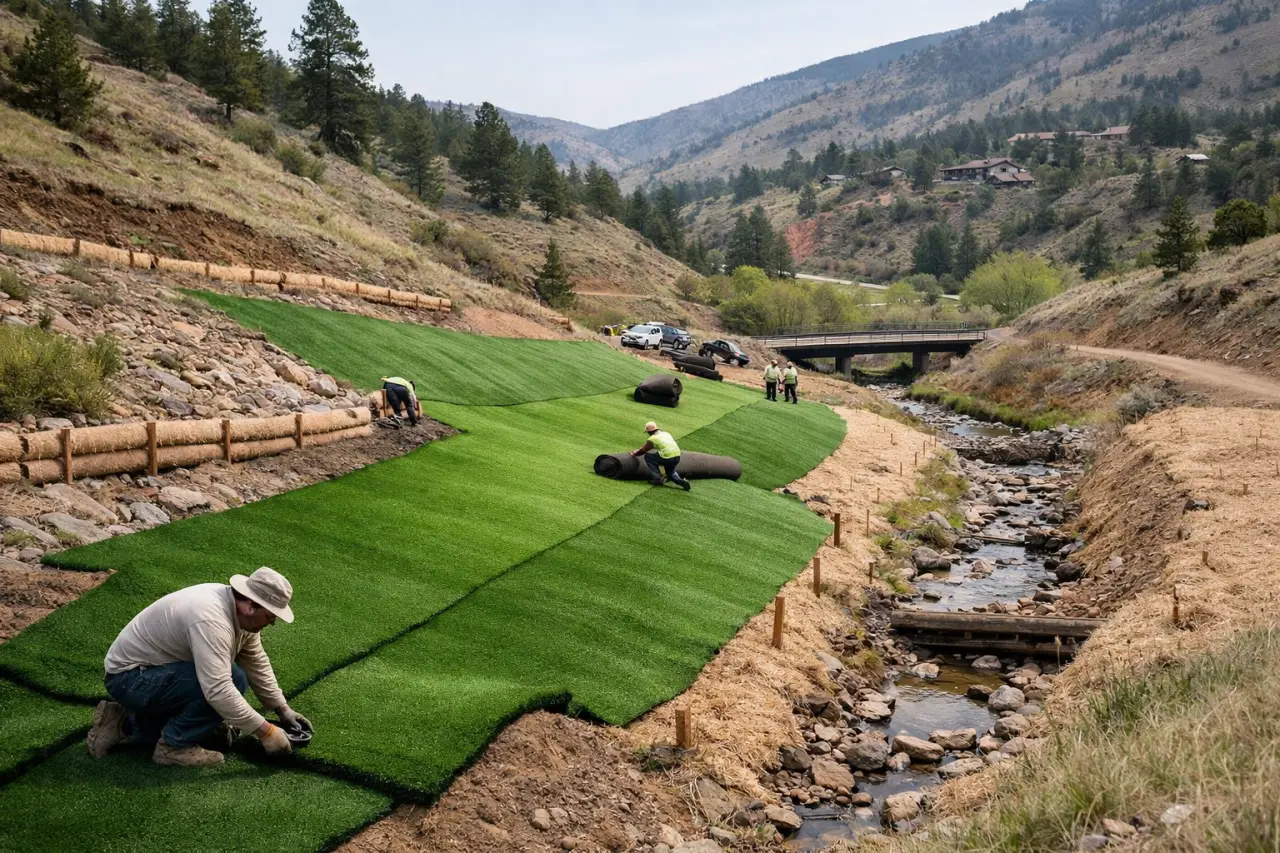
Artificial turf as an erosion-control tool in Aurora
In Aurora, artificial turf can do more than swap out a thirsty lawn. On the right site, it can help hold soil in place, reduce bare patches that wash out during storms, and create a cleaner finish on areas that are hard to keep planted. Aurora’s own landscape guidance notes that turf placement on steeper slopes can run into design limits, so the layout matters as much as the product itself. (auroragov.org)
That is why the best projects start with the ground, not the grass look. If a yard is shedding soil after rain, a turf installation should be paired with grading, base prep, and drainage planning. Aurora’s development materials also emphasize temporary erosion-control measures for disturbed areas, which is a good reminder that synthetic turf is one piece of a larger stability strategy. (auroragov.org)
Local companies that work in and around Aurora
HLE Landscaping & Concrete
HLE Landscaping & Concrete advertises artificial turf installation in Aurora and positions it as a low-maintenance way to replace traditional grass. For erosion-prone yards, that kind of service can be useful when the goal is to cover bare soil with a more stable surface after the base has been prepared correctly. (hlelandscaping.com)
Blue Sky Hardscapes & Irrigation
Blue Sky Hardscapes & Irrigation lists artificial turf installation among its outdoor-living services and is shown with an Aurora address in MapQuest’s listing. That combination is relevant for erosion-control projects because turf often works best when it is coordinated with irrigation, retaining walls, or other hardscape elements that shape runoff. (mapquest.com)
Black Pine Hardscape
Black Pine Hardscape offers professional artificial turf installation in Aurora. Their turf page shows they handle synthetic turf projects for residential and commercial landscapes, which matters if you are trying to stabilize a backyard slope or a larger common area with consistent coverage. (blackpinehardscapes.com)
XGrass
XGrass lists Aurora on its Denver-area artificial grass page and says it trains installers for demanding projects, including putting greens, athletic turf, and playground surfaces. That broader installation experience can matter on erosion-control jobs where the shape of the ground is irregular or the surface needs careful seam and base work. (xgrass.com)
Back Nine Greens
Back Nine Greens has an Aurora page for artificial grass, landscapes, and putting greens. The company says its turf is designed to handle Aurora’s temperature swings, which is helpful when you are weighing long-term durability for a yard that has already struggled with exposure and runoff. (backninegreens.com)
What to ask before you commit
Artificial turf is not a shortcut around drainage problems. In fact, a poor install can trap water, push runoff to the wrong place, or fail early at the seams. Before hiring anyone in Aurora, ask these questions:
- How will the area be graded before turf goes in?
- What base material will be used under the turf?
- How will runoff move away from the home and hard surfaces?
- Is the project on a slope that may need another erosion-control method first?
- Will the install meet Aurora’s landscape requirements for turf placement? (auroragov.org)
If the answer to any of those is vague, that is a red flag. A good erosion-control job should make the yard more stable, not just greener.
Where artificial turf fits best
In Aurora, artificial turf tends to make the most sense in places where grass has a hard time establishing itself and staying put. Common examples include:
- narrow side yards that get worn down
- transition zones beside patios or walkways
- small slopes where erosion keeps exposing roots or soil
- play areas where mud becomes a recurring issue
That said, the City of Aurora’s landscape guidance and homeowner materials both suggest that installation details matter, especially where slope and sub-base conditions are involved. Turf placed directly on poor ground is unlikely to solve erosion by itself. (auroragov.org)
A practical Aurora approach
For many Aurora properties, the smart sequence is: fix the grade, control water, then install the surface. A turf contractor that understands erosion control should be able to talk through base depth, edge restraint, drainage, and how the finished yard will handle Colorado weather over time. Aurora’s own materials on erosion-control blankets and landscape standards reinforce the point that stabilization starts before the final surface goes down. (auroragov.org)
If you are comparing bids, focus less on the promise of “maintenance-free” turf and more on whether the installer can explain how the project will stay in place. In a city like Aurora, that is usually the difference between a yard that merely looks finished and one that actually stays stable. (hlelandscaping.com)
Related articles
Colorado Springs Artificial Turf for Erosion Control: Local Picks
Looking for erosion-minded turf work in Colorado Springs? These local companies pair artificial turf with drainage, grading, and slope-aware installation.
Editorial Team
Denver Artificial Turf for Erosion Control: Design Notes
Denver yards need tough, low-water surfaces that hold soil in place. Here’s how local turf installers approach slopes, dog runs, and drainage-heavy spaces.
Editorial Team
Lakewood Artificial Turf Erosion Control: Local Installers
In Lakewood, synthetic turf can help hold slopes, simplify maintenance, and reduce bare-soil runoff. Here’s how local installers approach it.
Editorial Team