Erosion Control
Colorado Springs Artificial Turf for Erosion Control: Local Options
Colorado Springs homeowners use artificial turf to tame slopes, reduce runoff, and cut upkeep. Here’s how local installers approach erosion-prone yards.
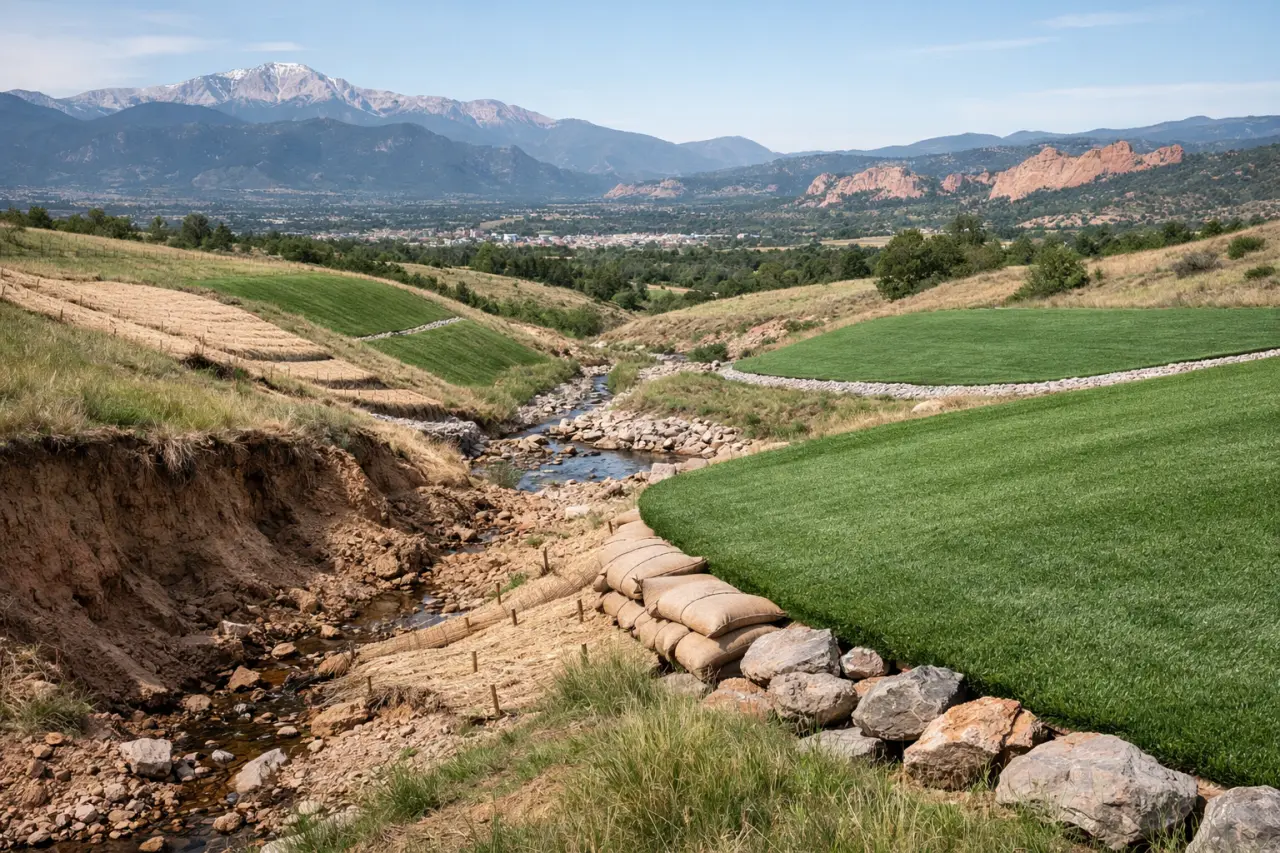
Erosion control starts with the base
In Colorado Springs, the problem is often not the turf itself — it’s what sits under it. On sloped lots, wind, runoff, and dry soil can move fast, so a successful turf project depends on grading, compaction, drainage, and edge control as much as the finished surface.
That is one reason local installers talk so much about site prep. Bear Claw Landscaping says turf in the Colorado Springs area needs a compacted subgrade to prevent movement, especially because the region has expansive soils that can shift and affect landscape stability (Bear Claw Landscaping). Front Range Turf also emphasizes smart design and proper installation for Colorado’s climate, with service in Colorado Springs and nearby neighborhoods (Front Range Turf).
Two local companies that fit the job
If you are comparing options for a slope, drainage swale, or other erosion-prone area, these Colorado Springs businesses are worth a close look:
- Dominion Turf focuses on artificial grass installation in Colorado Springs and says it serves both residential and commercial properties, with a lifetime installation warranty mentioned on its site (Dominion Turf).
- Bear Claw Landscaping offers synthetic turf installation in Colorado Springs and specifically frames turf as part of a xeriscape-friendly plan, which matters when you want a landscape that holds soil and cuts water use (Bear Claw Landscaping).
- Front Range Turf highlights synthetic turf installation for Colorado Springs and nearby Front Range communities, with residential turf installs and lawn replacement among its services (Front Range Turf).
Each company approaches the same basic goal from a slightly different angle: stabilize the surface, improve usability, and keep maintenance low. For a homeowner, the key question is not just “Who installs turf?” but “Who understands drainage and slope conditions on my lot?”
What to ask before you sign a turf contract
A good erosion-control project should feel engineered, not cosmetic. When you talk with an installer, ask how they handle the following:
Drainage and runoff
Artificial turf can help reduce bare-soil washout, but water still has to go somewhere. Ask how the company plans for runoff from roofs, patios, or uphill neighbors, and whether they recommend added drainage under the turf.
Compaction and base materials
On unstable ground, a weak base can lead to soft spots, movement, or seam issues. Bear Claw Landscaping notes the importance of a compacted subgrade before installation (Bear Claw Landscaping). That step matters even more when the goal is erosion control.
Edge restraint
If soil is slipping at the margins, the perimeter matters. Secure edges help keep the turf from lifting or shifting during Colorado’s wind and seasonal weather swings. CN Landscaping, which serves Colorado Springs and surrounding areas, says heavier infill and secure perimeter anchoring are important in higher-wind conditions (CN Landscaping).
The shape of the site
A flat backyard and a steep, irregular slope need very different solutions. Dominion Turf says it works on uniquely shaped areas and offers installation for both homes and businesses in Colorado Springs (Dominion Turf). That kind of flexibility is useful if the erosion problem is tied to a tricky layout rather than a simple lawn replacement.
Where artificial turf makes the most sense
Not every bare patch needs turf, but it can be a practical answer in spots where other ground covers struggle.
- Side yards that get runoff and little foot traffic
- Small slopes where mulch keeps washing away
- Dog areas where repeated use creates bare soil
- Entry strips and narrow corridors that are hard to irrigate evenly
- Commercial edges where appearance and soil stability both matter
In those places, turf can keep soil covered and reduce the cycle of erosion, patching, and reseeding. That said, turf is usually strongest as part of a broader landscape plan, not a cure-all for severe drainage problems.
A local perspective on choosing the right installer
Colorado Springs yards ask a lot from a landscape. The combination of dry weather, wind exposure, and variable soils means a turf job that looks good on day one may still fail later if the prep work is rushed. That is why I would favor companies that discuss the base, not just the grass.
Front Range Turf leans into design and durability (Front Range Turf). Bear Claw Landscaping connects turf to xeriscape planning and soil preparation (Bear Claw Landscaping). Dominion Turf positions itself as a local installation company with both product and install services (Dominion Turf). For a homeowner trying to stop erosion, those are the details that matter.
The bottom line
If your Colorado Springs property has a slope, a washout-prone side yard, or a patch of ground that never seems to hold, artificial turf can be part of the fix. The best results usually come from installers who treat erosion control as a ground-prep problem first and a turf project second.
Ask about drainage, compaction, and edging before you ask about color or pile height. In this climate, that order makes all the difference.
Related articles
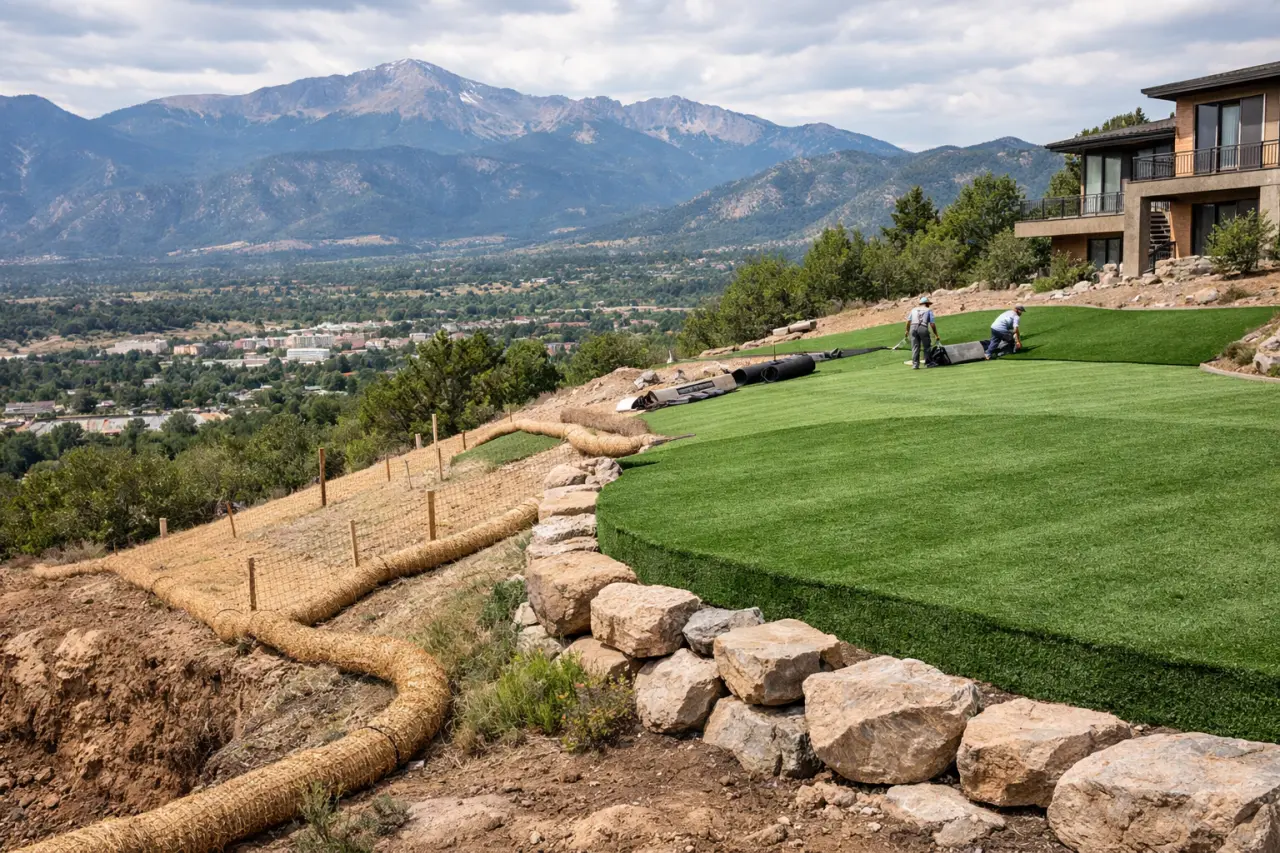
Colorado Springs Artificial Turf for Erosion Control: Local Picks
Looking for erosion-minded turf work in Colorado Springs? These local companies pair artificial turf with drainage, grading, and slope-aware installation.
Editorial Team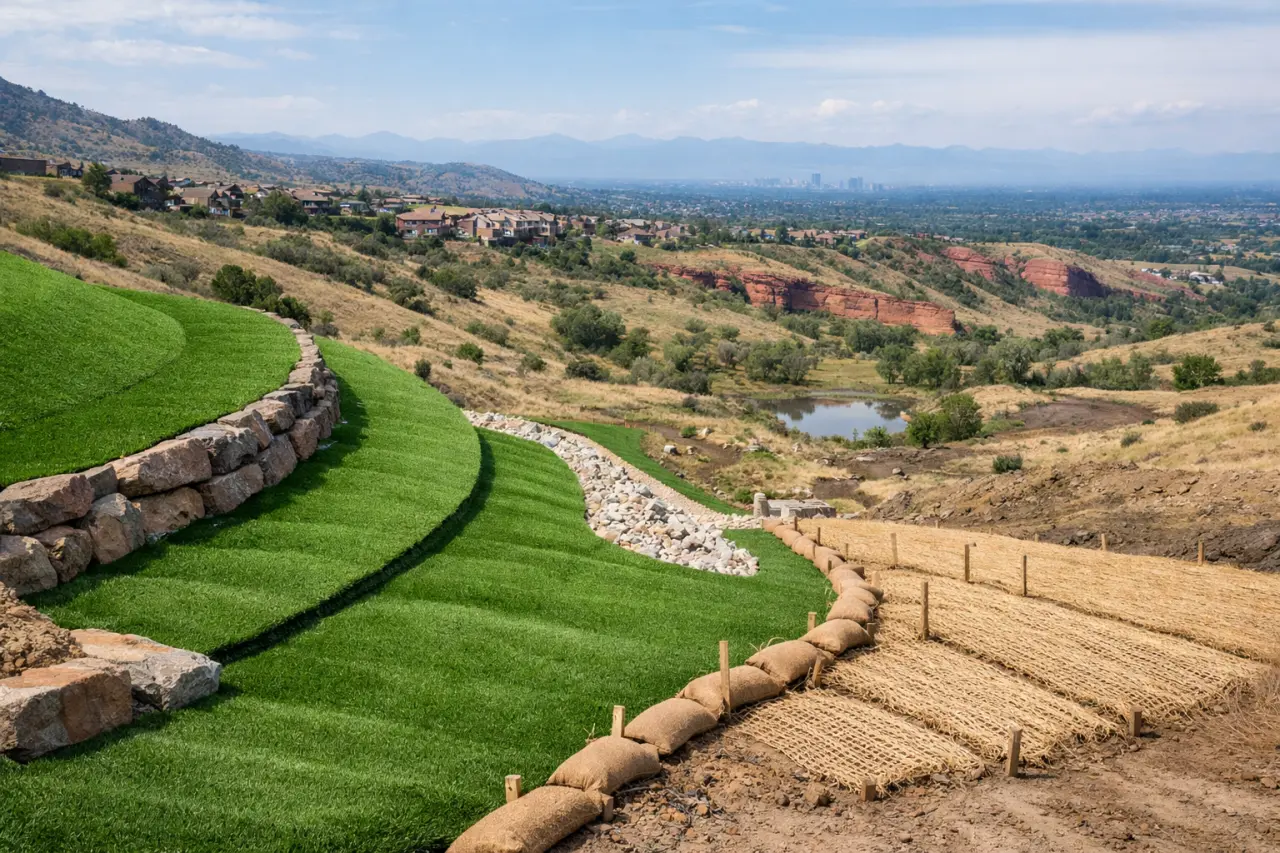
Denver Artificial Turf for Erosion Control: Design Notes
Denver yards need tough, low-water surfaces that hold soil in place. Here’s how local turf installers approach slopes, dog runs, and drainage-heavy spaces.
Editorial Team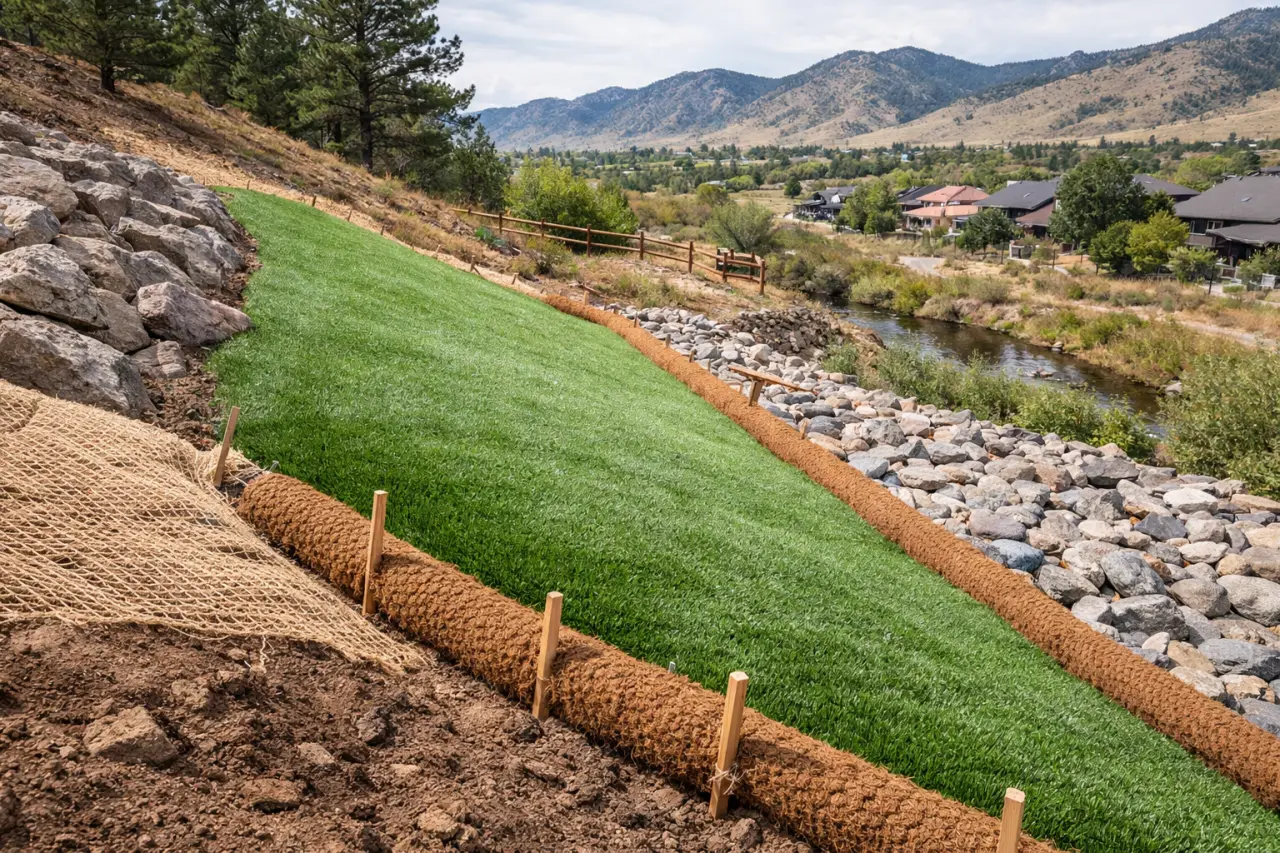
Lakewood Artificial Turf Erosion Control: Local Installers
In Lakewood, synthetic turf can help hold slopes, simplify maintenance, and reduce bare-soil runoff. Here’s how local installers approach it.
Editorial Team