Erosion Control
Denver Artificial Turf for Erosion Control: A Practical Guide
Denver yards with slopes need more than a tidy look. Here’s how artificial turf, drainage, and grading can work together to slow erosion.
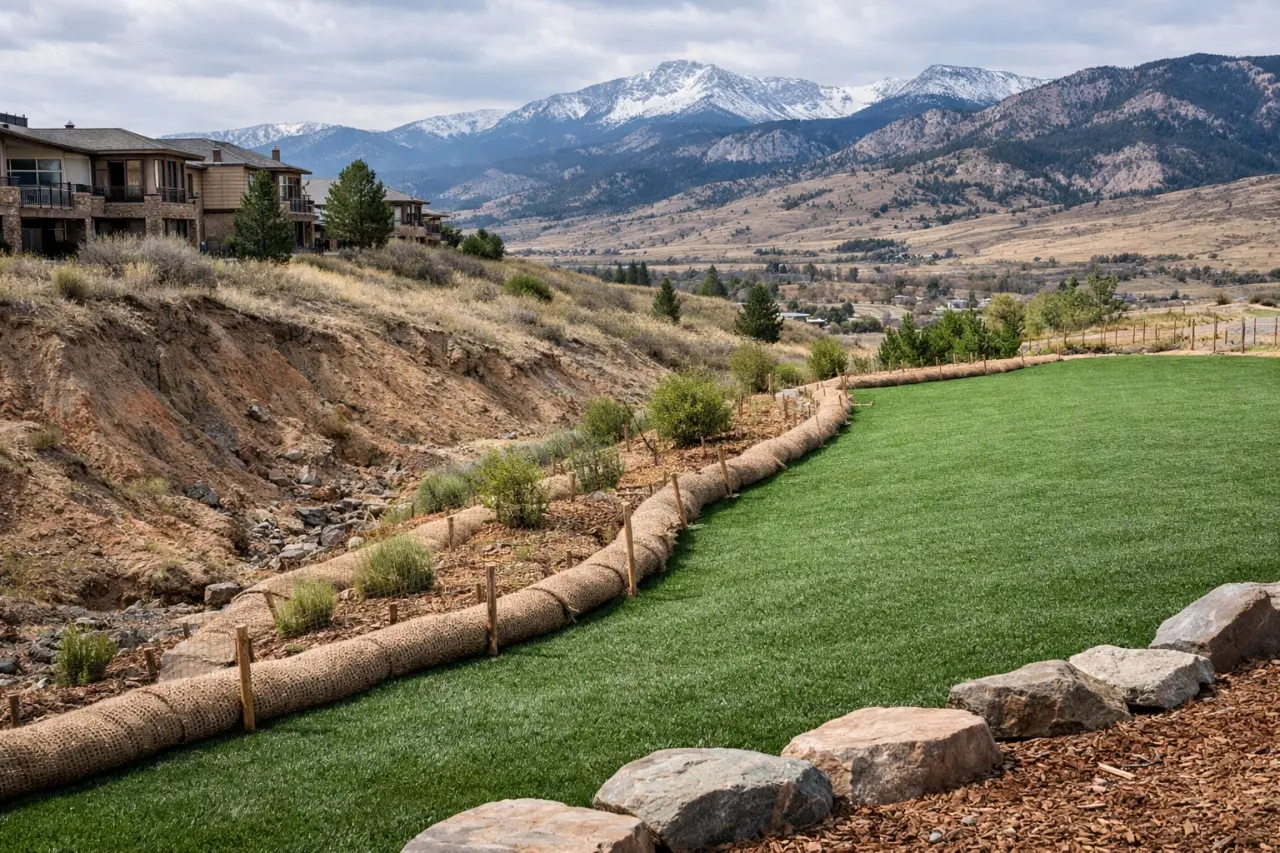
Erosion control starts with the ground underfoot
In Denver, erosion control usually comes down to how well a yard handles slope, runoff, and sparse soil cover. Artificial turf can help when it is installed as part of a larger plan that includes grading, base prep, and drainage—not as a standalone fix. Denver’s own guidance on green infrastructure emphasizes vegetation, soil conditions, and runoff management as part of keeping landscapes stable. (denvergov.org)
That matters on side yards, backyard inclines, and areas where foot traffic has worn away the soil. Turf can reduce bare-ground exposure, but the real difference comes from the installation details: compaction, edging, permeability, and how water is redirected at the margins. Denver’s turf and water-management materials also point to runoff control and buffer design as part of erosion reduction. (denvergov.org)
Denver businesses that handle turf and slope problems
A good Denver project usually blends turf with hardscape or grading work. Purchase Green Denver Artificial Grass operates a showroom and warehouse at 2300 East 77th Ave. and offers artificial grass, installation tools, and turnkey professional installation for homeowners and businesses. That makes it a useful starting point if you want to compare turf products before committing to a full slope project. (purchasegreen.com)
System Pavers lists Denver service coverage and says its teams specialize in hardscapes, patios, driveways, turf, and other outdoor remodeling work. For erosion control, that mix can be helpful because turf often works best when paired with retaining walls, steps, or a more carefully shaped yard. (angi.com)
RDS Hardscape Service includes artificial grass installation and retaining walls in its service lineup. The retaining-wall piece is important: on sloped lots, turf may improve surface stability, but a wall or terrace can be what actually slows the water that causes washout in the first place. (angi.com)
Divinity Landscapes, LLC lists artificial turf alongside sprinkler installation, hardscaping, and landscape design. That combination suggests a contractor that can think about irrigation, slope, and finish grading together rather than treating turf as a final cosmetic layer. (angi.com)
RockSolid Turf and Landscape LLC lists excavation, major grading or resloping, and artificial turf-related backyard landscaping. That is the kind of scope to look for when a Denver yard needs both stabilization and a finished surface. (angi.com)
What to ask before you hire
Artificial turf can help with erosion control, but only if the contractor understands the conditions on your lot. In Denver, I’d focus on these questions:
- How will runoff leave the area? Turf should not trap water against a foundation or fence line. Denver’s runoff and buffer guidance makes clear that managing flow is part of a stable landscape. (denvergov.org)
- Will you regrade first? If the slope is too steep or uneven, turf alone will not stop soil movement.
- Is a retaining wall or terrace part of the design? RDS Hardscape Service and System Pavers both point to the value of hardscape elements alongside turf. (angi.com)
- What base materials are used? A properly built base helps keep turf from shifting and keeps water moving through the system.
- How is the perimeter secured? Edge failure is a common place for erosion to restart.
- Does the installer work with drainage and sprinkler changes? Divinity Landscapes lists sprinkler work and turf together, which is a useful sign when you need the landscape system adjusted as a whole. (angi.com)
When artificial turf makes the most sense
Turf is not the answer for every erosion problem. It is usually strongest in places where you want to:
- cover bare soil that keeps washing away,
- reduce mud in a high-use backyard,
- stabilize a play area or pet run,
- replace a patchy lawn on a modest slope, or
- pair a clean surface with retaining walls or rockwork. (angi.com)
If the issue is severe runoff, a turf-only plan may disappoint. Denver’s public guidance repeatedly treats vegetation, drainage, and soil management as interconnected, which is a good reminder that the surface layer is only one part of erosion control. (denvergov.org)
A practical Denver approach
For most Denver homeowners, the best path is to start with the yard’s slope and drainage, then choose a contractor who can handle turf plus the supporting work. Purchase Green Denver can help with product selection and installation planning, while companies like System Pavers, RDS Hardscape Service, Divinity Landscapes, and RockSolid Turf and Landscape bring the grading and hardscape side that often makes erosion control actually hold up. (purchasegreen.com)
The takeaway is simple: in Denver, artificial turf helps with erosion control when it is installed as part of a drainage-first landscape plan. If you’re comparing bids, look less at the turf sample and more at how each company explains the ground beneath it. (denvergov.org)
Related articles
Colorado Springs Artificial Turf for Erosion Control: Local Picks
Looking for erosion-minded turf work in Colorado Springs? These local companies pair artificial turf with drainage, grading, and slope-aware installation.
Editorial Team
Denver Artificial Turf for Erosion Control: Design Notes
Denver yards need tough, low-water surfaces that hold soil in place. Here’s how local turf installers approach slopes, dog runs, and drainage-heavy spaces.
Editorial Team
Lakewood Artificial Turf Erosion Control: Local Installers
In Lakewood, synthetic turf can help hold slopes, simplify maintenance, and reduce bare-soil runoff. Here’s how local installers approach it.
Editorial Team