Erosion Control
Denver Artificial Turf for Erosion Control: Local Installers
Denver yards with slopes, runoff, or thin soil need more than a green look. These local turf teams focus on drainage, base prep, and erosion-resistant installs.
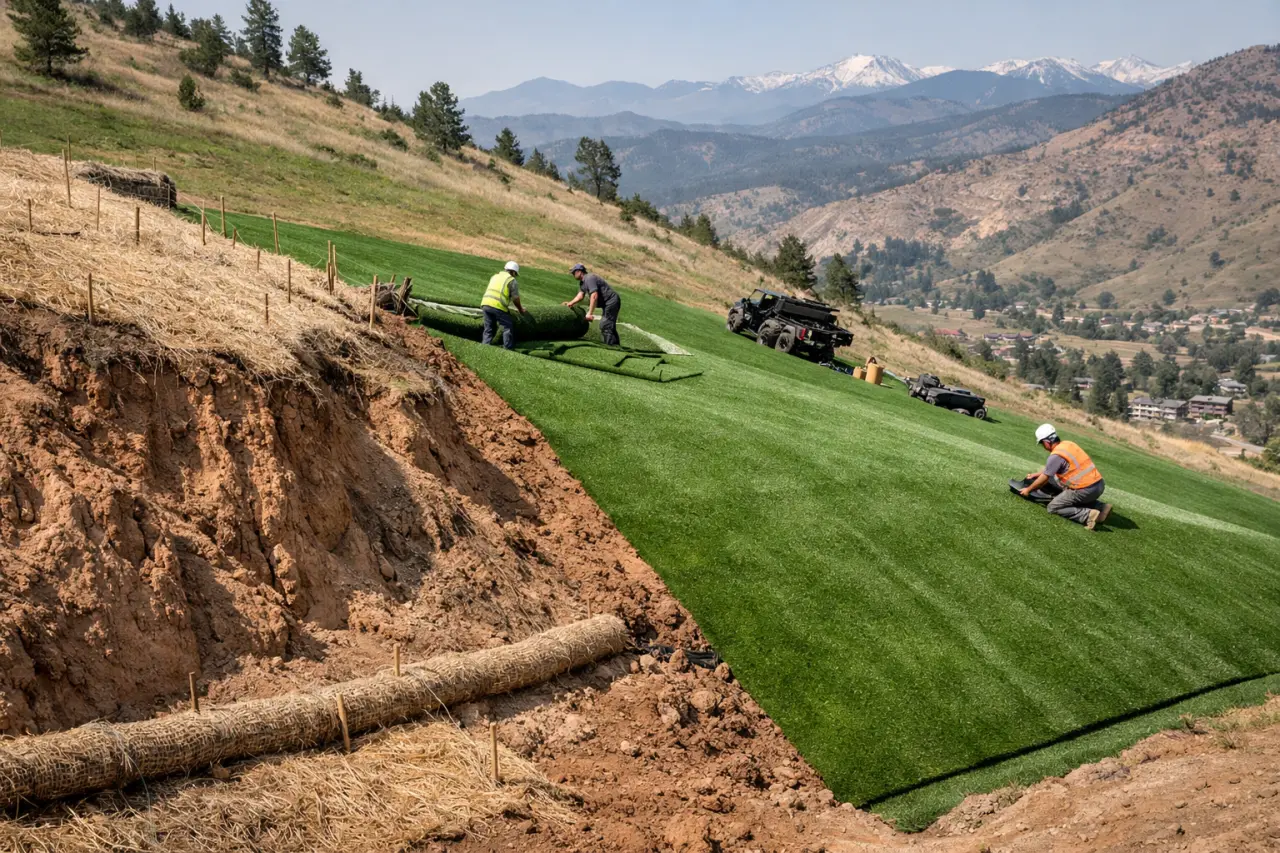
Why erosion control changes the turf conversation in Denver
In Denver, artificial turf is not just about cutting down on mowing. On sloped lots, worn-down play areas, and places where water runs off too fast, the real question is whether the installation is built to stay put. Proper drainage, compacted base layers, and careful edge detailing matter as much as the turf itself.
Denver’s own landscape guidance emphasizes positive drainage, stable subgrade conditions, and erosion-aware design when outdoor surfaces are installed or renovated. That is the context local homeowners should keep in mind when they compare turf options for a yard that sheds water or loses soil after storms. (denvergov.org)
Local companies worth calling for erosion-minded turf work
Several Denver-area turf installers position their work around performance, not just appearance. Frontier Turf says it serves the Denver Metro and Front Range with artificial turf installation and landscape work, backed by workmanship warranties. That makes it a practical name to ask about if your project involves both turf and grading fixes. (frontierturf.com)
Timber Turf Works describes itself as a locally owned artificial turf and synthetic grass installation company serving Denver and the Front Range. For a property where erosion starts with thin soil or a patchy lawn, a company that emphasizes installation details can be a better fit than a quick-swap surface upgrade. (timberturfworks.com)
SYNLawn Colorado lists Denver as part of its service area and notes support for installation and maintenance. If you are trying to keep a turf area functional over time, ongoing care matters because a neglected surface can develop drainage or compaction problems around the edges and seams. (synlawncolorado.com)
Aperfect Turf says it has installed artificial turf throughout the Denver Metro and surrounding areas and notes that it is Home Depot’s only authorized service provider for artificial turf installation in Colorado. For some buyers, that kind of affiliation may be a useful sign when they are comparing installers. (aperfectturf.com)
Waterloo Turf Denver specifically calls out drainage, saying smell issues usually come from poor drainage or skipped base prep rather than the turf itself. That is a useful clue for erosion-control projects, because the same sub-base that helps with odor control also helps keep water from pooling and washing out soil. (waterlooturf.com)
What to ask before you choose an installer
If you are using turf to help stabilize a problem area, the best conversation is not about color samples first. It is about what sits under the turf and how water leaves the site.
Ask each company:
- How do you handle subgrade prep on sloped or eroded ground?
- What base material do you use for drainage?
- How do you secure the perimeter so the edges do not lift or shift?
- Do you make adjustments for runoff paths or standing water?
- How do you handle pet areas, play areas, or places with heavy foot traffic?
Those questions are especially important in Denver, where clay-heavy soils, freeze-thaw cycles, and hard rain events can expose weak prep work quickly. Denver’s public guidance on landscape drainage and erosion control points in the same direction: the surface is only as good as the foundation beneath it. (denvergov.org)
When artificial turf helps erosion control most
Artificial turf is most useful for erosion control when the goal is to keep a surface covered and stable, not to solve every stormwater issue by itself. In practice, that often means:
- narrow side yards that turn to mud
- dog runs that get cut up after repeated use
- small slopes where grass will not hold
- around patios and walkways where runoff keeps pulling soil away
- transitional spots between hardscape and planting beds
On those sites, a turf install can reduce bare soil exposure and make the area easier to maintain. But the fix still depends on grading and drainage. If water is moving under or around the turf in the wrong way, you can still get washouts at the borders, sediment build-up, or failed seams. (waterlooturf.com)
The Denver standard: drainage first, appearance second
The strongest turf projects in Denver usually look simple from the street because the hard work happened underneath. That means compacted base layers, attention to slope, and a surface that sheds water without creating a new problem downstream.
That approach lines up with the city’s own landscape and water-quality thinking, which emphasizes erosion reduction, stable drainage, and careful site design. It also helps explain why turf contractors that talk openly about prep and drainage are often the better fit for erosion-control work than installers who focus only on the finished look. (denvergov.org)
A practical way to compare Denver installers
If you are narrowing the list, compare these things side by side:
- Whether the company serves Denver directly
- Whether it discusses base prep and drainage
- Whether it offers installation plus maintenance
- Whether it has experience with landscape work as well as turf
- Whether it can explain how the project will help with erosion-prone spots
For Denver homeowners, that is the difference between a cosmetic turf swap and a turf project that actually supports the yard. Frontier Turf, Timber Turf Works, SYNLawn Colorado, Aperfect Turf, and Waterloo Turf Denver all give you a starting point for those conversations. (frontierturf.com)
Bottom line
If your Denver property is fighting runoff, slope wear, or exposed soil, artificial turf can be part of the solution — but only if the installation is engineered for drainage and stability. The best local installer is the one that talks clearly about the ground beneath the turf, not just the grass on top.
Related articles
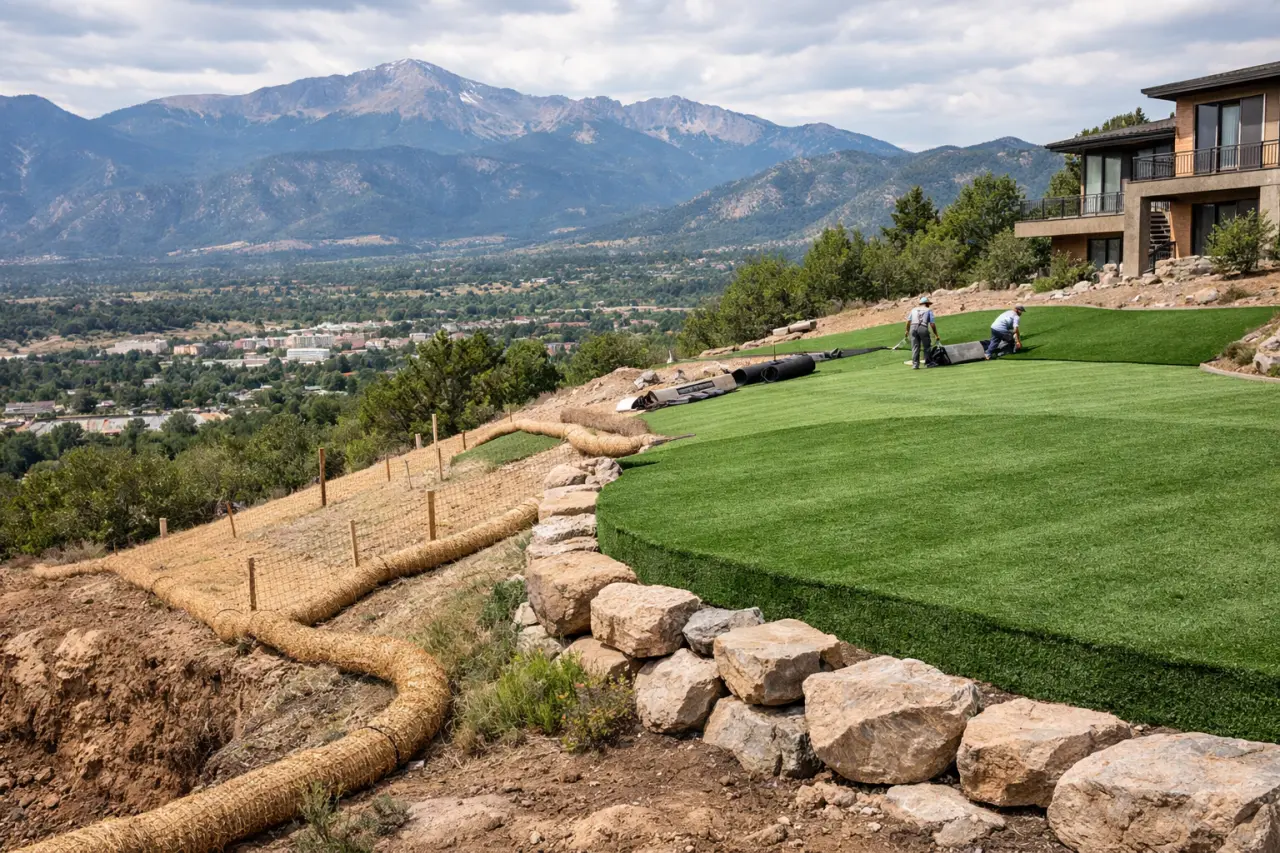
Colorado Springs Artificial Turf for Erosion Control: Local Picks
Looking for erosion-minded turf work in Colorado Springs? These local companies pair artificial turf with drainage, grading, and slope-aware installation.
Editorial Team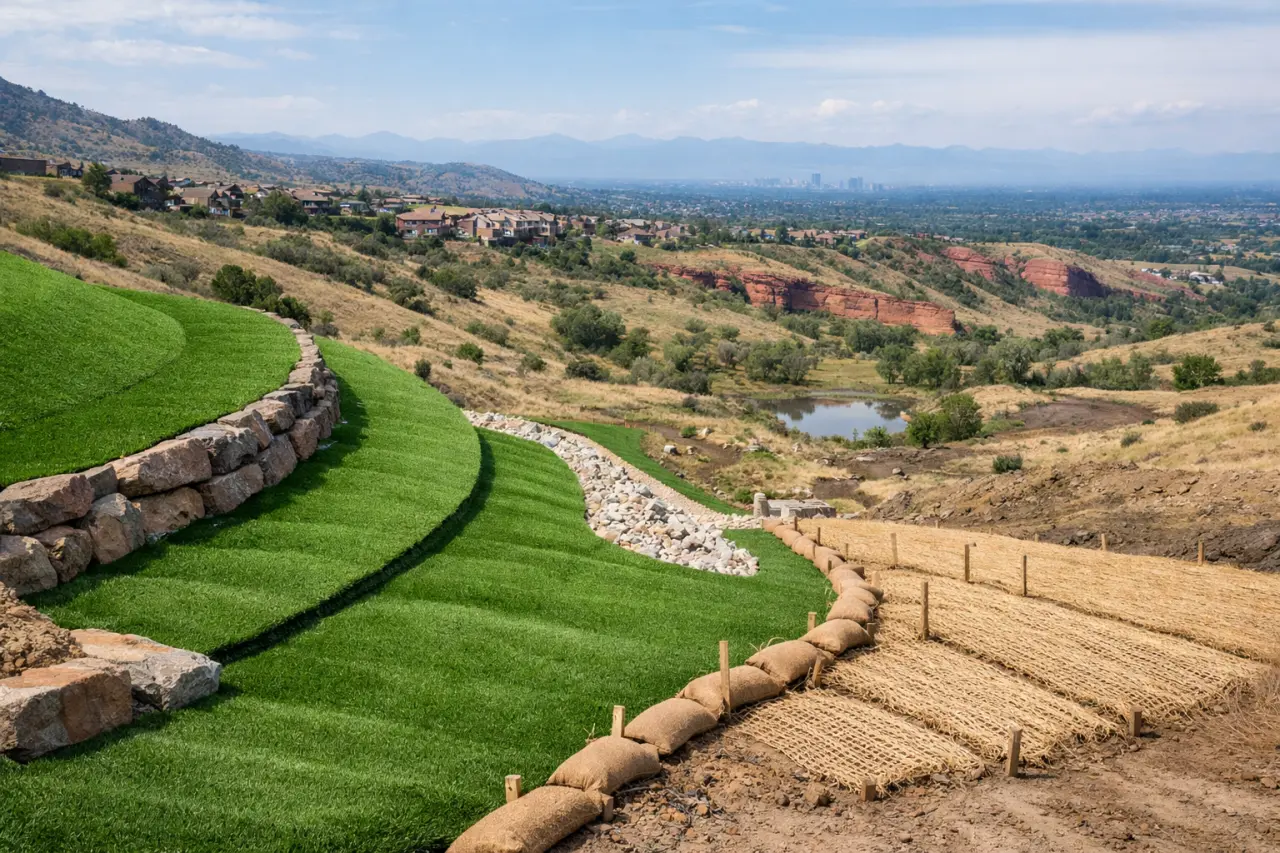
Denver Artificial Turf for Erosion Control: Design Notes
Denver yards need tough, low-water surfaces that hold soil in place. Here’s how local turf installers approach slopes, dog runs, and drainage-heavy spaces.
Editorial Team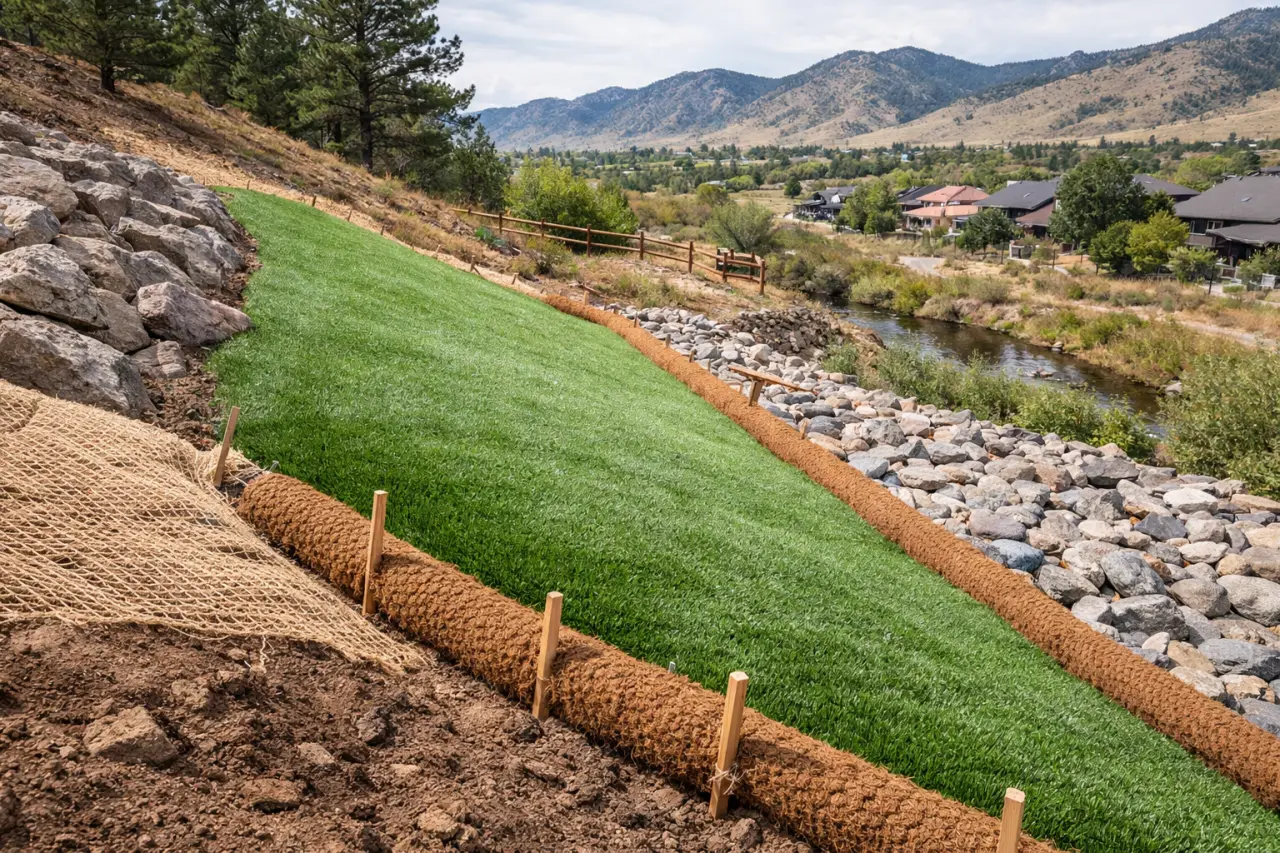
Lakewood Artificial Turf Erosion Control: Local Installers
In Lakewood, synthetic turf can help hold slopes, simplify maintenance, and reduce bare-soil runoff. Here’s how local installers approach it.
Editorial Team