Erosion Control
Lakewood Artificial Turf for Erosion Control: Practical Local Picks
Lakewood homeowners and property managers can use artificial turf to help steady slopes, trim runoff, and simplify upkeep on tricky ground.
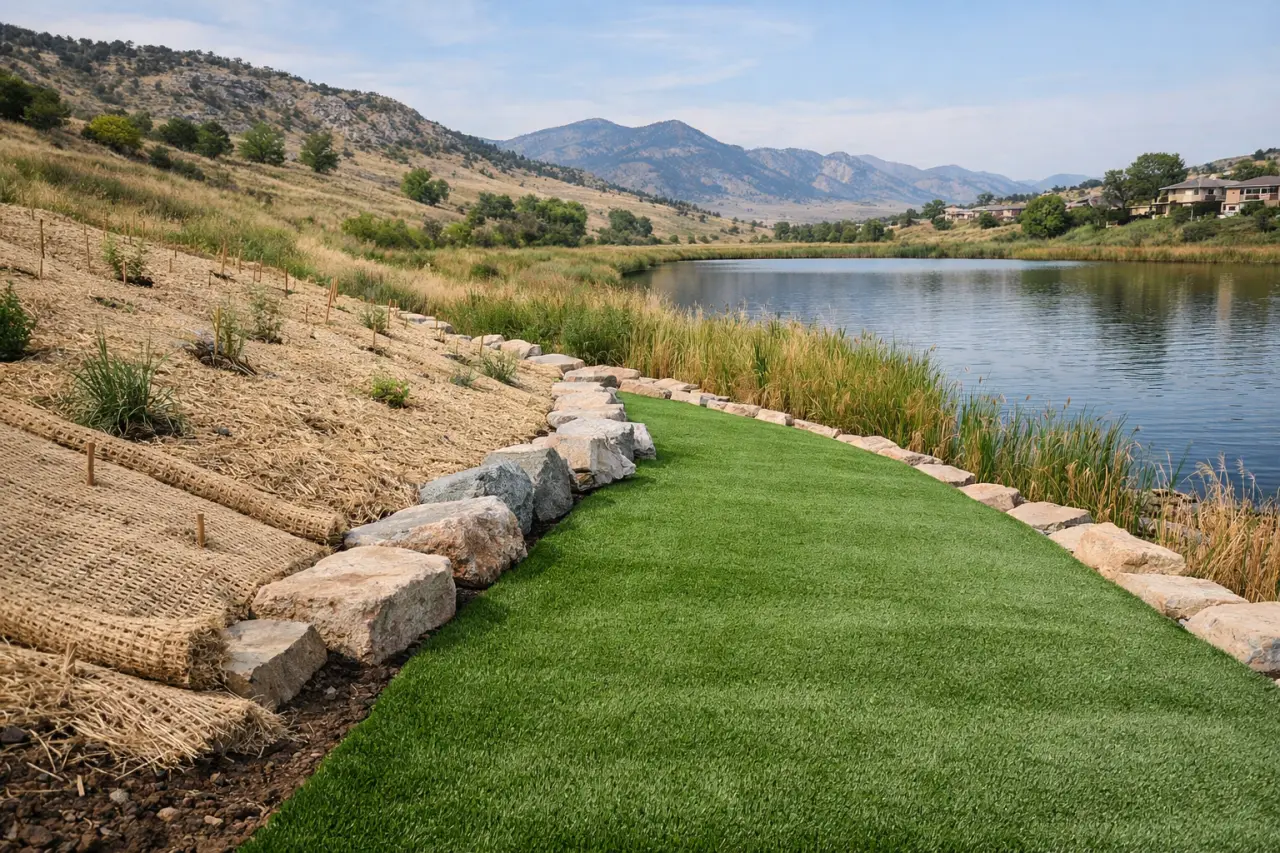
Erosion control starts with the ground you already have
In Lakewood, erosion control is often less about one dramatic fix and more about making a yard behave better through heavy rain, runoff, and everyday wear. Artificial turf can help in the right setting because it creates a stable surface that reduces bare soil exposure and can pair well with grading, edging, and drainage work. City guidance also reminds contractors to keep erosion and sediment control best practices in place during site work, including inspections after storm events and prompt maintenance when needed (City of Lakewood).
That matters on sloped lots, side yards, and play areas where soil tends to wash away before plants can establish. The best turf projects in Lakewood usually solve more than one problem at once: they cover exposed ground, manage runoff, and make the space easier to maintain.
Lakewood companies that work in this space
A few installers serving Lakewood explicitly market artificial turf, which makes them useful starting points when erosion control is part of the job.
SYNLawn Colorado offers artificial grass in Lakewood for residential lawns, pet turf, playground turf, commercial landscaping, and sports surfacing (SYNLawn Colorado). That breadth matters if your erosion issue is tied to a family yard, a common-use patio edge, or a worn area that needs a more durable surface than regular grass can provide.
Mile High Synthetic Turf says it serves Lakewood and emphasizes artificial grass installation experience in Colorado (Mile High Synthetic Turf). For homeowners who want a turf-first solution on a difficult slope or patchy area, that kind of focused installation experience is worth asking about.
Colorado Turf Guys lists Lakewood turf installation and turf maintenance, which can be helpful if your project is as much about long-term upkeep as initial construction (Colorado Turf Guys). A turf surface that is never brushed, cleaned, or checked for shifting edges can lose the stability you were counting on.
Xeris Landscaping advertises artificial turf installation in Lakewood (Xeris Landscaping). That can be a good fit when erosion control needs to be coordinated with broader landscaping work like grading, borders, or patio transitions.
LEM Landscaping is also listed as serving Lakewood with artificial turf installation (Turf Install Pros). For a small erosion-prone side yard or a tighter residential project, a local installer that handles the whole build can simplify the process.
What to look for in an erosion-control turf project
Artificial turf alone is not the whole answer. On a Lakewood property, it works best when the installer thinks through the layers underneath it.
Ask about drainage first
If water has nowhere to go, turf will not stop puddling or runoff. A good installer should talk about slope, drainage paths, and whether the site needs regrading or a base built to move water away from vulnerable spots.
Check how they handle soil stabilization
On bare or loose ground, the prep work is what makes the surface hold up. Ask whether the company uses compacted base material, edging, and seam reinforcement that help keep the turf from shifting over time.
Match the turf to the use
A narrow drainage strip, a pet run, and a backyard play zone are all different jobs. SYNLawn Colorado’s mix of residential, pet, playground, and commercial turf applications is a reminder that product selection should follow function, not just appearance (SYNLawn Colorado).
Plan for maintenance, not just installation
Even low-maintenance turf needs care. Colorado Turf Guys highlights maintenance alongside installation, which is a good cue to ask what brushing, rinsing, or periodic repair your project may need (Colorado Turf Guys).
A simple Lakewood homeowner checklist
Before you commit to turf for erosion control, walk the site and note where water moves after a storm. Then ask each installer the same basic questions:
- How will you stop runoff from cutting under the turf edges?
- Do you recommend regrading or a drainage layer?
- What base materials will you use?
- How do you secure the turf on a slope?
- What maintenance does the surface need in the first year?
- Can you show examples of similar residential work in Lakewood?
Those questions help separate a decorative turf job from a turf installation that is meant to stabilize ground.
When turf is the right answer, and when it is not
Artificial turf can be a smart choice when erosion comes from repeated foot traffic, bare soil, or a hard-to-mow strip that never stays planted. It can also make sense where a homeowner wants a cleaner finish than gravel or mulch alone.
But if the area has serious drainage failure, standing water, or unstable soil, turf should be part of a larger fix, not the fix itself. The City of Lakewood’s erosion-control guidance makes the broader point clearly: erosion control depends on ongoing inspection and maintenance, not just a finished surface (City of Lakewood).
For Lakewood properties, the smartest turf projects are the ones that start with the slope, the runoff, and the soil, then choose the product second. That is how you end up with a yard that looks better and stays put.
Related articles
Fort Collins Artificial Turf for Erosion Control: Local Picks
Fort Collins homeowners use artificial turf to tame slopes, protect bare spots, and cut down on muddy runoff. Here’s how local installers approach the job.
Editorial Team
Fort Collins Artificial Turf for Erosion Control Tips
Fort Collins homeowners use synthetic turf to steady slopes, reduce runoff, and cut maintenance. Here’s how local installers approach erosion-prone yards.
Editorial Team
Aurora Artificial Turf for Erosion Control: Site Prep Tips
See how Aurora homeowners use artificial turf to help stabilize slopes, improve drainage, and simplify upkeep on tricky yards.
Editorial Team