Irrigation Solutions
Aurora Irrigation Solutions for Synthetic Turf That Use Less Water
In Aurora, synthetic turf still needs smart irrigation planning. Here’s how local contractors and city water rules shape the right setup.
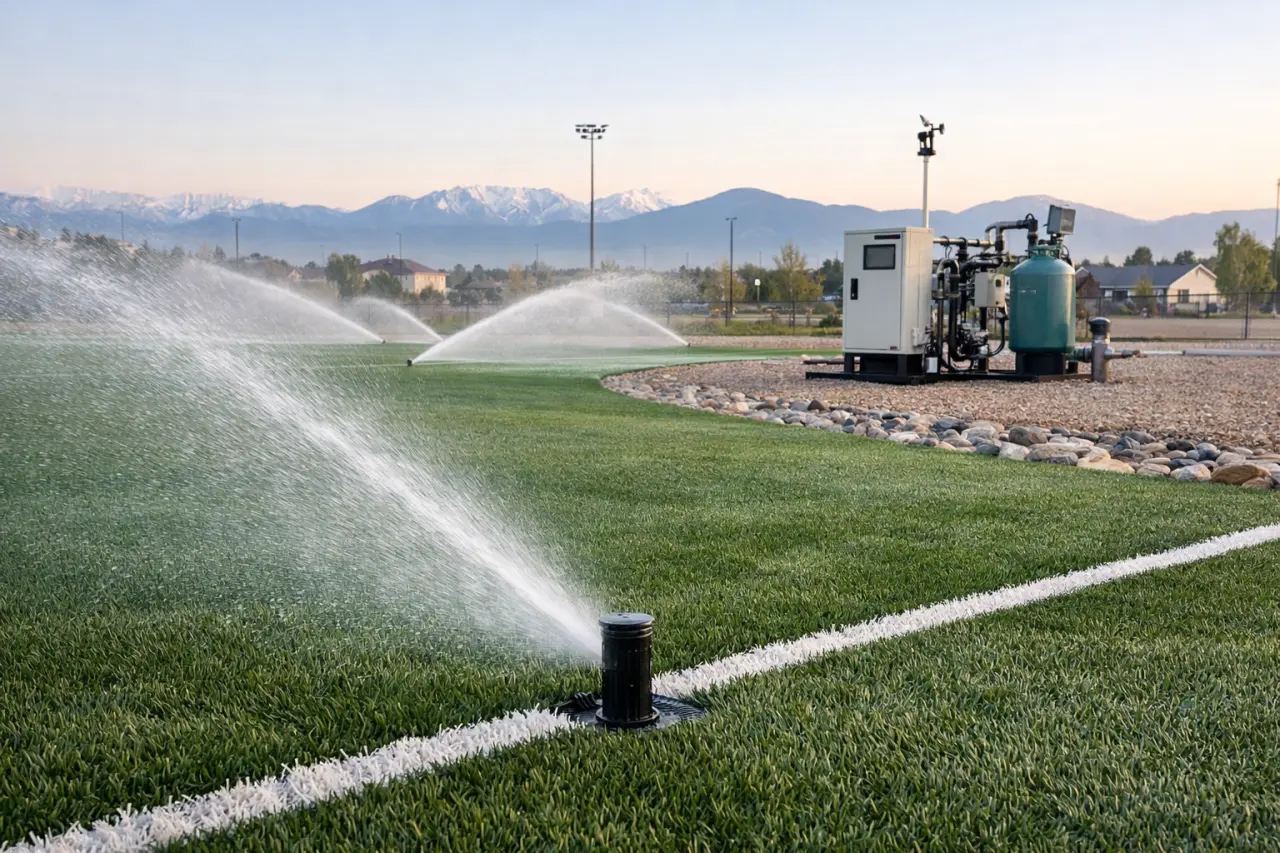
A smarter irrigation plan for synthetic turf in Aurora
Artificial turf cuts down on mowing and routine watering, but the surrounding landscape still needs a system that works with Aurora’s water rules and soil conditions. If you are pairing synthetic grass with planting beds, edge strips, or transition areas, the irrigation design matters as much as the turf install itself. Aurora Water notes that almost half of customer water use goes to lawns and landscaping, and it requires lawn and irrigation permits for new turf and new or modified sprinkler systems. (auroragov.org)
That makes Aurora a place where irrigation choices are not just a finishing touch. They are part of the project from the start, especially when a yard mixes artificial turf with native plants, shade trees, or a small irrigated border.
What local homeowners should look for
The best irrigation setup for an artificial turf property is usually not about watering the turf itself. It is about controlling water exactly where it is still needed. In practice, that often means:
- Drip irrigation for beds and narrow planting zones
- Pressure-regulating components to reduce waste from overspray and misting
- Smart controllers that avoid running when the landscape does not need water
- Careful zoning so turf edges are not watered like full grass lawns
EPA WaterSense says water-efficient irrigation products can cut waste, and it specifically points to spray sprinkler bodies with pressure regulation and controllers that apply water only when plants need it. (epa.gov)
For Aurora properties, that matters because the city is still working through drought resilience and turf-water reduction. Aurora Water says outdoor irrigation, especially cool-season turf like Kentucky bluegrass, has historically accounted for about 50% of Aurora’s total annual water use. (auroragov.org)
Local companies that fit the job
A few Aurora-serving landscape businesses stand out because they handle both turf-related work and irrigation-related work.
Delhierro Sprinklers & Landscape lists sprinklers and artificial turf among its services, which makes it a straightforward option for projects where the turf install and the watering plan need to be coordinated together. (sites.google.com)
Denver Sprinkler and Landscape says its service area includes Aurora and that it handles irrigation installation alongside broader landscape work. For a homeowner replacing grass with synthetic turf, that kind of overlap can be useful when the remaining planted areas still need sprinkler adjustments or a new zone layout. (sites.google.com)
Heart Heating, Cooling, Plumbing & Electric is based in Aurora, but its published home-services page focuses on HVAC, plumbing, and electrical work rather than landscape irrigation. If your project also involves water lines, shutoff concerns, or utility-related repairs near a turf installation, it may be part of the conversation. (sites.google.com)
Meadow Landscape Inc. lists landscape irrigation services, including new irrigation installation, repairs, drip systems, and timers, and also lists artificial grass. That combination suggests a contractor that can handle the water side of a synthetic-turf remodel without treating the turf and irrigation as separate jobs. (sites.google.com)
How to match the system to the yard
For most Aurora homes, the goal is to stop treating the entire yard as one watering zone. Synthetic turf should not be run like a natural lawn, and the remaining landscape should be grouped by need.
A practical setup often looks like this:
1. Separate turf from plants
Turf areas should be isolated from beds and shrubs so sprinkler heads do not waste water on artificial grass. Where spray sprinklers remain necessary, WaterSense notes that pressure regulation can improve distribution and reduce runoff and misting. (epa.gov)
2. Use drip where possible
Drip systems make sense around synthetic turf borders, foundation plantings, and decorative beds because they deliver water more directly to the root zone. That reduces overspray onto turf edges and hardscape.
3. Ask about permits early
Aurora Water requires permits for new turf installations and for new or renovated irrigation systems, including cases where a zone is added or the size of a system changes. If you are converting part of a lawn to artificial turf, it is worth checking whether the irrigation plan needs city review before work begins. (auroragov.org)
4. Plan for conservation
Aurora also offers a Grass Replacement Incentive Program for converting water-guzzling turf to water-wise landscapes. If your artificial turf project is part of a broader xeriscape-style redesign, the rebate program may be relevant to the remaining planted areas. (auroragov.org)
The Aurora approach: less water, better control
Aurora’s water conservation messaging is clear: the city wants fewer wasted gallons and better-performing outdoor systems. The city’s Water-wise Garden and conservation materials reinforce that point, and EPA guidance backs up the value of efficient controllers and pressure-managed sprinkler parts. (auroragov.org)
For synthetic turf owners in Aurora, that usually leads to a simple but important rule: do not overbuild the irrigation system just because the yard used to be grass. Match the system to the landscape that remains. That may mean fewer spray heads, more drip lines, and a cleaner split between turf, beds, and any small lawn areas you still keep.
What to ask before you hire
Before choosing an irrigation contractor for an artificial turf project in Aurora, ask:
- Which zones will be removed, capped, or converted to drip?
- Will the controller be reprogrammed for the new layout?
- Are the sprinkler bodies pressure-regulating or otherwise water-efficient?
- Does the project need a city irrigation permit?
- How will the contractor keep overspray off the synthetic turf edges?
The right answers should sound local and specific, not generic. In Aurora, the best irrigation solution for artificial turf is the one that respects the city’s water rules, protects the parts of the yard that still need water, and leaves the turf itself dry unless maintenance truly calls for it. (auroragov.org)
Related articles
Fort Collins Irrigation Solutions for Artificial Turf Owners
Fort Collins turf owners still need smart water planning. Here’s how local irrigation pros handle cooling, cleaning, and low-water system upgrades.
Editorial Team
Aurora Irrigation Solutions for Artificial Turf and Drainage
Aurora turf owners need irrigation that fits synthetic surfaces. Here’s how local sprinkler pros and drainage-minded crews can help.
Editorial Team
Colorado Springs Irrigation Solutions for Artificial Turf Yards
For Colorado Springs turf owners, irrigation work is about smart water use, drainage, and keeping synthetic grass clean, stable, and ready.
Editorial Team