Irrigation Solutions
Denver Irrigation Solutions for Artificial Turf Transitions
Denver turf projects need irrigation plans that fit the swap from bluegrass to synthetic grass. Here’s how local companies handle the water side of the job.
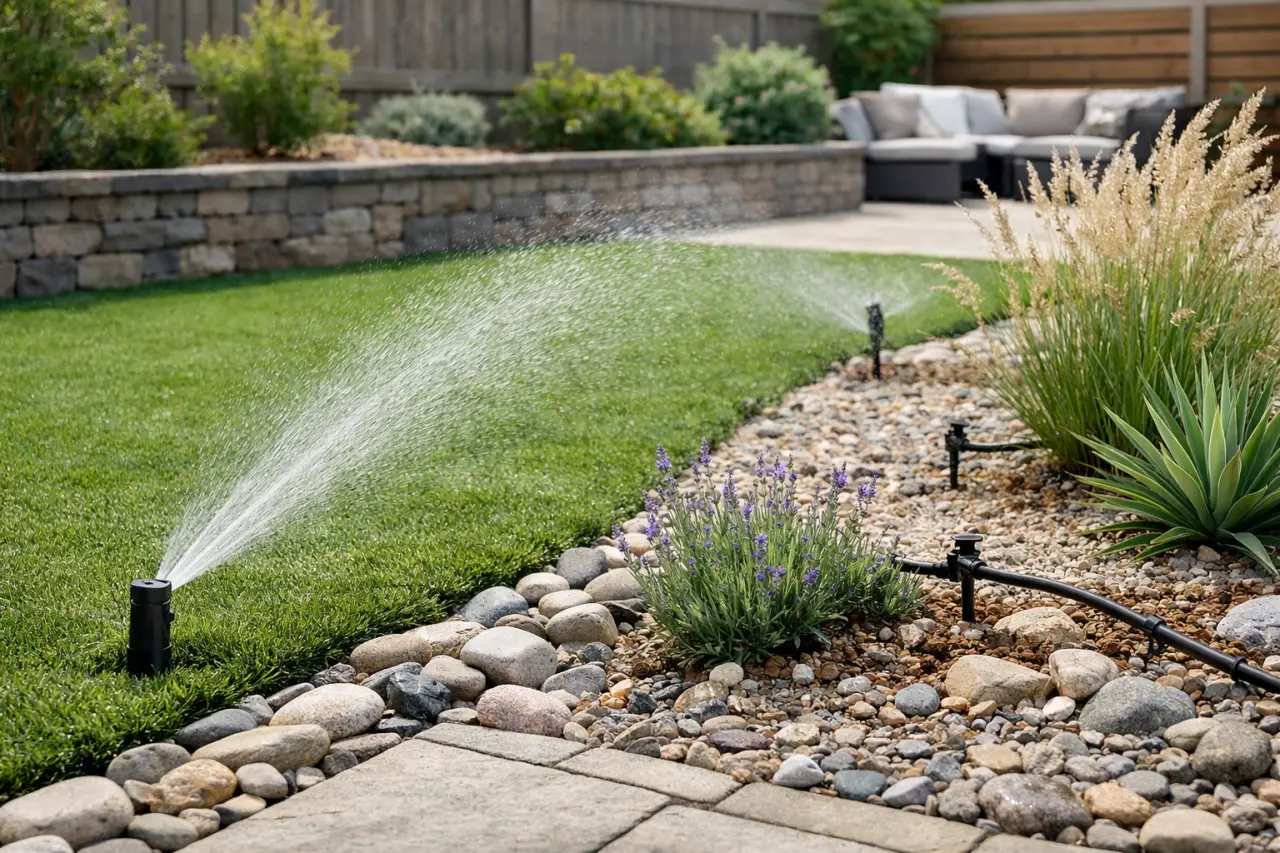
When artificial turf changes the irrigation conversation
In Denver, artificial turf is rarely just a surface choice. It usually starts with a bigger water-management question: what happens to the sprinkler system once the lawn is gone?
That’s why the best irrigation solutions for synthetic grass aren’t about watering turf at all. They’re about rethinking zones, repurposing lines, and making sure the rest of the landscape still gets the water it needs without wasting a drop. Denver Water’s current rules also make efficiency matter more than ever, with guidance to repair leaking sprinkler systems within 10 days and avoid irrigation during the middle of the day. (denverwater.org)
Local companies that work on both sides of the project
A Denver homeowner converting a yard to artificial turf may still need irrigation help for trees, shrubs, beds, and side-yard plantings. That’s where companies with both landscape and sprinkler experience become especially useful.
Circo Irrigation and Landscaping says it has been designing and installing landscapes and irrigation in Denver since 1968, and it specifically lists drip and water-conserving irrigation systems among its services. That makes it a practical fit when a synthetic lawn project leaves behind planting areas that still need targeted watering. (circolawnsprinklers.com)
Apex Irrigation focuses on sprinkler service, repair, installation, and winterization in Denver, including spring start-ups and fall shutdowns. For artificial turf owners, that kind of seasonal service matters because the yard may have fewer spray zones after conversion, but the remaining irrigation still has to be protected and adjusted correctly. (apexirrigationllc.com)
Colorado Cascade Sprinkler & Irrigation provides sprinkler installation, repair, and maintenance in the Denver area and says it services Rain Bird, Hunter, and other manufacturers. If your artificial turf project includes controller changes, head replacements, or repairs to older zones left in place for landscaping beds, that manufacturer flexibility can simplify the work. (coloradocascade.com)
Mile High Sprinkler & Landscaping offers installation, maintenance, and repair in Denver and highlights spring activations, repairs, winterizations, and routine maintenance. That combination is useful when a turf replacement project needs the irrigation system rebalanced before the next watering season. (milehighsprinkler.com)
What irrigation still matters after turf is installed
A common mistake is to think artificial turf means no irrigation planning is needed. In practice, the opposite is often true.
Denver Water recommends low-volume, non-spray irrigation such as drip systems for trees, shrubs, perennials, annuals, and vegetables during drought conditions. It also encourages customers to consider soaker hoses, sub-surface piping, or drip irrigation for flower beds and shrubs. (denverwater.org)
That matters because synthetic grass typically removes the need for overhead lawn watering, but surrounding plantings may need:
- Drip irrigation for beds and foundation plantings
- Zone cap-offs or rewiring where spray heads are no longer needed
- Pressure and runoff checks to keep water off hardscape
- Controller updates so empty turf zones aren’t still programmed to run
Denver Water’s outdoor watering guidance also notes that turf watering is limited by schedule, and that landscape irrigation should not waste water on sidewalks or streets. A clean turf conversion should reduce those losses, not create new ones around the edges. (denverwater.org)
The Denver angle: keep the system, change the purpose
For many Denver properties, the smartest approach is not a full irrigation teardown. It’s a conversion.
That usually means keeping part of the system, but changing what each zone does. A front yard converted to synthetic grass may leave behind a few drip-fed planting strips. A backyard may keep a watered border, while the center lawn area becomes artificial turf. The goal is to cut waste while preserving the plants that still benefit from irrigation.
Denver Water’s turf-related conservation work underscores that shift. The utility promotes reducing high-water-use turf and improving irrigation efficiency, and its rebate and landscape-transformation pages repeatedly point customers toward water-wise landscaping and improved irrigation practices. (denverwater.org)
For Denver residents, that means an artificial turf project is often most successful when the irrigation contractor asks two questions:
- Which parts of the yard no longer need spray coverage?
- Which plants still need efficient, low-volume watering?
That’s the difference between a simple surface replacement and a better-functioning landscape.
How to choose the right irrigation help
If you’re planning artificial turf in Denver, look for a contractor that can handle more than one piece of the puzzle. A good fit will understand sprinkler layout, drip irrigation, seasonal winterization, and the local watering rules that affect how systems should be set up and maintained. Denver Water’s guidance on outdoor watering and leak repair makes that especially important in a dry year or during restricted watering periods. (denverwater.org)
Useful questions to ask
- Can you convert unused turf zones to drip or cap them properly?
- Will you inspect remaining spray heads for overspray onto walks and driveways?
- Can you program the controller so only planted areas run?
- Do you offer winterization for the irrigation that remains?
- Have you worked on artificial turf projects in Denver that kept some planted areas watered efficiently?
A practical Denver takeaway
Artificial turf can reduce lawn watering dramatically, but it does not eliminate the need for irrigation expertise. In Denver, the best results usually come from a contractor who can simplify the system, preserve the planting areas that still need water, and keep the whole yard aligned with local watering rules.
That’s why companies like Circo Irrigation and Landscaping, Apex Irrigation, Colorado Cascade Sprinkler & Irrigation, and Mile High Sprinkler & Landscaping are worth a look when your synthetic grass project still has a living landscape around it. (circolawnsprinklers.com)
Related articles
Lakewood Irrigation Solutions for Artificial Turf: Water-Smart Picks
Lakewood homeowners can pair synthetic grass with smart irrigation, drainage, and seasonal service to keep turf clean, cool, and long-lasting.
Editorial Team
Fort Collins Irrigation Solutions for Artificial Turf Spaces
Fort Collins turf owners can pair synthetic grass with smart irrigation, drainage fixes, and seasonal maintenance that supports cleaner edges and lower waste.
Editorial Team
Aurora Irrigation Solutions for Artificial Turf Care
How Aurora property owners keep synthetic turf clean, cool, and functional with smart irrigation, local code awareness, and practical maintenance.
Editorial Team