Maintenance Services
Denver Artificial Turf Maintenance: Cleaning, Repair, and Care
Denver turf needs more than an occasional rinse. Here’s how local maintenance crews handle odor, infill, brushing, and repairs without overcomplicating it.
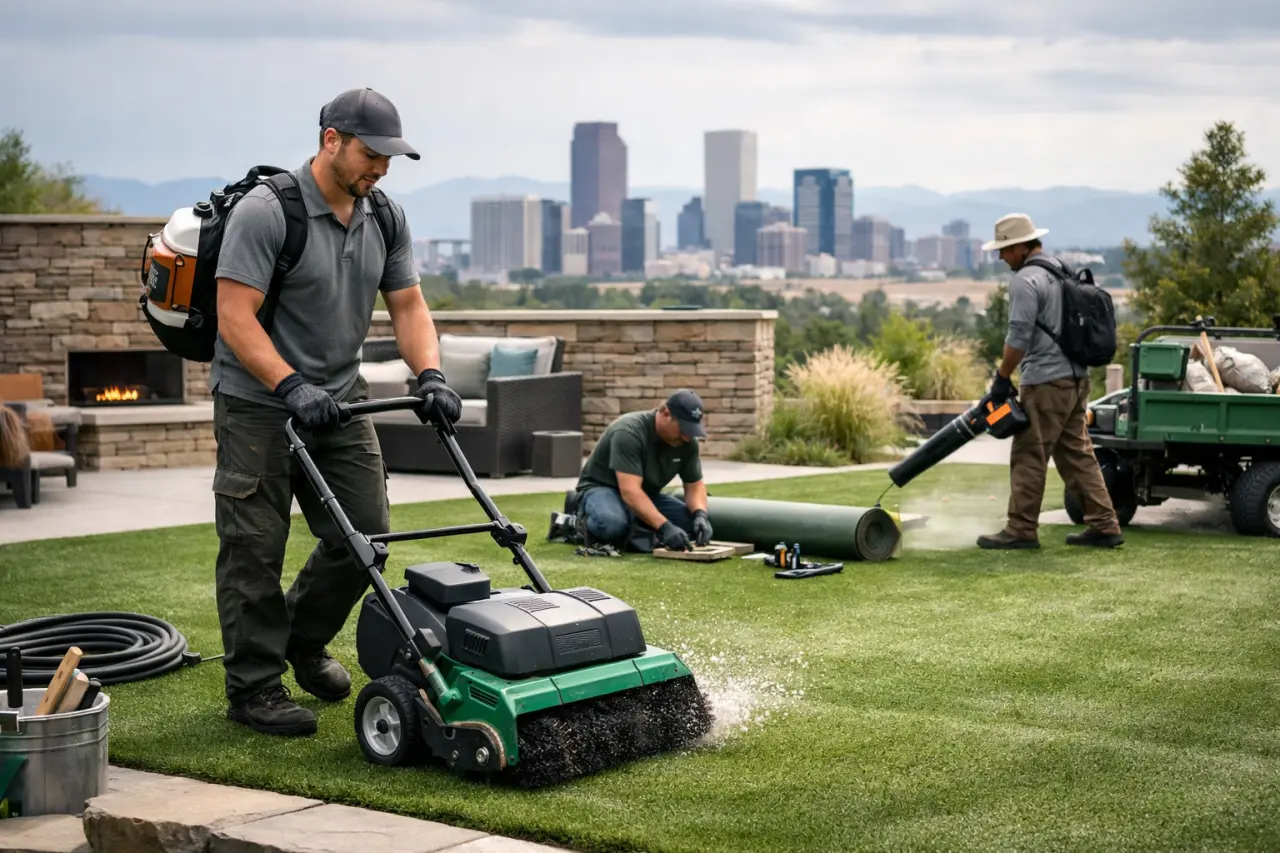
What Denver turf really needs over time
Artificial grass in Denver can hold up well, but it still needs routine care. Dust, pet use, flattened fibers, and shifting infill can make even a good installation look tired. Local cleaning and restoration crews focus on the basics: brushing, debris removal, odor control, infill balancing, and minor repairs. TurFresh notes that Denver’s climate can bring UV exposure, dust, wildfire ash, and winter grime into the mix, which is a good reminder that synthetic grass is not entirely hands-off (TurFresh).
The most useful maintenance is usually the least dramatic. If the blades are matted down, infill has settled, or pet areas smell off, those issues tend to respond to targeted care rather than a full replacement.
Denver companies that handle turf upkeep
A few Denver-focused businesses stand out for maintenance work rather than just installation.
Turf Revival Pros describes its work around cleaning, deodorizing, de-compacting, and fiber restoration for homes across the Denver metro, with added attention to pet odor remediation and putting green tune-ups (Turf Revival Pros). That mix is useful if a lawn needs both freshening and mechanical recovery.
303 Turf Cleaning centers its service on artificial grass cleaning and care in the Denver area, and its process page emphasizes deep power brushing, infill redistribution, and environmentally friendly cleaning methods (303 Turf Cleaning). That makes it a practical option for turf that looks flat or uneven.
US Power Broom says it provides artificial turf cleaning and maintenance throughout the Denver metro area and highlights equipment that lifts fibers, removes debris, and redistributes infill without damaging the turf system (US Power Broom). For property owners who care most about appearance and texture, that is the kind of service to ask about.
Where maintenance usually starts
Before calling anyone, it helps to identify which problem is actually showing up.
- Flattened blades: Often fixed with power brushing or grooming.
- Low or uneven infill: Can make turf feel hard, thin, or patchy.
- Pet odor: Usually needs a deeper clean, not just a rinse.
- Debris buildup: Leaves, soil, and dust can collect in seams and around edges.
- Drainage trouble: Standing water can point to compaction or blockage.
The maintenance standard used in some municipal guidance is consistent with this approach: clear debris, rinse, brush, and restore infill as needed. Thornton’s artificial turf maintenance guidance specifically calls out cleaning, sanitizing, brushing, debris removal, and brushing loose infill back into place (City of Thornton). Even though that document is not a consumer how-to, it matches what Denver homeowners typically end up needing.
A practical maintenance schedule for Denver homeowners
A simple schedule keeps synthetic grass from getting ahead of you.
Weekly or as needed
- Pick up leaves, twigs, and pet waste.
- Rinse off visible dust or sticky spills.
- Check high-traffic paths for matting.
Monthly
- Brush traffic lanes and pet zones.
- Look for low spots where infill may have shifted.
- Inspect seams, edges, and drainage areas.
Seasonally
- Do a deeper clean after heavy dust, wind, or winter grime.
- Refresh infill if the surface feels compacted.
- Ask about odor treatment if pets use the turf regularly.
Denver’s dry weather can hide buildup at first, but once the blades flatten, the turf starts to lose the look people wanted in the first place. That is where professional grooming earns its keep.
What to ask before booking service
Not every turf job needs the same treatment. When you contact a company, ask what they actually do on site.
- Do they use power brushing, or just rinse the surface?
- Can they rebalance infill?
- Do they handle pet odor removal?
- Will they inspect seams or drainage issues?
- Is the service aimed at residential turf, pet turf, or putting greens?
Those questions matter because turf maintenance is not one-size-fits-all. A dog run, a backyard play area, and a putting green each wear differently. Turf Revival Pros, 303 Turf Cleaning, and US Power Broom all describe service lines that go beyond basic washing, which is useful when the surface needs real restoration instead of cosmetic cleanup (Turf Revival Pros; 303 Turf Cleaning; US Power Broom).
When repairs are worth it
A little wear does not automatically mean the turf is done. Minor issues like loose infill, flattened fibers, and surface odor often respond well to maintenance. More serious problems, such as failed seams, damaged backing, or drainage issues that keep returning, are different. At that point, repair is usually more sensible than repeated cleaning.
Denver owners get the best results when they treat synthetic grass like an installed surface that still needs care. The right maintenance partner can keep it looking even, feeling softer underfoot, and performing better through the year. In a city where weather swings, dust, and pet traffic all show up fast, that kind of upkeep is less of a luxury than it sounds.
Related articles
Lakewood Artificial Turf Maintenance: Cleaning and Repair Options
Lakewood turf owners have a few solid maintenance paths, from routine cleaning to repair and infill refreshes. Here’s how local providers approach it.
Editorial Team
Fort Collins Artificial Turf Maintenance for Homes and Fields
Fort Collins turf needs more than a quick rinse. Here’s how local maintenance pros handle brushing, infill, odor control, and repairs.
Editorial Team
Aurora Artificial Turf Maintenance for Pet Runs and Busy Yards
Aurora homeowners can keep synthetic grass cleaner, safer, and longer-lasting with the right maintenance plan, from debris removal to infill care.
Editorial Team