Playground Turf
Denver Playground Turf: A Practical Guide for Safer Playgrounds
Denver playground projects need turf that handles heavy use, drainage, and safety rules. Here’s how local installers and standards shape the best choices.
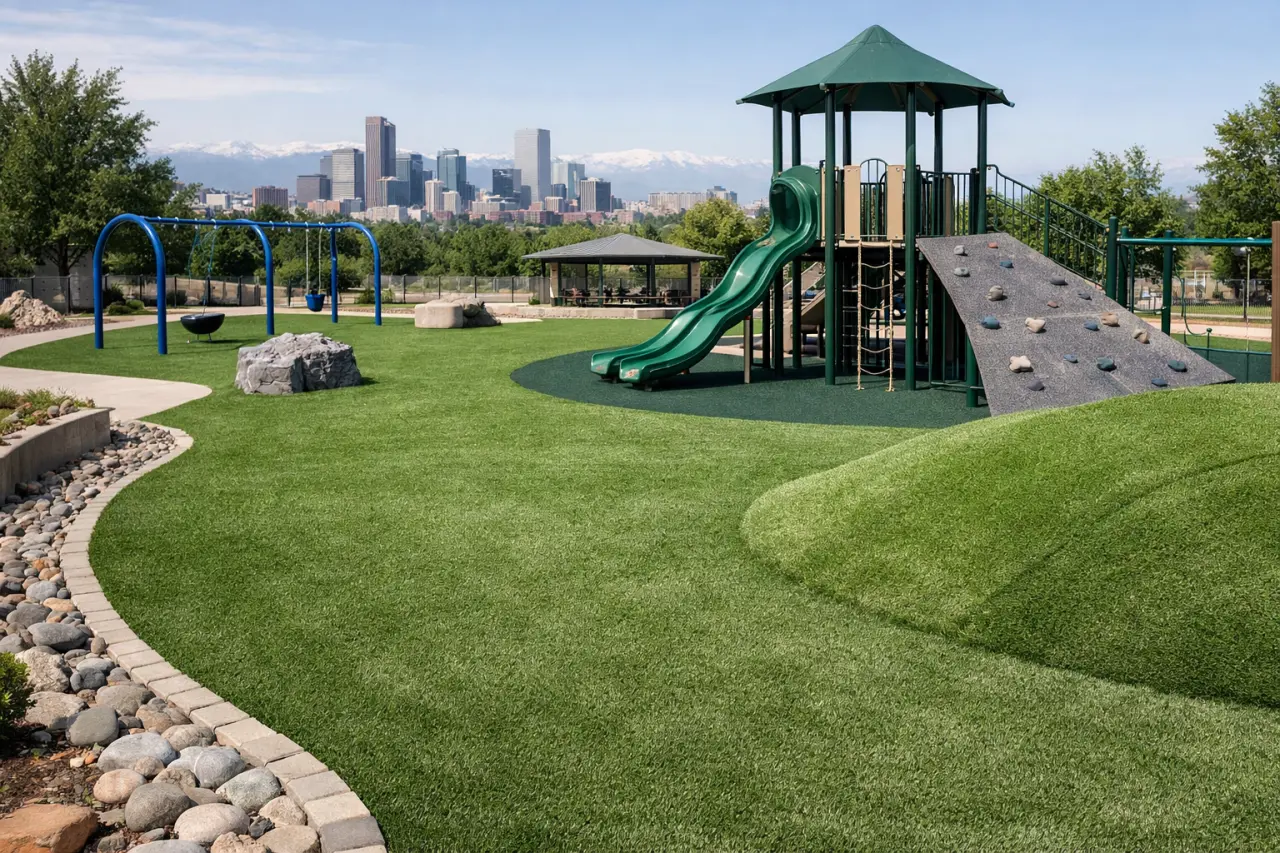
Why Denver playground turf needs a different checklist
In Denver, playground turf is doing more than just replacing grass. It has to stand up to hard use, dry weather, freeze-thaw cycles, and the kind of foot traffic that comes with schools, childcare centers, and neighborhood play areas. That means the best projects usually start with a safety-first plan, not just a product choice.
For owners and managers, the biggest question is often not whether synthetic turf looks good. It’s whether the system is built to perform as a playground surface, with the right padding, base preparation, and drainage for the equipment and fall heights on site. The International Play Equipment Manufacturers Association certifies surfacing to ASTM impact-attenuation standards, which is a useful benchmark when comparing options. (ipema.org)
Denver businesses that work with playground turf
A few Denver-area companies openly call out playground turf in their services, which makes them easier to compare for this category.
SYNLawn Colorado says its playground turf options include added padding systems to help absorb impact and reduce the risk of injury, and it describes its playground surfacing as meeting IPEMA-related safety expectations. (synlawncolorado.com)
Waterloo Turf Denver lists playground turf as a specific service and describes it as a way to create a safe, durable play space with less mess and upkeep. (waterlooturf.com)
XGrass Denver says it serves the metro area with synthetic grass products including playground surfaces, alongside other turf applications. (xgrass.com)
Frontier Turf says its grass is suitable for playgrounds and daycares, which signals that it is working with families and facilities, not only residential lawns. (frontierturf.com)
PlushGrass is another Denver-focused installer, and its company history notes that its owner began installing turf in Denver in 2000. (plushgrass.com)
If you’re comparing bids, the key is to ask which company is actually specifying a playground-rated system rather than a general landscape turf product.
What matters more than the turf blade
A lot of playground buyers start by comparing the look of the grass. In practice, the more important details are underneath.
1. Impact attenuation
A playground surface has to soften falls in the use zone around equipment. IPEMA’s certification program ties surfacing products to ASTM F1292 impact-attenuation testing, which is the kind of standard a Denver buyer should expect to see discussed in writing. (ipema.org)
2. Drainage and winter performance
Denver sees weather swings that can expose weak base work quickly. If water has nowhere to go, seams loosen, padding shifts, and the play area becomes more work than it should be. That is why it helps when a contractor talks specifically about drainage, not just turf color.
3. Heat and daily comfort
Artificial surfaces can get hot in full sun, so material choice matters. Some playground systems are designed with cooler surface technology or heat-reducing components, and it’s worth asking how a product performs in the middle of summer rather than only how it looks on installation day. (synlawncolorado.com)
A Denver buyer’s short list
When you talk to a playground turf installer in Denver, keep the conversation focused on the things that affect long-term use:
- What playground standard or certification does the turf system meet?
- Is the padding built into the system, or added separately?
- How is drainage handled under the play area?
- What maintenance is required after installation?
- Is the product designed for schools, child care, or public play settings?
Those questions help separate a general landscape installation from a surface meant to support active play. Colorado’s child care rules also recognize artificial turf with built-in resilient padding as a unitary surfacing option, which is another reason to pay attention to how the system is constructed, not just what it looks like. (law.cornell.edu)
Where Denver projects tend to make the biggest difference
Playground turf is especially useful where managers want a cleaner, more consistent surface than loose fill. That can matter at child care centers, private schools, churches, apartment communities, and parks with a lot of daily use. Denver Parks and Recreation documents also show artificial turf appearing in playground planning discussions, which reinforces that the material has a place in local outdoor design decisions. (denvergov.org)
For families, the appeal is easy to understand: fewer muddy shoes, less ongoing raking or topping off, and a play zone that stays visually tidy. For facility managers, the advantage is usually the combination of durability and simpler upkeep.
The smartest way to compare local options
If you are narrowing down Denver installers, compare them on two levels at once: the turf product and the installation method. SYNLawn Colorado, Waterloo Turf Denver, XGrass Denver, Frontier Turf, and PlushGrass all give Denver buyers a starting point, but the best fit depends on whether the project is a small private play area or a higher-traffic public one. (synlawncolorado.com)
The safest approach is to ask for a playground-specific plan, not a lawn quote. In Denver, that difference can determine whether the surface is simply attractive or truly ready for years of play.
Related articles
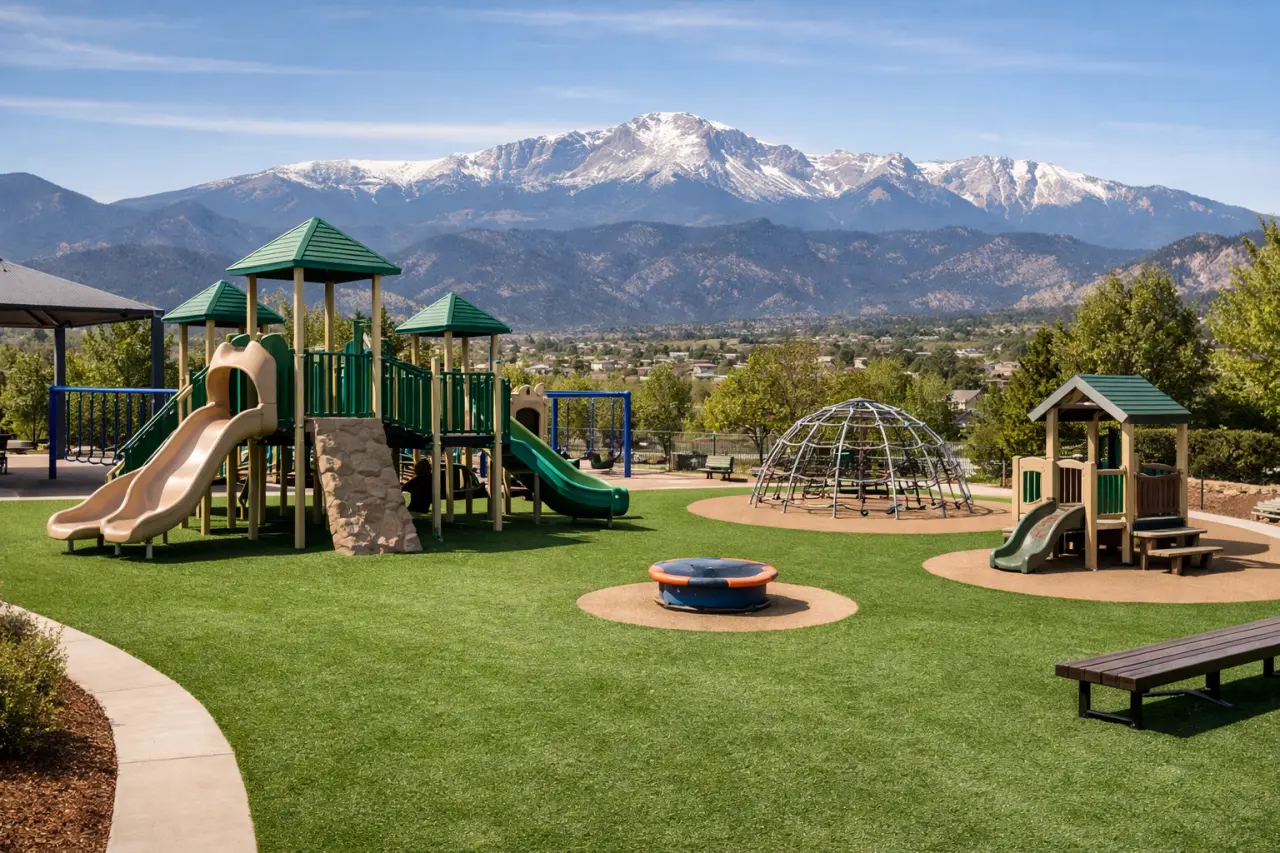
Colorado Springs Playground Turf Options for Safer Play Spaces
Colorado Springs schools, parks, and daycares have turf choices that balance fall safety, drainage, and maintenance. Here’s how local installers approach the work.
Editorial Team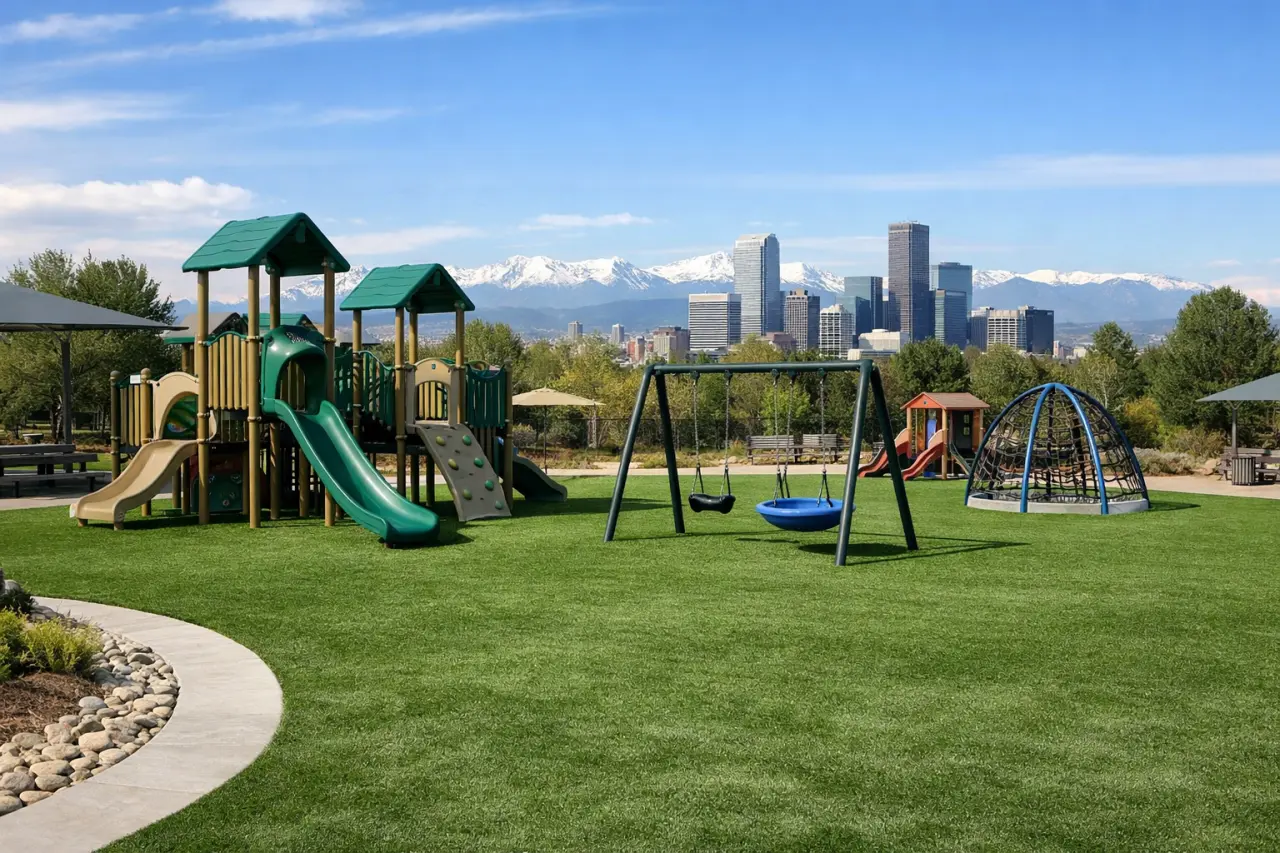
Denver Playground Turf Options for Schools, Parks, and Daycares
Denver facility managers and parents want play surfaces that cushion falls, drain well, and stay easy to maintain through busy seasons.
Editorial Team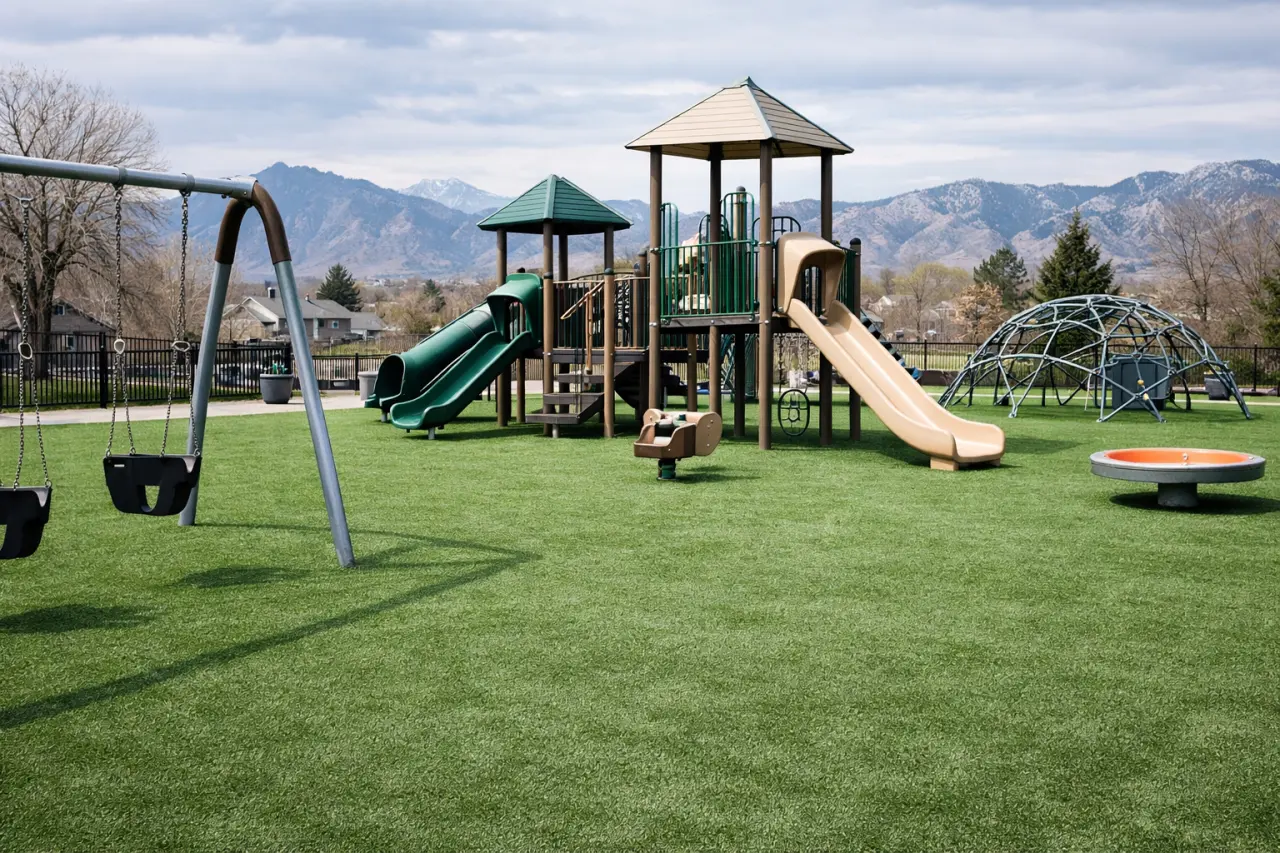
Lakewood Playground Turf: Safer Surfaces and Local Installers
Lakewood playground projects often hinge on surfacing, drainage, and maintenance. Here’s how local installers and city playgrounds point to smarter turf choices.
Editorial Team