Repair Services
Denver Artificial Turf Repair: Seam Fixes and Refreshes
Denver turf needs more than a rinse when seams lift, infill thins, or high-traffic spots flatten. Here’s how local repair-focused providers help.
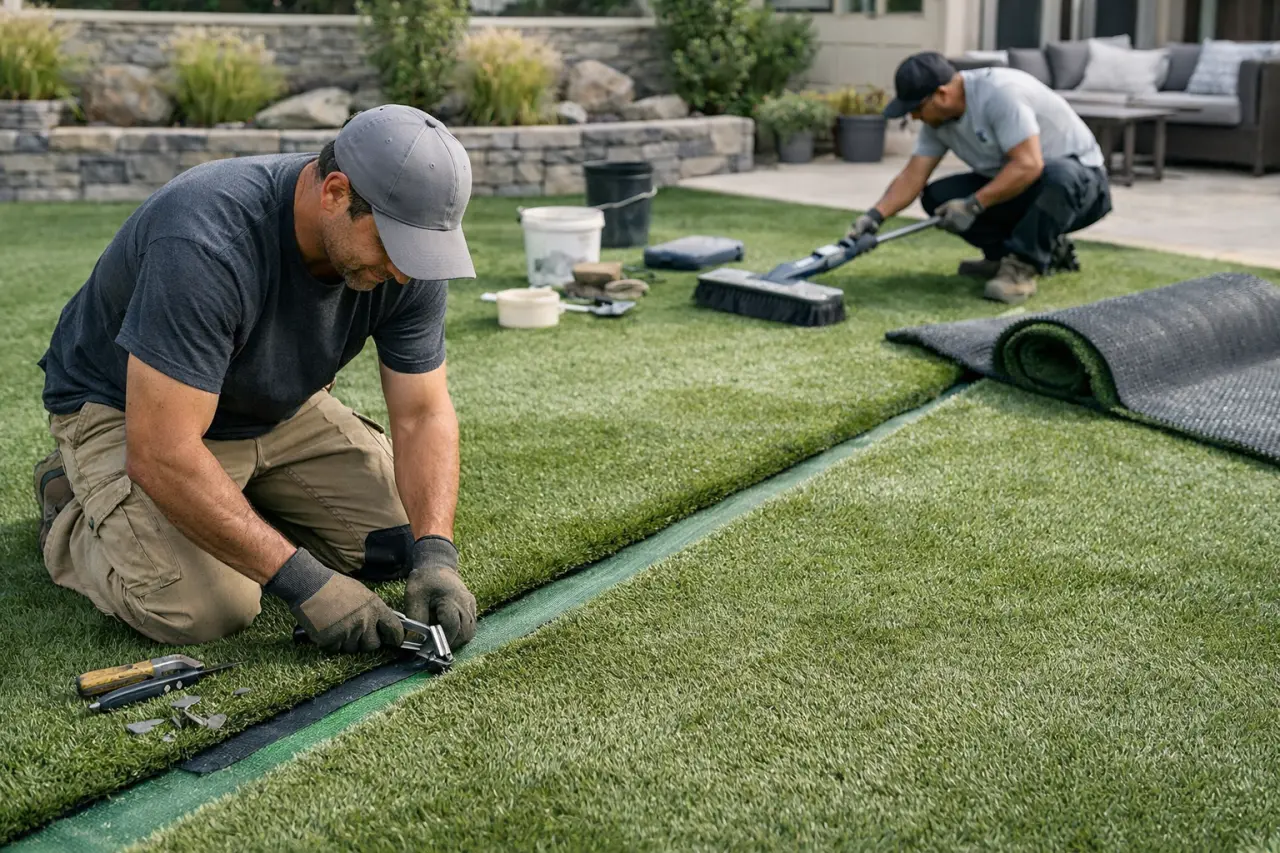
What Denver homeowners notice first
Artificial turf usually fails in small, annoying ways before it looks truly worn out. In Denver, that can mean a lifted seam after freeze-thaw cycles, flattened blades in a dog run, or infill that has migrated away from the busiest paths. Turf cleaning and restoration specialists such as Turf Revival Pros say their work includes fiber restoration, pet odor remediation, and de-compacting turf for homes across the Denver metro (Turf Revival Pros).
For many homeowners, the goal is not a full replacement. It is getting the surface back to level, tidy, and safe enough for daily use.
The repair jobs that matter most
Good turf repair work is usually narrow and practical. The most common fixes are:
- Seam repair where two turf panels start to separate
- Patch work for burns, tears, or localized damage
- Infill replacement when the turf starts to feel thin or hard
- Re-leveling in spots that have settled or compacted
- Fiber revival when the blades mat down and stop standing up
Manufacturer guidance for synthetic fields also emphasizes seam repairs and proper infill handling as part of routine care, and it warns against gluing seams or sanding turf while the surface is wet (Sporturf). That advice is especially relevant in Denver, where sudden weather swings can make timing matter.
Denver companies that fit a repair-first conversation
If you are looking for a local provider, it helps to separate companies that install turf from those that also handle restoration and maintenance. A few Denver-area businesses stand out for that broader service mix.
Turf Revival Pros focuses on cleaning, restoration, and de-compacting turf, which makes it a strong fit when the issue is matting, odor, or a surface that has lost its bounce (Turf Revival Pros).
TurFresh Denver centers its Denver work on artificial turf cleaning and says its process is built for local conditions like UV exposure, dust, wildfire ash, and winter grime (TurFresh). That kind of maintenance can extend the life of a surface before bigger repair is needed.
PlushGrass is a Denver-area installer with a warehouse north of downtown and a long-running presence in Colorado. Its HomeAdvisor profile shows it works on artificial lawns, dog areas, putting greens, playgrounds, and sports fields (PlushGrass). That broader installation background matters when repair work depends on matching existing turf.
Mile High Synthetic Turf has more than 50 years of combined experience in artificial grass products and installation in Denver and surrounding communities, according to its Angi profile (Mile High Synthetic Turf). For turf problems tied to grading, drainage, or a failing base layer, that installation experience can be useful.
Just Turf serves Denver and emphasizes artificial turf installation, irrigation, and xeriscaping, along with durable turf products for homes and businesses (Just Turf). If the repair issue is connected to the landscape around the turf, that wider scope can help.
How to judge whether the turf can be repaired
A quick visual check usually tells you a lot.
Likely repairable
- A seam has lifted, but the backing is intact
- One section is worn flat while the rest still looks healthy
- Infill is sparse in a few traffic lanes
- A pet area needs cleaning, deodorizing, or re-broadcasting of infill
More likely to need replacement
- Backing is cracked or brittle across a wide area
- Damage keeps returning in the same spot
- Multiple seams are failing at once
- The turf is faded, matted, and thinning everywhere
That line between repair and replacement often comes down to age, sunlight exposure, and how the surface was installed in the first place. Denver’s strong sun and dry climate can speed up wear on exposed areas, which is why restoration work often starts with cleaning, grooming, and infill correction before anyone talks about a full tear-out (TurFresh; Turf Revival Pros).
Questions worth asking before you book
If you are calling around Denver, ask direct questions so you know whether the company is set up for the kind of work you need.
- Do you handle seam repairs and patching, or only full installations?
- Can you match existing turf closely enough for a small repair?
- Do you clean and re-level infill as part of the visit?
- Will you inspect the base for drainage or settling problems?
- Is the fix meant for a pet area, putting green, or general lawn?
A company that understands both installation and restoration is often better positioned to explain why the damage happened and how to stop it from coming back. That is where firms like PlushGrass, Mile High Synthetic Turf, and Just Turf can be especially useful, because their public profiles show they work across both turf and broader landscape projects (PlushGrass; Mile High Synthetic Turf; Just Turf).
A Denver-centered approach to turf upkeep
In Denver, the smartest repair plan is usually the one that starts early. Once a seam opens or a traffic lane goes flat, the problem tends to spread from cosmetic nuisance to a more expensive fix. Cleaning, grooming, infill correction, and targeted patching can buy time and keep the surface usable.
For homeowners, pet owners, and anyone caring for a putting green, the best local help is usually the provider that can explain the cause of the damage, not just cover it up. That is the difference between a quick patch and a repair that lasts.
Related articles
Colorado Springs Artificial Turf Repair: Beyond the Quick Patch
For Colorado Springs turf owners, small repairs can prevent bigger problems. Here’s how local companies approach seams, infill, and worn spots.
Editorial Team
Denver Artificial Turf Repair for Seam, Infill, and Wear Fixes
Denver turf repair often starts with the small stuff: lifted seams, thin infill, and flattened fibers. Here’s how local providers approach those fixes.
Editorial Team
Lakewood Artificial Turf Repair: Keeping Surfaces Ready
In Lakewood, turf repair is often about catching small problems early. Here’s how local providers handle seams, worn spots, and maintenance.
Editorial Team