Seam Repair
Denver Seam Repair for Artificial Turf: Local Fixes to Watch
Seam issues can turn up in Denver turf after heat, freeze-thaw cycles, or heavy use. Here’s how local turf companies approach repairs that stay flat.
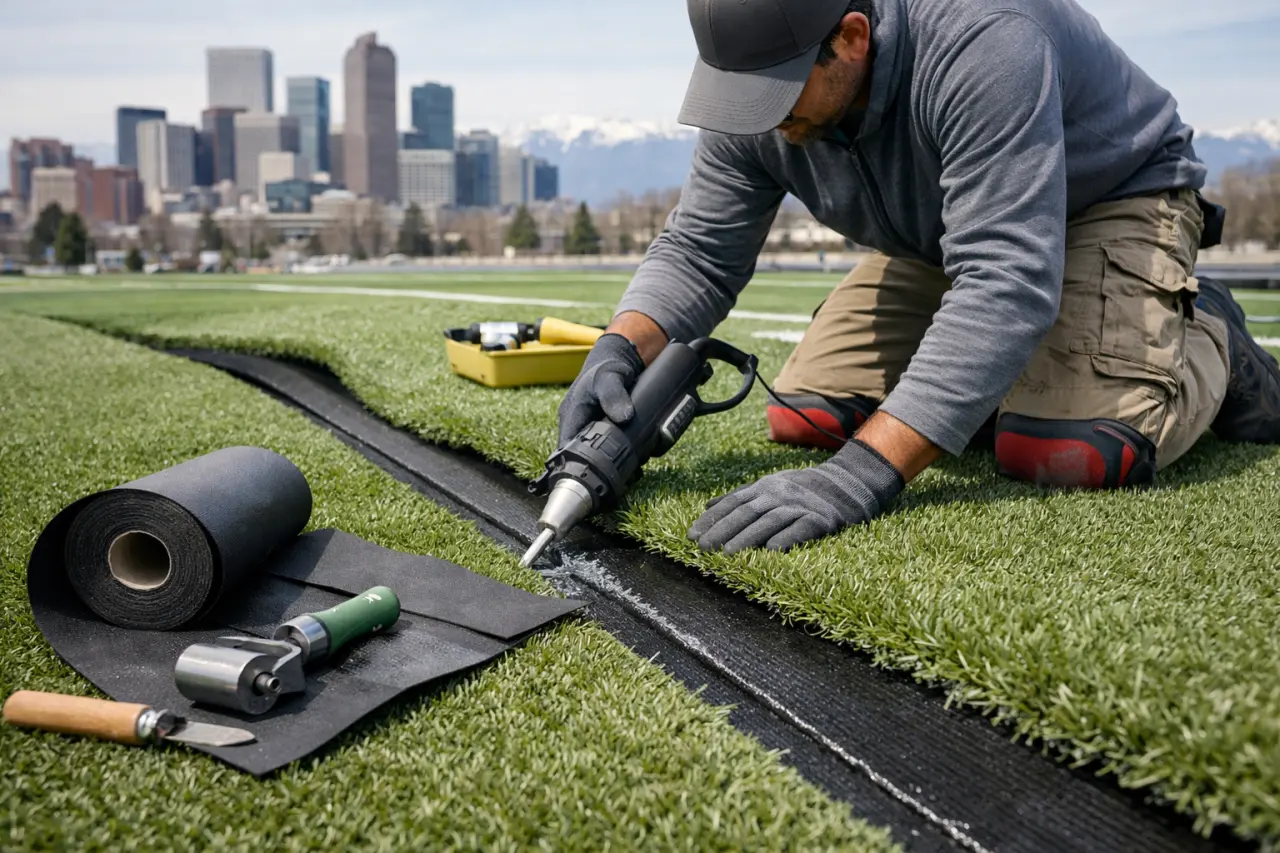
Denver seam repair starts with the right diagnosis
A lifting seam is more than a cosmetic issue. In Denver, seams can separate when the turf shifts, the base settles, or weather swings stress the installation. Once that edge opens up, the area can catch feet, collect debris, and make the whole surface look tired.
The good news: several Denver turf companies emphasize installation and maintenance details that matter for seam work, including precision cutting, seaming, seam strength, and finish quality (Timber Turf Works, Waterloo Turf Denver, FRSR Landscape). That matters because a proper repair usually depends on how the original seam was built.
What seam repair usually involves
A seam repair visit often starts by lifting the affected edge, checking the backing, and looking for stretched adhesive or damaged seam tape. If the seam was cut poorly or installed under tension, the repair can be more involved than just pressing it back down.
For Denver homeowners, the practical question is whether the problem is isolated or structural. A small opening may be a straightforward re-bonding job. Wider separation can point to base movement, poor edge finishing, or worn turf backing. Companies that advertise seam strength and seam finishing are signaling that they understand those failure points (Waterloo Turf Denver, FRSR Landscape).
Common repair steps
- Recutting the seam so the edges meet cleanly
- Replacing or resetting seam tape
- Applying turf adhesive evenly
- Weighing and curing the seam so it bonds flat
- Reworking infill where the repair area was disturbed
If the turf is old or sun-faded, matching the repaired section to the surrounding lawn can be tricky. That’s one reason some crews frame seam repair as part of a larger maintenance visit rather than a quick patch.
Denver companies worth asking about seam issues
If you want seam repair handled by a crew that already works on turf installations in Denver, start with companies that publicly describe installation and maintenance services.
Luxe Blades operates in Denver and says it has installed turf in Colorado for more than 16 years, with a Denver address listed on its site (Luxe Blades). That kind of long-term installation background can help when a seam problem is tied to the original build.
Indy Artificial Turf & Landscaping says it is locally owned and operated and serves the Denver area with artificial turf installation work (Indy Artificial Turf). If your seam issue is connected to a larger turf section, an installer that already handles full projects may be useful.
Timber Turf Works describes itself as a Denver-based turf installer and says its crew handles precision cutting and seamless seaming (Timber Turf Works). That language suggests a focus on the details that keep seams from becoming a recurring problem.
Waterloo Turf Denver highlights seam strength on its Denver page, which is a good sign if you are comparing companies for repair or replacement work (Waterloo Turf Denver). If a seam has pulled apart repeatedly, strength at the joint should be part of the conversation.
FRSR Landscape lists “professional seam & edge finishing” among its Denver turf services (FRSR Landscape). That is especially relevant when the issue shows up near borders, curves, or transitions between turf pieces.
How to tell if the seam needs repair now
A minor lip in the turf can seem harmless at first, but it tends to get worse once people walk across it or the edge starts catching wind. In Denver, where freeze-thaw cycles and dry air can both affect outdoor materials, it is smart to inspect seams after a hard winter stretch or after heavy use.
Watch for:
- Edges that curl upward
- A visible line where the backing is exposed
- Loose infill along the join
- A seam that feels soft or bouncy underfoot
- Gaps that widen after storms or watering
If the seam is also causing drainage problems or uneven footing, it is usually better to address it sooner rather than wait for a larger section to fail.
Questions to ask before you book
Before you schedule repair work, ask how the company plans to handle the joint itself, not just the surface appearance. A useful repair should leave the seam flat and bonded, not simply hidden.
Ask:
- Will you lift and reset the seam, or cover it?
- Do you replace seam tape when needed?
- How do you handle damaged backing?
- Can you match the repair to existing infill and pile direction?
- Do you also inspect nearby edges or transitions?
These questions help you separate a true seam repair from a quick cosmetic touch-up.
A practical Denver approach
For most Denver property owners, the best seam repair choice is the one that solves the cause, not just the symptom. That may mean calling an installer with strong seaming language on its site, or choosing a crew that can evaluate whether the problem is localized or tied to the whole panel layout (Timber Turf Works, Waterloo Turf Denver, FRSR Landscape).
If the seam is small and the base is stable, the fix may be straightforward. If the joint keeps opening, the repair should go deeper. In Denver, that difference is what separates a short-term patch from turf that stays neat through another season.
Related articles
Lakewood Seam Repair for Artificial Turf: Fixes That Hold
Seam failures can make turf look tired fast. Here’s how Lakewood homeowners can compare repair options and know when a patch is enough.
Editorial Team
Lakewood Seam Repair for Artificial Turf: Local Service Notes
Seam repair can make or break an artificial lawn. Here’s how Lakewood homeowners can compare local turf companies and spot a lasting fix.
Editorial Team
Fort Collins Seam Repair for Artificial Turf: Who to Call
Seam gaps in synthetic grass need the right tools and timing. Here’s how Fort Collins property owners can think about repair, maintenance, and local help.
Editorial Team