Erosion Control
Colorado Springs Artificial Turf for Erosion Control Guide
Colorado Springs homeowners use artificial turf for slopes, dog runs, and tight yards where runoff is a problem. Here’s how local installers and code rules fit together.
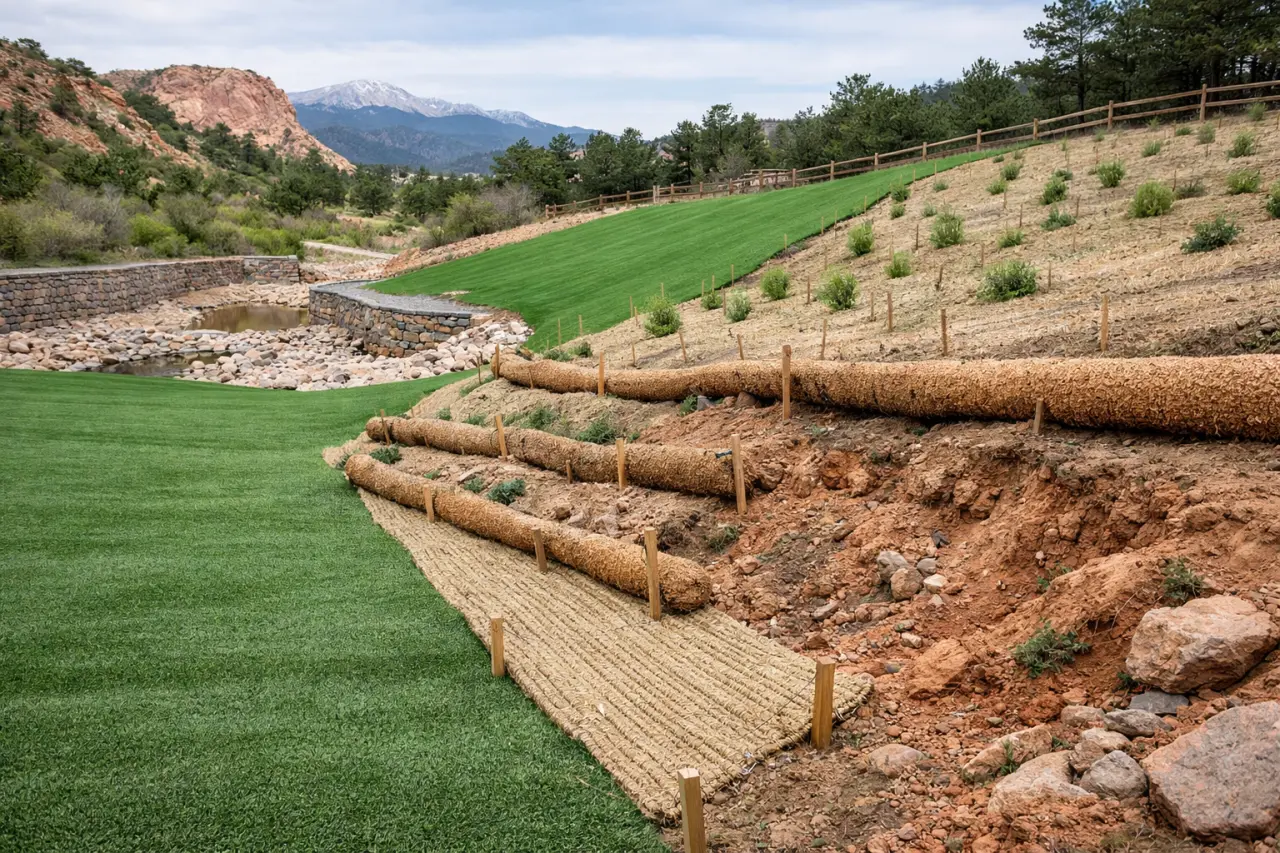
Artificial turf as an erosion-control choice in Colorado Springs
In Colorado Springs, erosion control is not just a construction-term concern. The city’s stormwater rules make clear that land-disturbing work can require approved grading and erosion control plans, and that unmanaged sediment can clog drains and affect waterways (City of Colorado Springs; City of Colorado Springs). For homeowners, that usually means paying close attention to runoff, bare soil, and slope conditions before a new landscape goes in.
Artificial turf can be part of that conversation when the goal is to reduce exposed soil, improve surface stability, and make a yard easier to maintain. The key is choosing a product and an installation method that fit the site, especially on slopes or in drainage-prone spaces. The city’s landscape policy says artificial turf in required landscape areas must be rated for commercial use, installed to manufacturer specifications, and shown with details for drainage and edge treatment; it also says turf should not be installed directly on top of concrete or asphalt (City of Colorado Springs).
Local companies that come up for this work
A few Colorado Springs businesses stand out when you are looking at turf through an erosion-control lens, not just as a lawn upgrade.
Front Range Turf says it serves Colorado Springs with synthetic and artificial turf installation for residential and commercial properties (Front Range Turf). That makes it relevant if your project is a side yard, a dog run, or a sloped back yard where you want a stable surface and less exposed dirt.
Peak Turf Solutions describes itself as a full-service artificial turf company in Colorado Springs and says its installation process includes removing existing landscape, prepping and compacting the sub-base, installing a drainage layer, seaming and securing the turf, and applying infill (Peak Turf Solutions; Peak Turf Solutions). Those steps matter for erosion control because the base, drainage, and perimeter anchoring are what help the surface stay put during rain and routine use.
CN Landscaping installs artificial turf in Colorado Springs and emphasizes practical design, correct drainage, and materials suited to local elevation and drought conditions (CN Landscaping; CN Landscaping). If your yard has runoff patterns, a turf installer who talks about drainage upfront is usually the better fit than one focused only on appearance.
Turf Master lists drainage and erosion control among its services and says it has been making Colorado Springs beautiful since 1980 (Turf Master). That broader landscape background can be useful when turf is only one part of a larger slope-stabilization plan.
D&M Environmental describes itself as a landscaping, decking, fencing, and erosion control company based in Colorado Springs (D&M Environmental). If your project involves a difficult grade, edging, retaining features, or other site work around turf, that kind of mix can be helpful.
What to ask before you sign a turf contract
Artificial turf can help reduce exposed soil, but it is not automatically an erosion fix. In Colorado Springs, the best results usually come from a properly prepared base and a design that manages water rather than trapping it. A good installer should be ready to talk through:
- how the existing grade will be handled
- whether the slope needs additional stabilization before turf goes in
- where runoff will go during heavy rain
- what edge restraints or borders will keep the turf from creeping or lifting
- how the drainage layer is built
- what maintenance is needed to keep seams, infill, and edges in place
That matters because the city’s own code requires artificial turf details for drainage and edge treatment, and because erosion problems tend to show up first at the borders of a project, not in the center (City of Colorado Springs).
When turf makes sense, and when it doesn’t
Artificial turf can be a smart option where grass struggles to establish, especially on compacted or difficult slopes. It can also work well for dog runs, narrow strips beside driveways, and small side yards where irrigation and mowing are awkward.
But if the goal is to meet broader landscape requirements or protect a more serious drainage issue, turf may need to be paired with other measures. Colorado Springs’ stormwater guidance makes clear that erosion and sediment control are part of site planning, not an afterthought (City of Colorado Springs). In practice, that may mean combining turf with grading fixes, gravel borders, retaining walls, or plantings that help hold soil in place.
The city’s landscape policy also reflects that turf is only one tool among many. It notes that artificial turf can be allowed in limited portions of required landscape areas when the site conditions make other non-living materials difficult to maintain, but it still has to be integrated into the larger landscape plan (City of Colorado Springs).
A practical way to choose the right installer
For Colorado Springs homeowners, the right turf contractor is usually the one who starts with drainage and slope, not color samples.
A strong first conversation sounds like this:
- How will you prepare the base on my property?
- What do you do differently for sloped or runoff-prone areas?
- How do you handle edging and seams?
- Will the finished surface help keep soil from washing out at the margins?
- Can you explain how your installation fits local code and drainage conditions?
If a company can answer those questions clearly, it is more likely to deliver a turf project that looks good and also stands up to the realities of Colorado Springs weather. If the answers stay vague, that is usually a sign to keep looking.
Bottom line for Colorado Springs yards
Artificial turf can be a practical erosion-control tool in Colorado Springs when it is used with the right base preparation, drainage design, and edge treatment. Local companies such as Front Range Turf, Peak Turf Solutions, CN Landscaping, Turf Master, and D&M Environmental give homeowners options that range from turf-only installs to broader site work (Front Range Turf; Peak Turf Solutions; CN Landscaping; Turf Master; D&M Environmental). For a yard with slope, runoff, or chronic bare spots, that combination can make the difference between a surface that merely looks finished and one that actually holds up.
Related articles
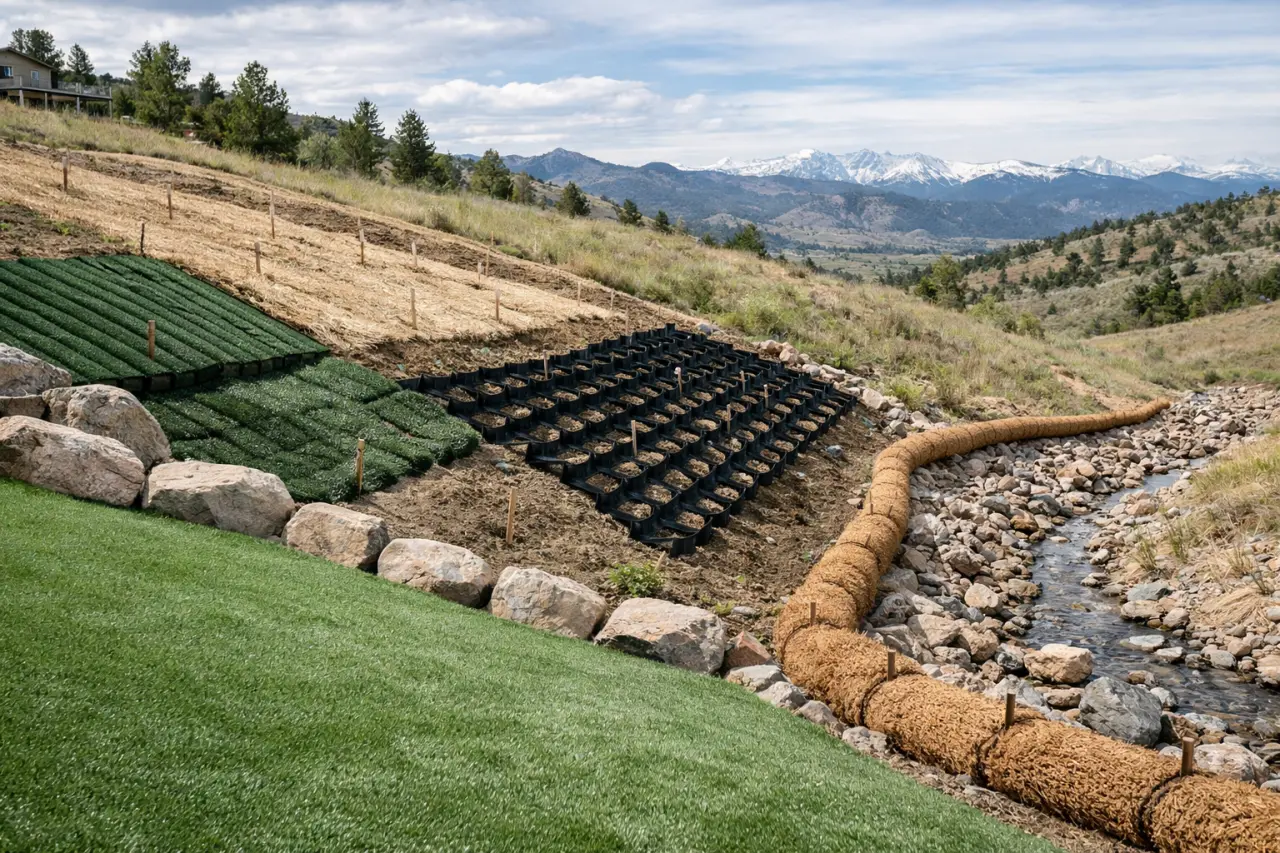
Denver Artificial Turf Erosion Control: Local Installation Options
Denver property owners looking to steady slopes or reduce washout can compare turf-focused installers and erosion-control specialists that work locally.
Editorial Team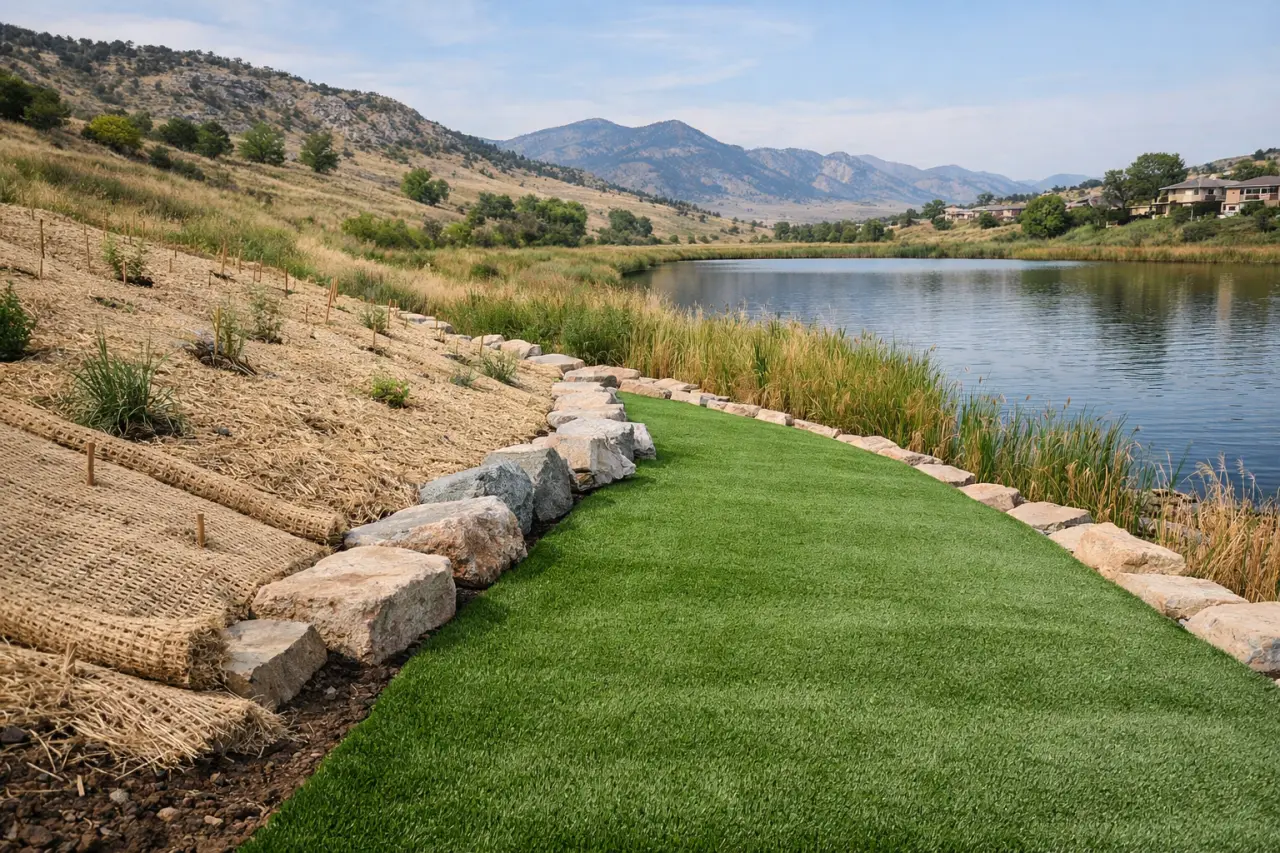
Lakewood Artificial Turf for Erosion Control: Practical Local Picks
Lakewood homeowners and property managers can use artificial turf to help steady slopes, trim runoff, and simplify upkeep on tricky ground.
Editorial Team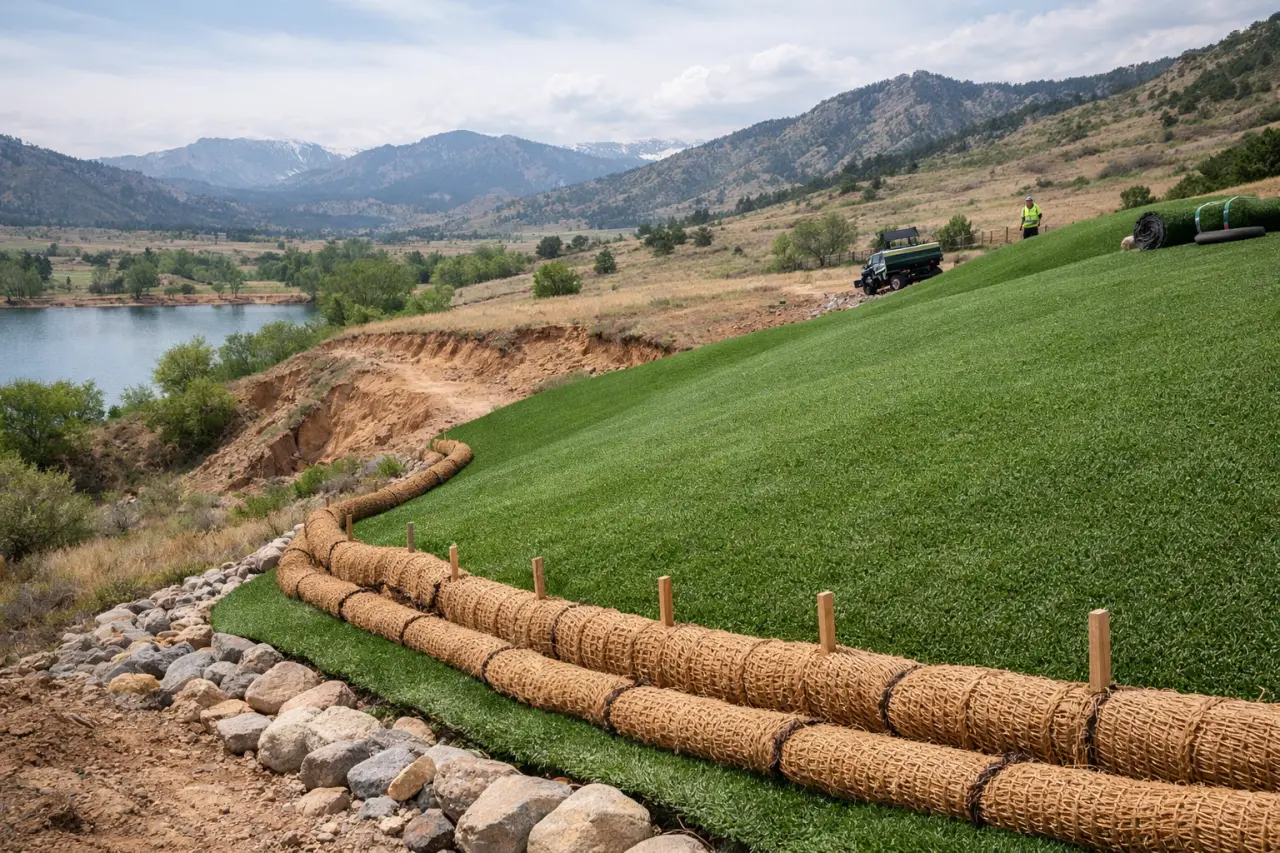
Fort Collins Artificial Turf for Erosion Control: Local Picks
Fort Collins homeowners use artificial turf to tame slopes, protect bare spots, and cut down on muddy runoff. Here’s how local installers approach the job.
Editorial Team