Erosion Control
Colorado Springs Artificial Turf for Erosion Control: Local Choices
Colorado Springs homeowners use artificial turf to steady slopes, cut runoff, and simplify maintenance. Here’s how local installers approach the job.
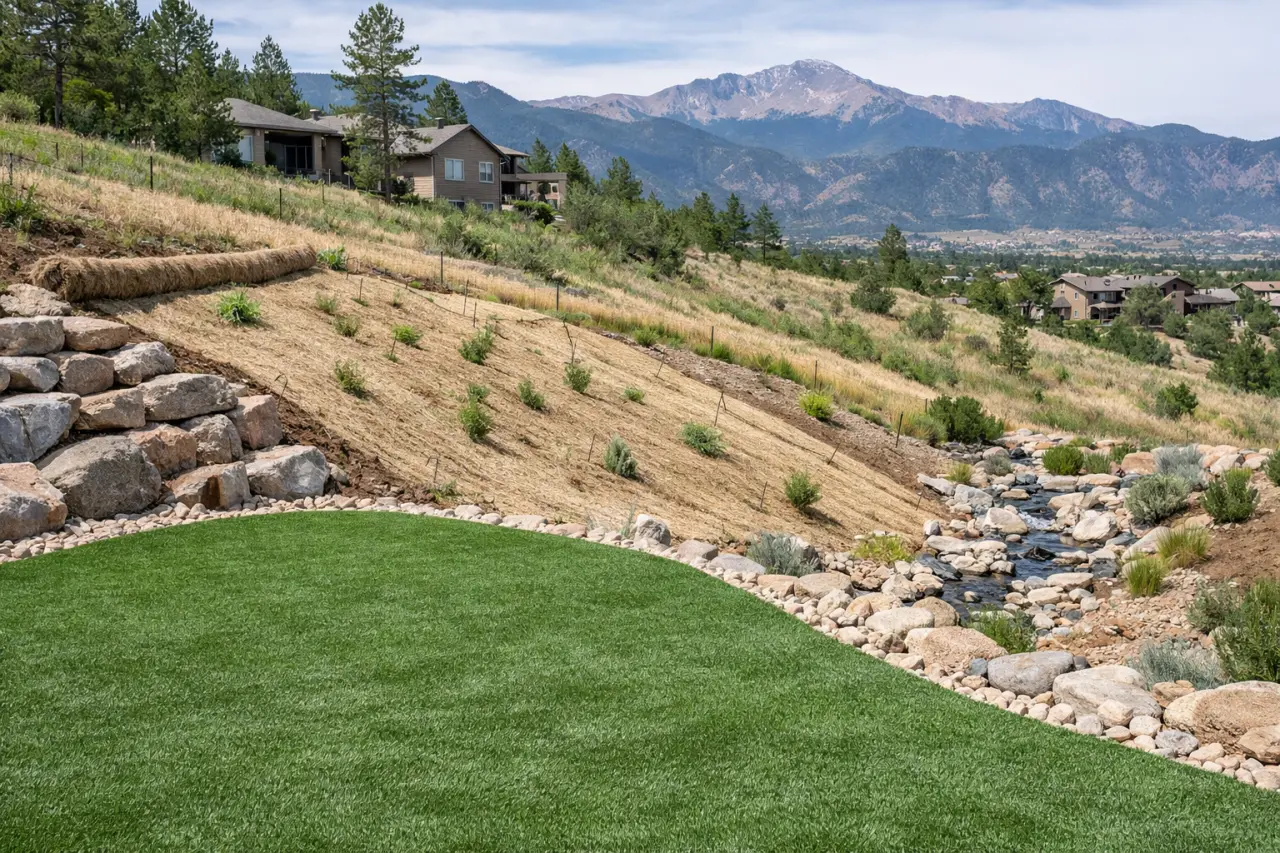
Artificial turf on Colorado Springs slopes
In Colorado Springs, erosion control usually starts with understanding the ground itself. The city requires a Grading and Erosion Control permit before many land-disturbing activities, and its stormwater criteria focus on sediment control and erosion control during construction (City of Colorado Springs; City of Colorado Springs). That matters when turf is going onto a slope, a wash-prone side yard, or a space that needs more than a cosmetic upgrade.
Artificial turf can help in those settings because it covers exposed soil and creates a more stable surface once the base is built correctly. But the turf itself is only part of the answer. Drainage, compaction, edging, and the transition from the turf field to the surrounding grade determine whether the finished area stays put through snowmelt and summer storms.
Two local approaches that fit erosion-prone ground
Colorado Springs installers tend to fall into two useful buckets for this kind of work: specialists in synthetic turf and landscape contractors that also handle erosion control on the broader site.
Dominion Turf focuses on artificial grass installation in Colorado Springs and highlights drainage as a major part of turf performance in local weather. The company notes that snowmelt, sudden rain, and freeze-thaw cycles can affect drainage, especially on sloped areas that wash out each spring (Dominion Turf; Dominion Turf). That makes it a natural fit for yards where the goal is to replace bare soil with a surface that handles runoff better.
Taravella’s Hydro Turf leans more explicitly into erosion control and land reclamation. Its Colorado Springs erosion-control page describes native seed work, while a related post explains how its teams use site assessment, erosion-control blankets, and biodegradable mats to help stabilize soil during installation (Taravella’s Hydro Turf; Taravella’s Hydro Turf). Even though that material is not turf-specific in the narrowest sense, the company’s approach is useful for homeowners who want a more complete slope plan, not just a surface swap.
What a good turf-and-erosion plan should include
For a Colorado Springs property, the best installations usually start with the ground, not the product. A strong plan often includes:
- A slope review. If water is moving quickly across the area, the installer should identify where it starts and where it exits.
- Base preparation. Turf works better when the soil is graded, compacted, and built with drainage in mind.
- Edge control. Perimeter anchoring helps keep turf from lifting in wind or shifting during freeze-thaw cycles.
- Water management. Drainage layers, infill choices, and outlet points should match the site.
- Transition treatment. Bare soil next to turf can still erode, so adjacent areas may need rock, planting, or another stabilizing layer.
CN Landscaping’s Colorado Springs turf page echoes some of those practical concerns, noting the importance of secure perimeter anchoring and heavier infill in a windy, high-elevation environment (CN Landscaping). That kind of detail matters on exposed lots and open backyards where the wind can work against the installation.
Where turf helps most
Artificial turf makes the most sense in Colorado Springs when erosion pressure and maintenance pressure overlap. A few common examples:
- a side yard where rainwater repeatedly cuts channels into bare dirt
- a dog run that turns to mud in spring
- a play area at the bottom of a slope
- a compact courtyard where irrigation is impractical
- a patch near hardscape that keeps shedding soil onto walkways
In those cases, the value of turf is less about looking manicured and more about removing exposed soil from the equation. That can reduce mud tracking, keep runoff from carrying loose dirt, and make the area more usable after storms.
How city rules affect the job
Before any grading or major soil work, Colorado Springs residents should check whether the project triggers a permit. The city’s GEC rules apply to clearing, excavation, filling, and similar land-disturbing work, and its stormwater criteria are built around keeping sediment and erosion under control during construction (City of Colorado Springs; City of Colorado Springs). If a turf project includes regrading or drainage changes, that can matter as much as the turf product itself.
The city’s landscape code also shows that artificial turf can be part of approved landscape solutions, but it sits alongside broader requirements for landscape design and maintenance rather than replacing them entirely (City of Colorado Springs; City of Colorado Springs). In practice, that means turf should be treated as one piece of a site plan, especially when erosion is the reason for the project.
A practical way to choose an installer
If you are comparing companies in Colorado Springs, ask each one how it handles slope stability and drainage. The right answer should be specific to your ground, not a generic sales pitch.
Look for an installer that can explain:
- how the base will be built
- what keeps water from pooling under the turf
- how edges will be secured
- whether adjacent bare ground also needs stabilization
- whether the project could require city review before work begins
For erosion control, the best turf installation is the one that leaves fewer loose edges, fewer drainage surprises, and less exposed soil than what was there before. In Colorado Springs, that usually means choosing a company that thinks like both a turf installer and a site-stability contractor.
Related articles
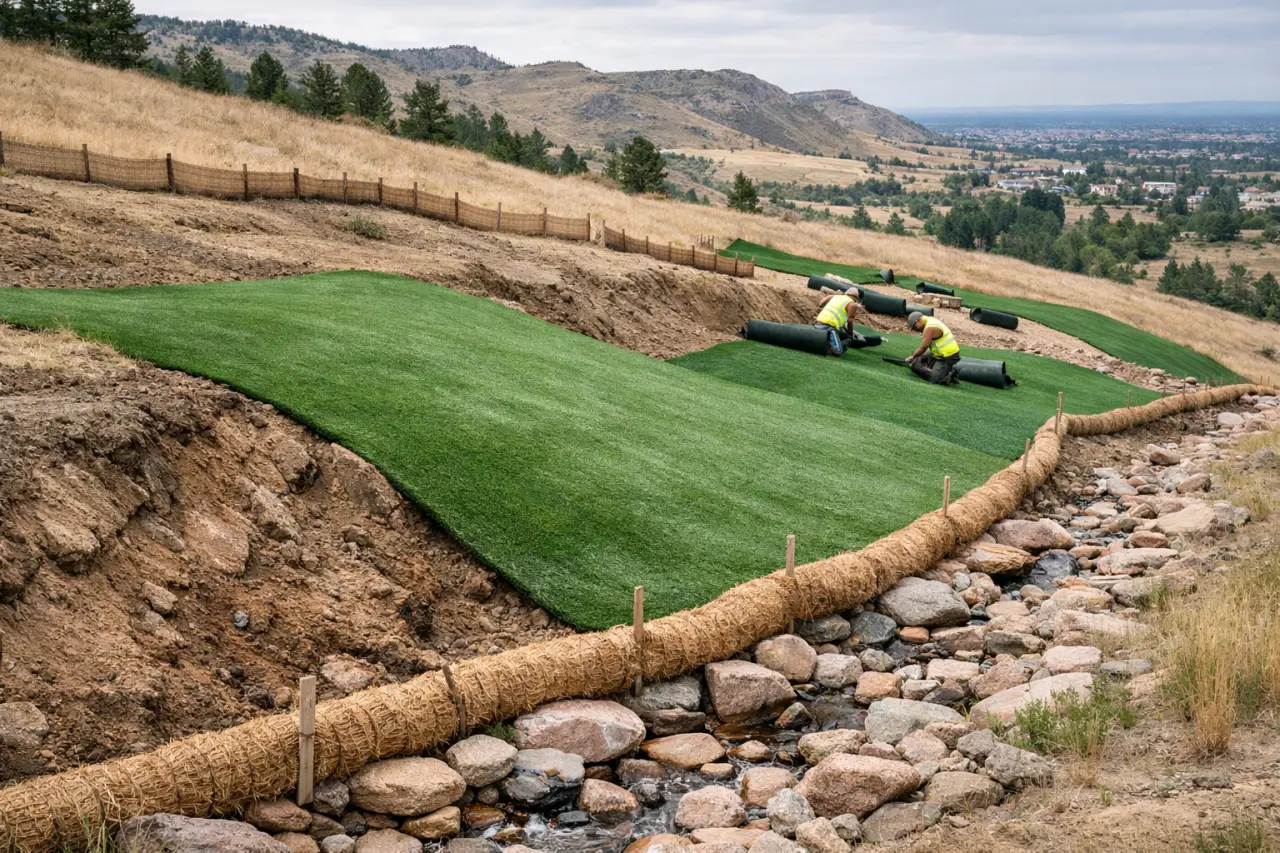
Denver Artificial Turf for Erosion Control: Local Installers
Denver yards need more than a green look; they need surfaces that stay put on slopes, borders, and high-traffic spots. Here are local turf companies to compare.
Editorial Team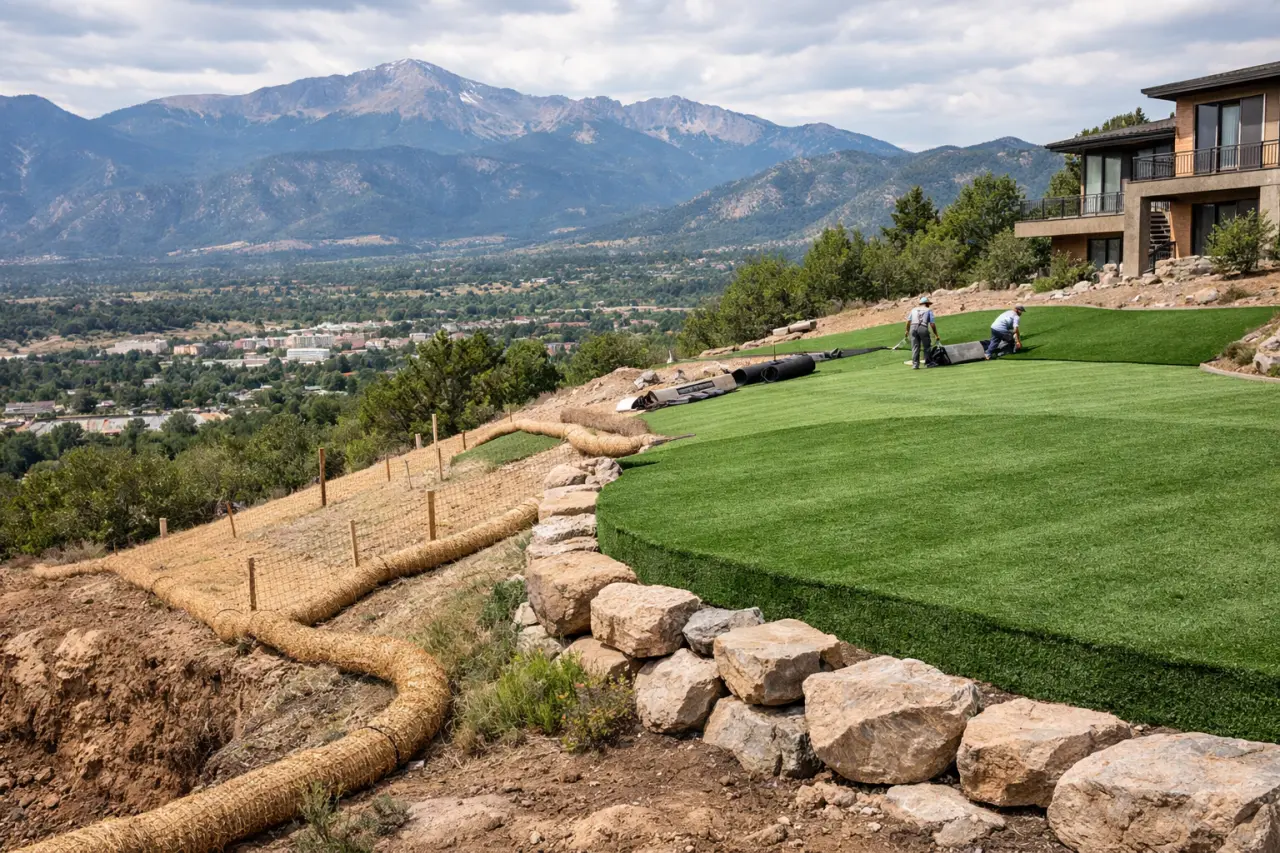
Colorado Springs Artificial Turf for Erosion Control: Local Picks
Looking for erosion-minded turf work in Colorado Springs? These local companies pair artificial turf with drainage, grading, and slope-aware installation.
Editorial Team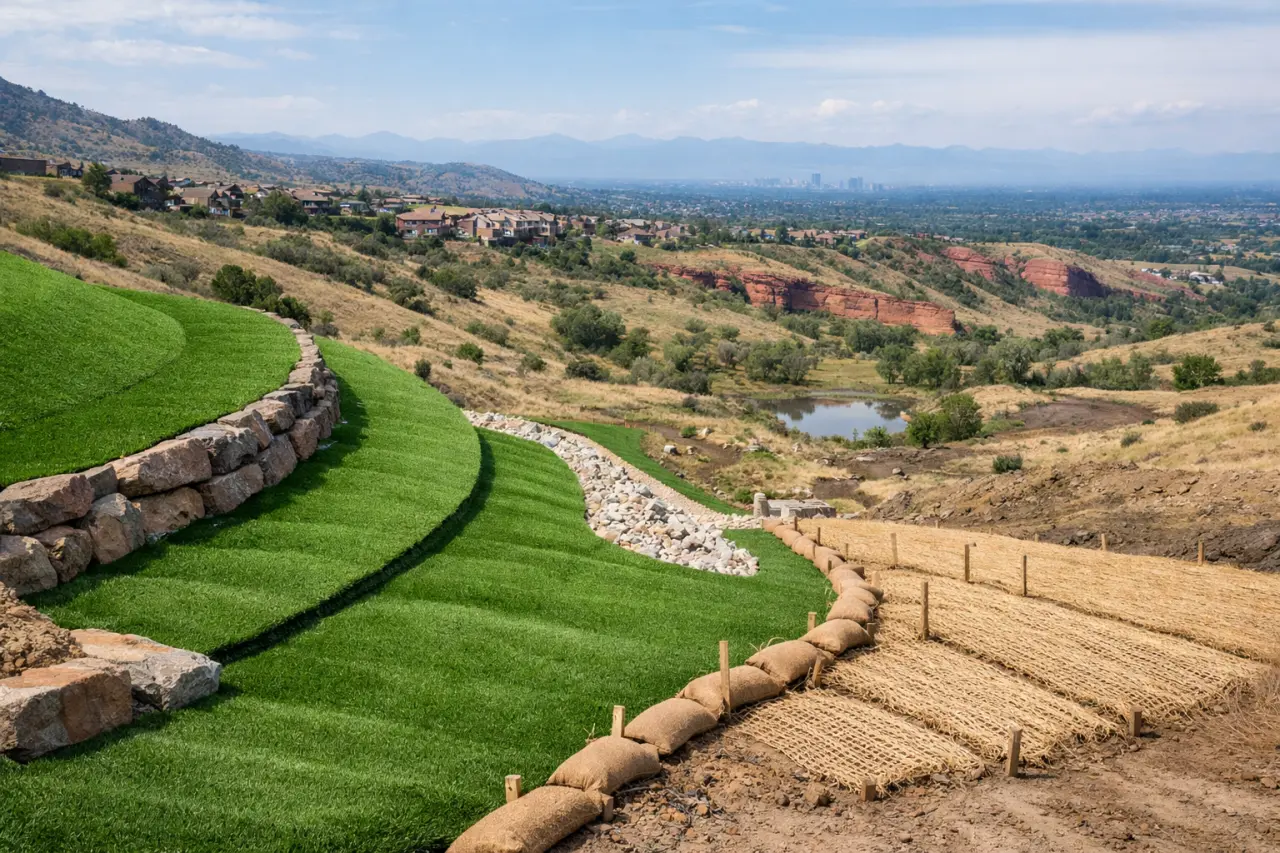
Denver Artificial Turf for Erosion Control: Design Notes
Denver yards need tough, low-water surfaces that hold soil in place. Here’s how local turf installers approach slopes, dog runs, and drainage-heavy spaces.
Editorial Team