Erosion Control
Denver Artificial Turf for Erosion Control: Local Installers
Denver yards need more than a green look; they need surfaces that stay put on slopes, borders, and high-traffic spots. Here are local turf companies to compare.
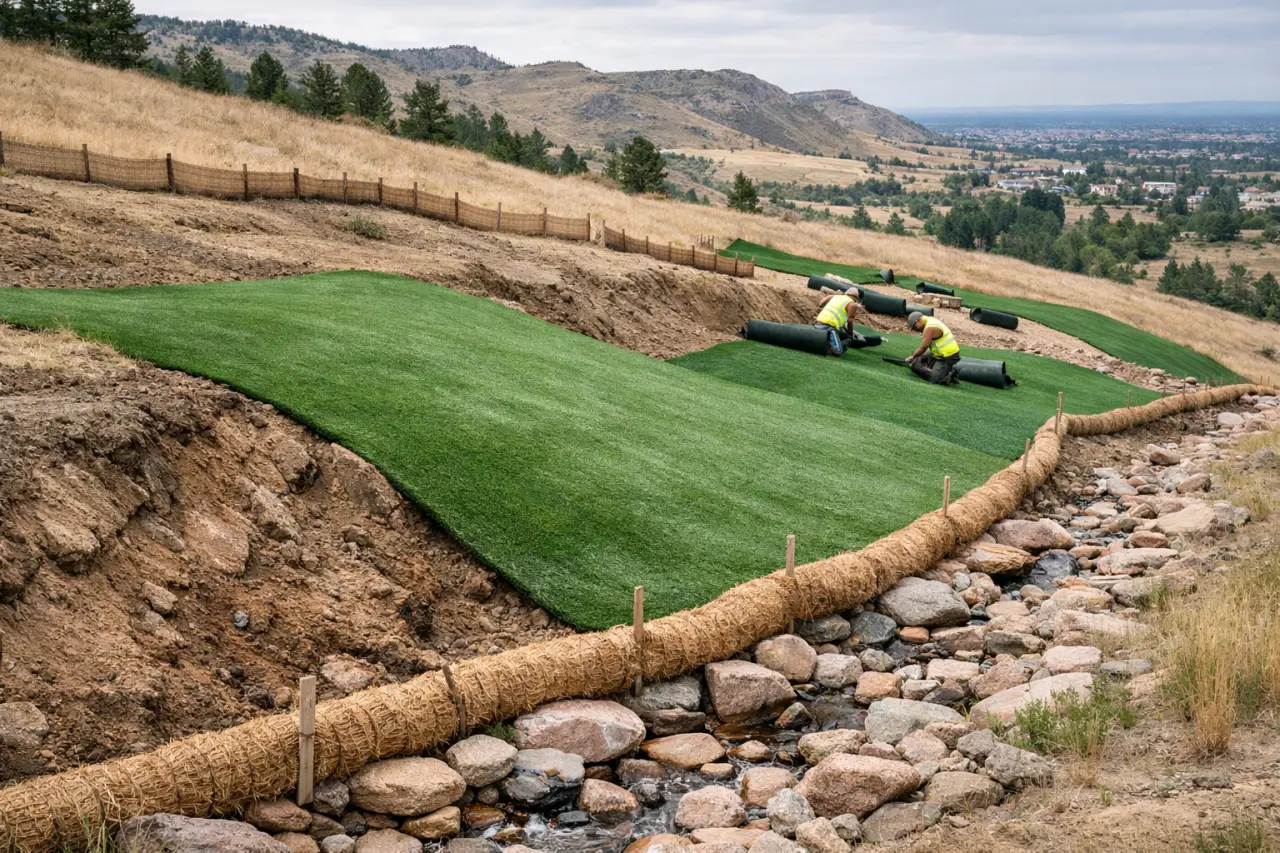
Why artificial turf comes up in erosion control
In Denver, erosion control is often about solving a simple problem: keeping loose soil from moving when wind, runoff, or foot traffic hit a bare spot. Artificial turf can help by covering exposed ground and creating a more stable surface when it’s paired with proper grading, drainage, and base prep. Denver Water has also long promoted xeriscaping ideas in response to the region’s dry climate, which is part of why many homeowners think beyond traditional lawn grass when they want a lower-water landscape. (Denver Water)
That said, turf is not a shortcut. If a slope is poorly prepared or drainage is ignored, the surface can still fail. Denver’s own public works guidance for green infrastructure emphasizes erosion and sedimentation control during excavation and installation, which is a good reminder that the ground underneath matters as much as the finished surface. (City and County of Denver Public Works)
Denver companies worth comparing
If you’re looking at artificial turf with erosion control in mind, the best local conversations start with companies that talk about installation quality, drainage, and landscape prep—not just appearance.
Frontier Turf serves the Denver metro and Front Range with artificial turf installation and landscape products, and says it backs its work with industry-leading workmanship warranties. That makes it a practical name to call when you want to ask how a project will handle runoff, edging, and sloped yards. (Frontier Turf)
Timeless Grass & Greens describes itself as a family-owned artificial grass installer serving Denver-area cities, with pet turf, putting greens, and commercial solutions. For erosion-minded projects, the useful question is how the company handles base building and drainage around patios, play areas, and problem spots where soil washes out. (Timeless Grass & Greens)
Mile High Turfscape says it handles the design, installation, maintenance, and repair of synthetic turf and serves the Denver metro and surrounding areas. That broader service list matters if you want a firm that can not only install turf but also come back later to address seams, edges, or settling that can expose soil again. (Mile High Turfscape)
PlushGrass describes itself as Denver and Colorado’s artificial grass installation expert. The company’s background in turf installation gives it credibility for homeowners who want a cleaner surface over a bank, side yard, or other exposed area where erosion has been a recurring issue. (PlushGrass)
M. Brothers Landscape & Hardscape offers artificial turf alongside hardscape and xeriscape services. That combination can be useful when erosion control depends on more than turf alone, since retaining walls, borders, and hard edges often help keep a landscape from shedding soil downhill. (M. Brothers Landscape & Hardscape)
What to ask before you hire
When you’re comparing Denver installers for erosion control, focus less on the “grass look” and more on the ground structure.
Ask these questions:
- How do you prepare slopes so the turf stays anchored?
- What base materials do you use to improve drainage?
- How do you keep edges from lifting and exposing soil?
- Do you recommend turf alone, or turf plus hardscape, edging, or rock?
- What maintenance is needed to keep drainage working over time?
Those questions matter because erosion control is a systems problem. A turf surface can help stabilize bare ground, but only if the installer understands drainage, subgrade conditions, and the way water moves across the site. Denver’s public guidance on landscape and green infrastructure makes the same point by stressing proper excavation, bedding, and installation practices. (City and County of Denver Public Works)
Where artificial turf fits best
In Denver, artificial turf tends to make the most sense where the soil is already under stress:
- narrow side yards that shed mud
- small slopes that are hard to irrigate evenly
- pet runs that get worn down fast
- play areas where repeated traffic strips away cover
- transition zones between patios, paths, and planting beds
It’s especially useful when the goal is to cover exposed soil quickly and reduce the chance of washout between rain events. But it works best as part of a broader landscape plan, not as a stand-alone fix. If the site needs better grading, a drain line, or retaining elements, those should happen first.
A practical Denver approach
For most homeowners, the smartest move is to get one or two turf bids and compare them against a more landscape-heavy bid. A company like Frontier Turf may be a good fit if you want a turf-first install, while M. Brothers Landscape & Hardscape may be better if your erosion issue is tied to slope, borders, or a larger yard redesign. (Frontier Turf; M. Brothers Landscape & Hardscape)
The key is to match the installer to the problem. If your issue is mostly bare soil and worn lawn, turf can help. If water is moving downhill or pooling in the wrong place, you need an installer who talks plainly about drainage and site prep before they talk about color and blade height.
Bottom line
Denver homeowners looking at artificial turf for erosion control should compare companies based on installation method, drainage awareness, and follow-up support. The right installer can help stabilize exposed ground and reduce washout, but only if the project starts with the soil, not the surface. (Timeless Grass & Greens; Mile High Turfscape; PlushGrass)
Related articles
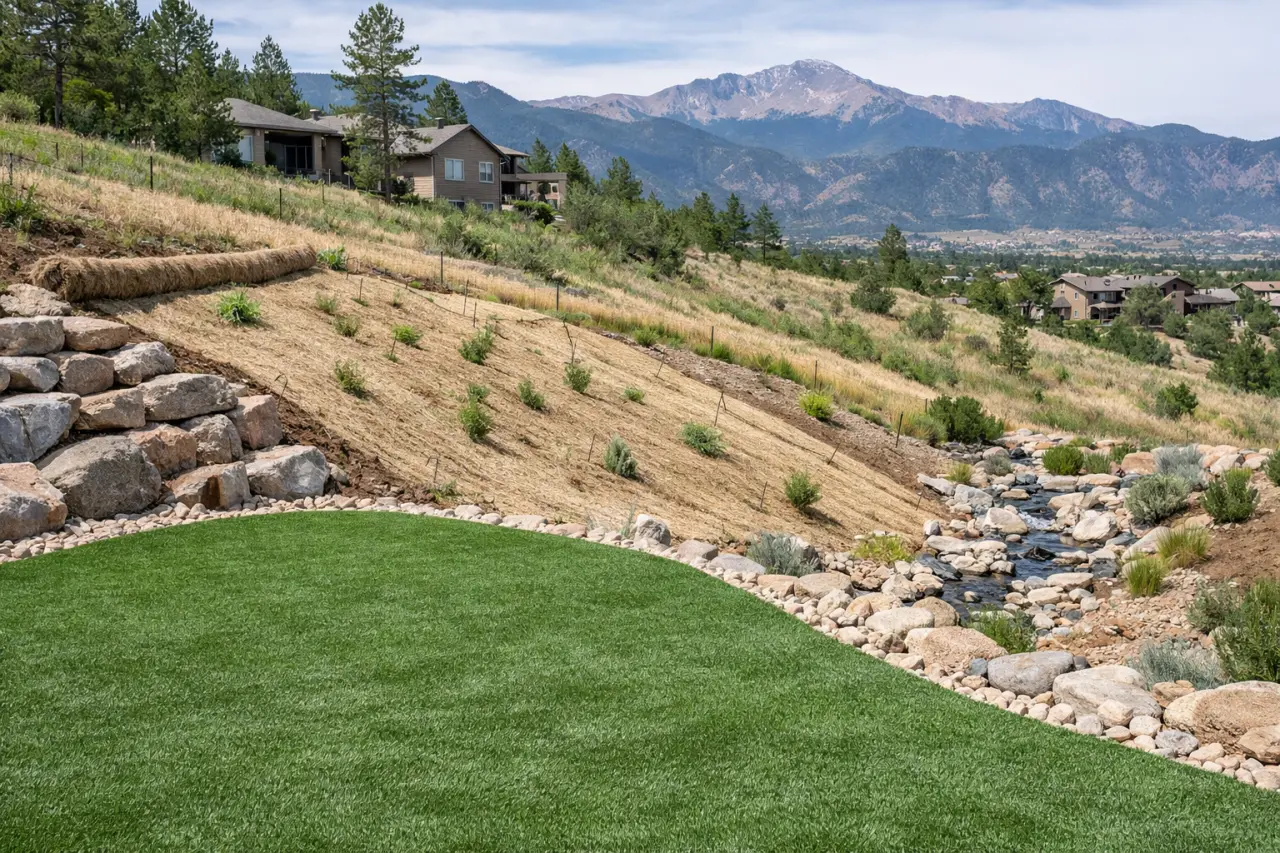
Colorado Springs Artificial Turf for Erosion Control: Local Choices
Colorado Springs homeowners use artificial turf to steady slopes, cut runoff, and simplify maintenance. Here’s how local installers approach the job.
Editorial Team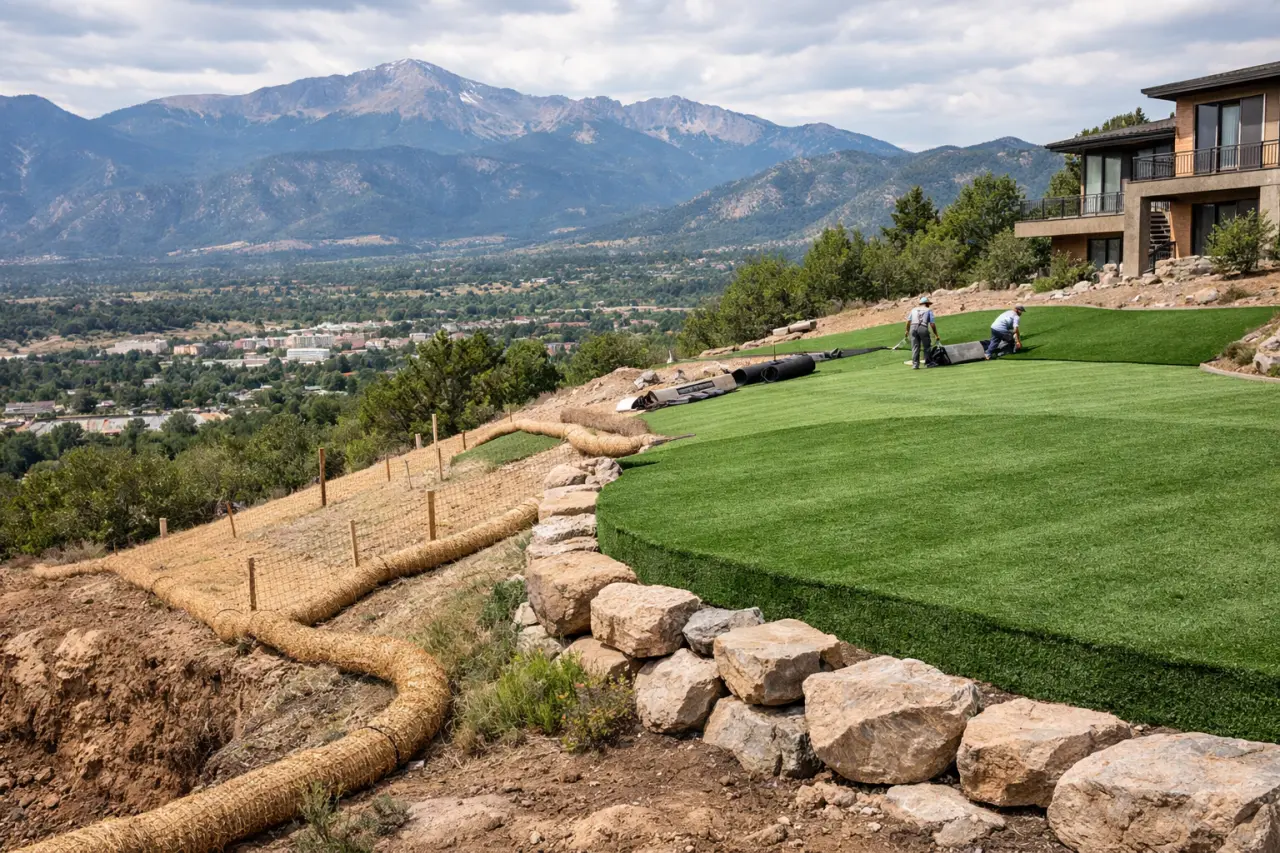
Colorado Springs Artificial Turf for Erosion Control: Local Picks
Looking for erosion-minded turf work in Colorado Springs? These local companies pair artificial turf with drainage, grading, and slope-aware installation.
Editorial Team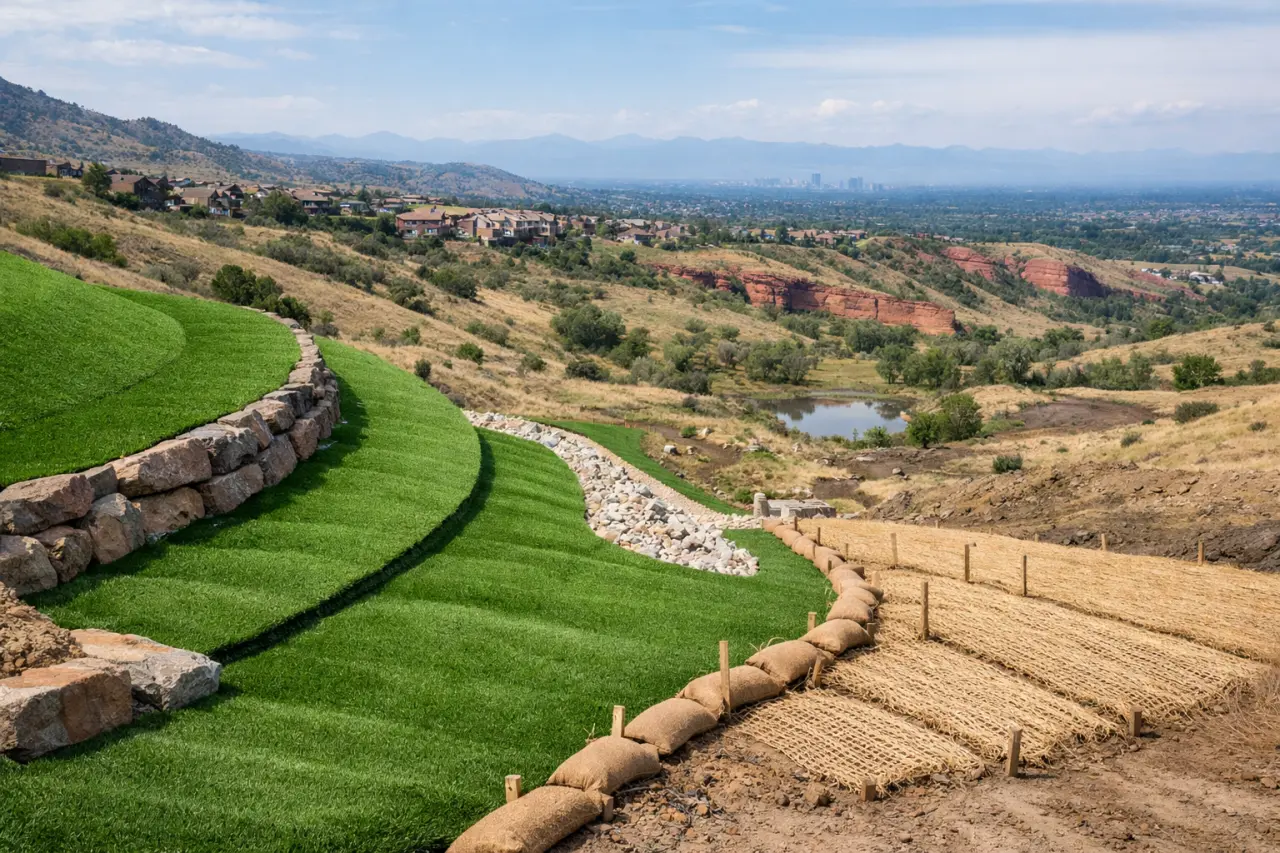
Denver Artificial Turf for Erosion Control: Design Notes
Denver yards need tough, low-water surfaces that hold soil in place. Here’s how local turf installers approach slopes, dog runs, and drainage-heavy spaces.
Editorial Team