Erosion Control
Colorado Springs Artificial Turf for Erosion Control: Local Installers
Colorado Springs homeowners use artificial turf to cut runoff, steady slopes, and simplify yard care. Here are local installers and what to ask before you compare bids.
Why erosion control and artificial turf go together in Colorado Springs
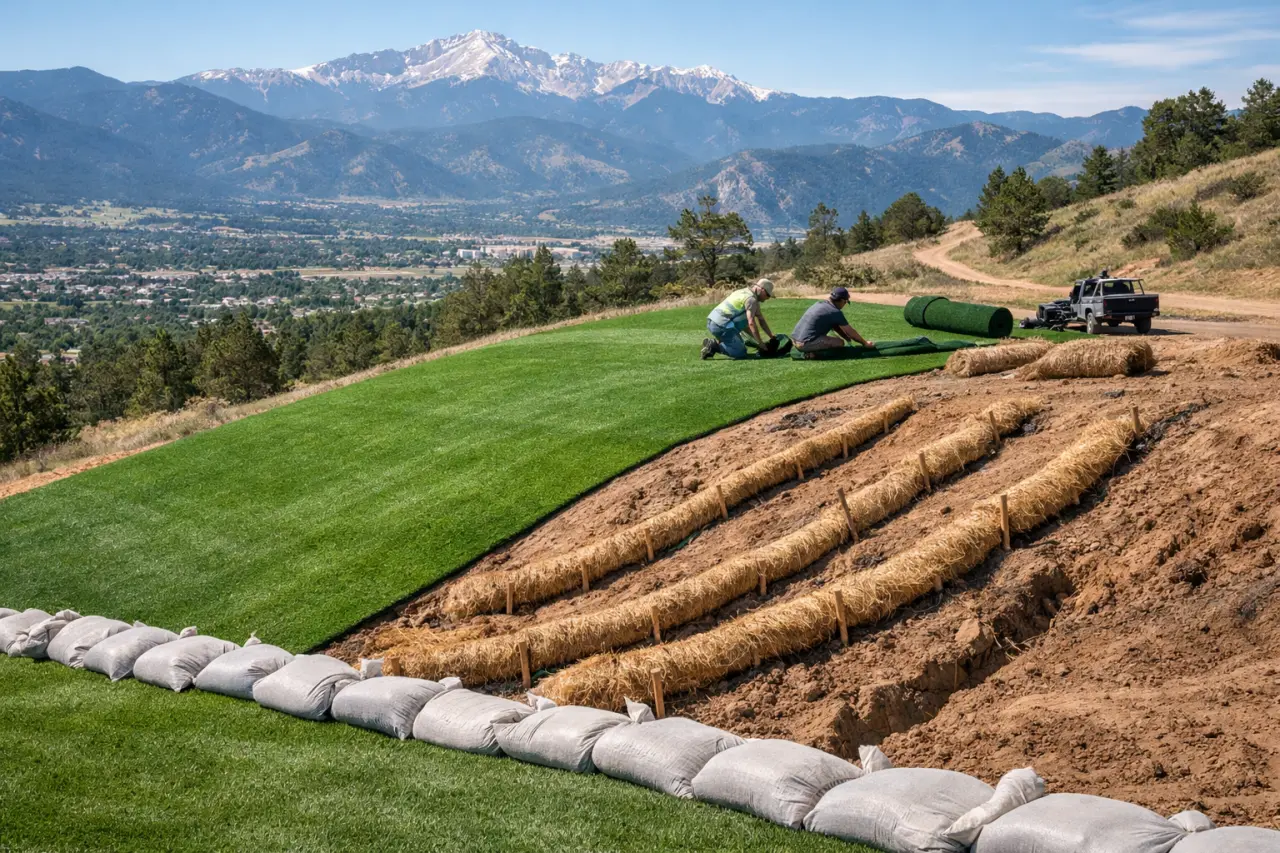
On a sloped yard, bare soil can wash out fast after a hard storm or a heavy watering cycle. Artificial turf can help stabilize exposed ground when it is installed over a properly prepared base, with edge restraint, drainage, and secure anchoring. Several Colorado Springs installers describe their work in exactly those terms, including base prep, drainage layers, compacted sub-bases, and perimeter anchoring. (cnlandscapingco.com)
That matters here because the local market is not just selling a green look. It is selling a system that can hold together on hillsides, dog runs, side yards, and other trouble spots where soil tends to move.
Local companies worth comparing
Front Range Turf says it serves Colorado Springs and nearby Front Range communities with synthetic turf installation for residential and commercial properties. Its Colorado Springs page positions artificial turf as a low-maintenance solution, which makes it a natural starting point if your main concern is keeping soil in place without constant re-seeding. (frontrangeturf.com)
Dominion Turf has a Colorado Springs location and describes itself as an artificial grass installer focused on local yards. Its service pages highlight installation in Colorado Springs and mention a quick installation window, which suggests a straightforward residential workflow for homeowners who want erosion-prone areas handled without a long project timeline. (dominionturf.com)
Peak Turf Solutions emphasizes full-service turf installation and maintenance in Colorado Springs. The company says its process includes removing existing landscape, preparing and compacting the sub-base, adding a drainage layer, laying and seaming the turf, and securing the perimeter anchoring. For erosion control, that sequence is important because the base is doing as much work as the turf surface itself. (peakturfsolutions.com)
Fresh Landscapes specifically notes that turf on a slope needs more nails or spikes to keep it from shifting over time and to help prevent erosion. That is the kind of practical detail worth asking about if your yard has a grade, a drainage swale, or an area that sheds water toward a fence line. (freshlandscapesco.com)
CN Landscaping also serves Colorado Springs and publishes unusually concrete installation notes. Its page says slopes over 5% can require additional drainage engineering, and it points out that wind exposure at this elevation can call for heavier infill and secure perimeter anchoring. That makes it useful for comparing how different installers think about the same hillside problem. (cnlandscapingco.com)
What to ask before you sign
A good erosion-control turf project is less about the grass blades and more about what sits underneath them. When you talk to an installer, ask how they handle:
- Drainage: Where does water go after a storm or irrigation cycle?
- Slope prep: Do they change the base on steeper sections?
- Anchoring: What keeps the edges from lifting or drifting?
- Compaction: How tightly is the sub-base compacted before turf goes in?
- Transitions: How do they handle borders where turf meets pavers, beds, or existing hardscape? (cnlandscapingco.com)
Those questions are especially useful in Colorado Springs, where wind, sun exposure, and uneven lots can make a quick install fail long before the turf itself wears out. CN Landscaping’s notes on wind and slope, and Peak Turf Solutions’ emphasis on drainage and perimeter anchoring, are a good reminder that installation quality drives performance. (cnlandscapingco.com)
When turf is a better fit than re-seeding
Artificial turf can make sense when a spot keeps losing soil because the grass never gets established. That often shows up in narrow side yards, dog paths, shaded strips, or small slopes near downspouts and walks. In those cases, the goal is not to create a perfect lawn; it is to create a stable surface that reduces repeated repair work. Fresh Landscapes’ slope guidance and CN Landscaping’s drainage notes both point toward that use case. (freshlandscapesco.com)
It is also worth noting that some local homeowners’ association and city landscape documents treat artificial turf as a separately managed landscape element rather than a plug-and-play fix, which reinforces the need to confirm rules before you start. A windjammer HOA guideline says artificial turf is allowed if approved and kept in good condition, while City of Colorado Springs landscape maintenance standards focus heavily on turf condition, weed control, and orderly site care. (wjhoa.org)
A practical way to compare bids
If you are calling around Colorado Springs, compare each proposal on the same points:
Base work
Ask what gets removed, how the grade gets corrected, and how the installer handles soft or sloping ground. CN Landscaping and Peak Turf Solutions both show that base work is central to a durable result. (cnlandscapingco.com)
Drainage details
Ask whether the project includes a drainage layer or any adjustment for runoff. If the answer is vague, that is a warning sign on erosion-prone lots. (peakturfsolutions.com)
Edge security
Ask how the perimeter is fastened and whether extra anchoring is included on grades. Fresh Landscapes and CN Landscaping both flag this as a key issue. (freshlandscapesco.com)
Maintenance plan
Ask what periodic care looks like after install. Peak Turf Solutions, for example, also advertises turf maintenance in Colorado Springs, which can matter if you want the surface to keep shedding water cleanly and stay even over time. (peakturfsolutions.com)
Bottom line
For erosion control in Colorado Springs, artificial turf works best when it is treated like a drainage and grading project first, and a landscaping upgrade second. Front Range Turf, Dominion Turf, Peak Turf Solutions, Fresh Landscapes, and CN Landscaping each give you a slightly different angle to compare, but the same basic rule applies: the right install on the right base is what keeps a slope from becoming a muddy, worn-down patch. (frontrangeturf.com)
Related articles
Aurora Artificial Turf for Erosion Control: Permit Basics
Learn how Aurora homeowners weigh artificial turf for erosion control, from city rules to local installers and slope prep that keeps soil in place.
Editorial Team
Colorado Springs Artificial Turf for Erosion Control Guide
Colorado Springs homeowners use artificial turf for slopes, dog runs, and tight yards where runoff is a problem. Here’s how local installers and code rules fit together.
Editorial Team
Denver Artificial Turf Erosion Control: Local Installation Options
Denver property owners looking to steady slopes or reduce washout can compare turf-focused installers and erosion-control specialists that work locally.
Editorial Team