Erosion Control
Fort Collins Artificial Turf for Erosion Control: Local Options
Fort Collins homeowners and property managers can pair synthetic turf with drainage-savvy landscape work to help stabilize slopes and reduce soil loss.
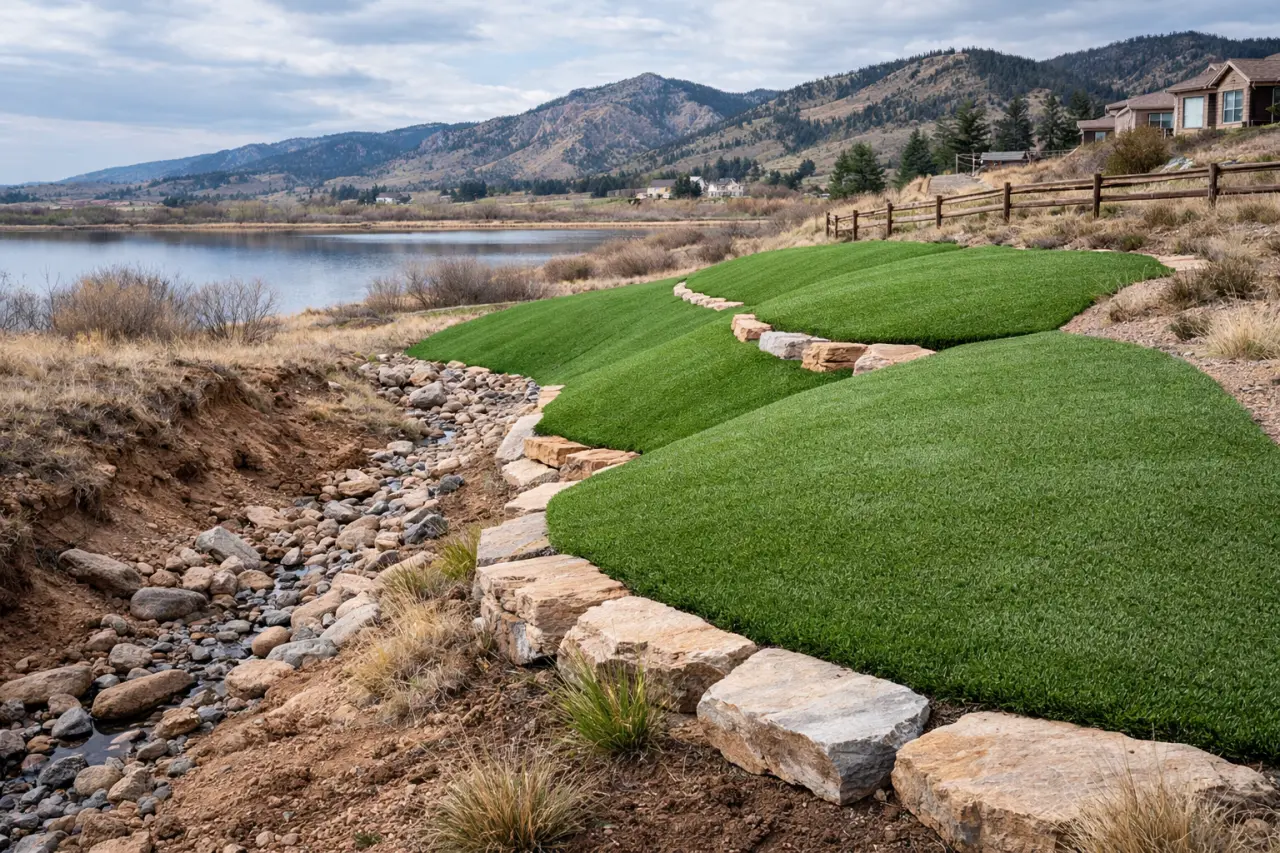
Why turf projects in Fort Collins need an erosion-control mindset
In Fort Collins, the best artificial turf jobs are rarely just about replacing grass. On sloped yards, edges near walks and drives, and spots that take runoff, the installation has to help keep soil in place while still looking clean year-round.
City guidance for land-disturbing work puts erosion and sediment control front and center, and Fort Collins also points property owners toward landscape planning resources that address erosion control, irrigation, and turf conversion. That matters if your project involves removing existing turf, regrading, or reshaping a difficult area before synthetic grass goes in. (fcgov.com)
Fort Collins companies to know
If you want a turf project handled by a company that serves Fort Collins specifically, a few names stand out.
Synthetic Turf International of Fort Collins, CO says it provides synthetic turf tools, products, and installation expertise in the Fort Collins area, including lawns, putting greens, playgrounds, and pet areas. That makes it a fit for homeowners who want a turf surface that is planned as part of a broader site solution rather than a simple carpet swap. (synthetic-turf.com)
Fort Collins Turf focuses on premium synthetic turf solutions and says its work ranges from backyard transformations to custom putting greens. The company also notes national recognition from Synthetic Grass Warehouse for an installation that highlighted craftsmanship and precision. For buyers, that suggests a shop that understands the details that matter when a project needs to look finished around slopes, borders, and hardscape transitions. (fortcollinsturf.com)
Green Hills Landscaping & Hardscaping offers artificial grass installation alongside irrigation, sprinkler installation, and mulching in Fort Collins. That combination is useful for erosion-prone yards, because turf alone is only one part of the picture; drainage, edging, and surrounding landscape work often determine whether a space stays stable after heavy weather. (greenhillslandscapingandhardscaping.com)
Don’t skip the prep work
A turf surface can help cover bare soil, but erosion control starts before the first roll of synthetic material goes down. In practice, the important questions are: where does water flow, what needs to be reshaped, and how will the base be held together?
Habitat Guild, a Fort Collins-based landscape company, describes its work as design, build, and care for regenerative landscapes. It also highlights hardscapes, softscapes, irrigation systems, and soil work, and one customer review specifically mentions graded steps with erosion control. Even if you are not replacing your whole yard, that kind of project mix is valuable when an artificial turf area is part of a larger slope or drainage challenge. (habitatguild.com)
A few prep items are worth asking about before you sign on:
- grading and slope correction
- base compaction
- drainage paths away from the home
- edging that keeps the turf perimeter locked in
- transitions to stone, mulch, or planting beds
- weed and sediment control during installation
Those are the details that help turf perform like a landscape improvement instead of a patch job.
When turf is the right answer, and when it is not
Artificial turf makes the most sense where residents want a durable surface and where runoff, foot traffic, or repeated bare spots make live ground cover hard to maintain. It can be especially appealing for pet areas, narrow side yards, and play zones that need to stay usable through dry spells.
But not every erosion problem should be solved with turf. Fort Collins city resources for turf removal and sustainable landscaping emphasize low-water design, native plants, and erosion-aware planning. In some yards, a mix of native planting, soil stabilization, and limited hardscape may do more to slow runoff than turf by itself. (fortcollins.gov)
That’s the main local lesson: turf works best when it is part of a larger erosion-control plan.
What to ask before hiring
If you are comparing Fort Collins installers, ask these questions early:
Site design
- How will you handle a slope or drainage swale?
- Will you adjust grade before installation?
- What is your approach to base materials under turf?
Water and runoff
- How do you keep water from pooling at turf edges?
- Do you coordinate with irrigation changes or sprinkler removal?
- What happens where turf meets mulch, rock, or planting beds?
Maintenance and longevity
- How do you recommend caring for seams, infill, and drainage over time?
- What should be checked after a hard rain or freeze-thaw cycle?
A company that can answer those clearly is usually thinking like a landscape contractor, not just a product seller.
A practical Fort Collins takeaway
For Fort Collins properties, the strongest artificial turf projects are the ones that treat erosion control as the starting point. Synthetic Turf International of Fort Collins, Fort Collins Turf, Green Hills Landscaping & Hardscaping, and Habitat Guild each point to a different part of that equation: turf installation, precision workmanship, drainage-adjacent landscaping, and full-site planning. (synthetic-turf.com)
If your yard sheds soil, washes out at the edges, or keeps turning patchy, the right local installer should be able to explain how the turf will sit on the site, not just how it will look on day one. That’s the difference between a surface and a solution.
Related articles
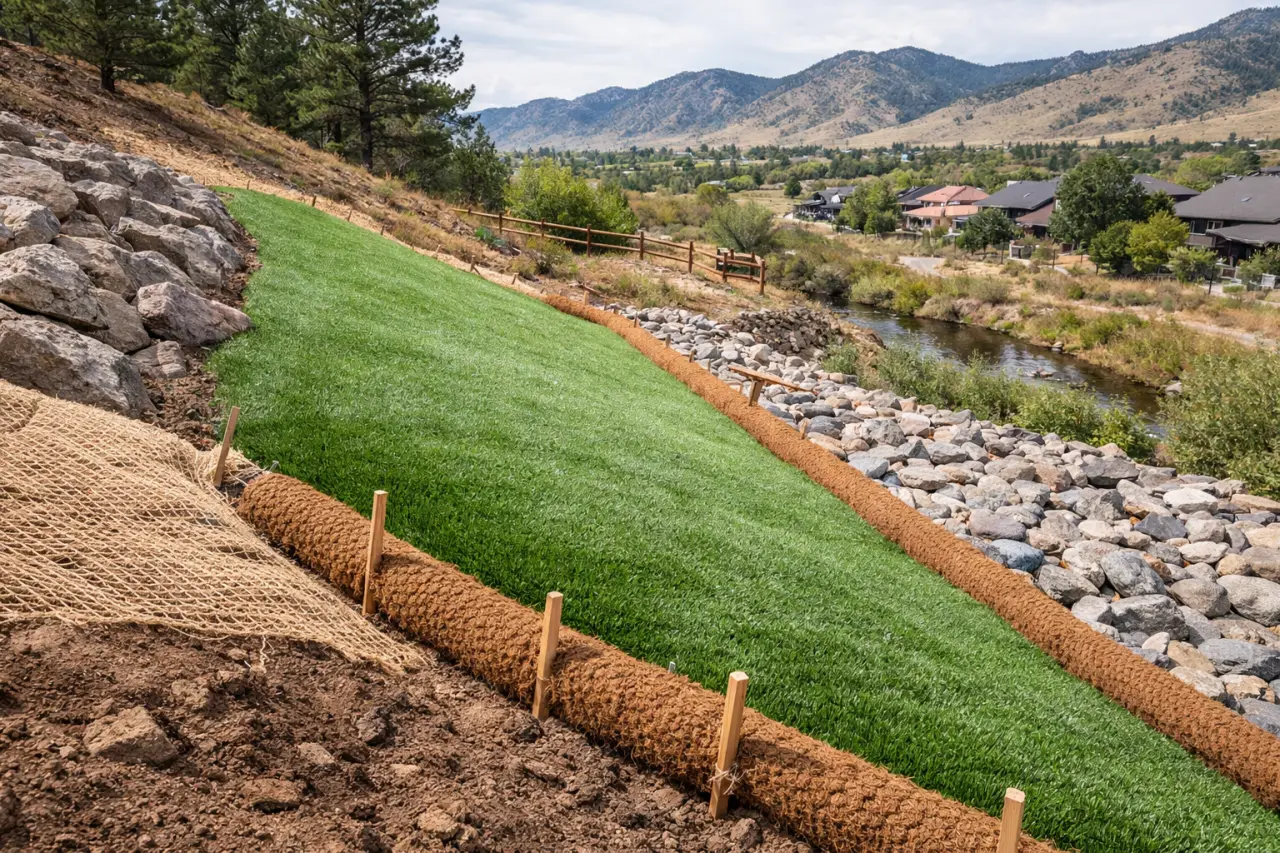
Lakewood Artificial Turf Erosion Control: Local Installers
In Lakewood, synthetic turf can help hold slopes, simplify maintenance, and reduce bare-soil runoff. Here’s how local installers approach it.
Editorial Team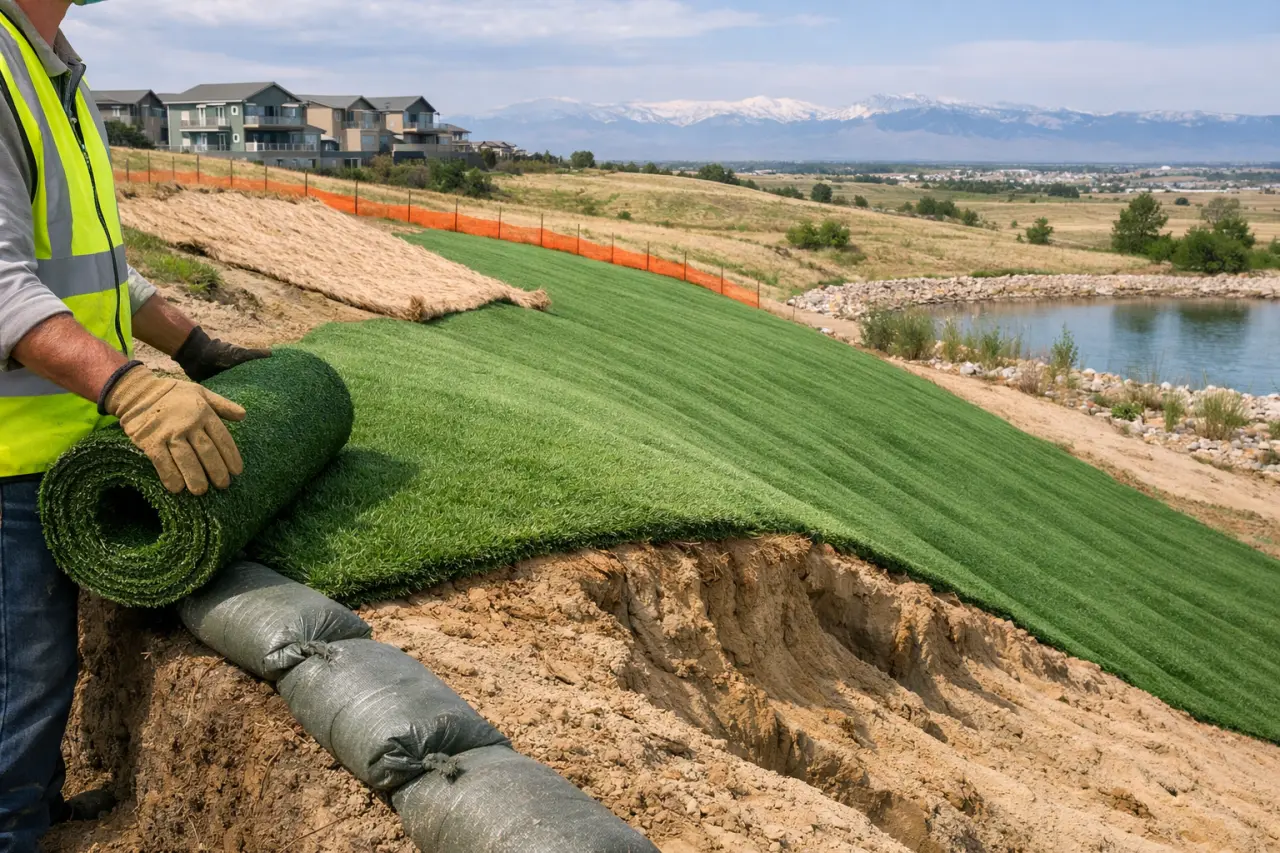
Aurora Artificial Turf for Erosion Control: Permit Basics
Learn how Aurora homeowners weigh artificial turf for erosion control, from city rules to local installers and slope prep that keeps soil in place.
Editorial Team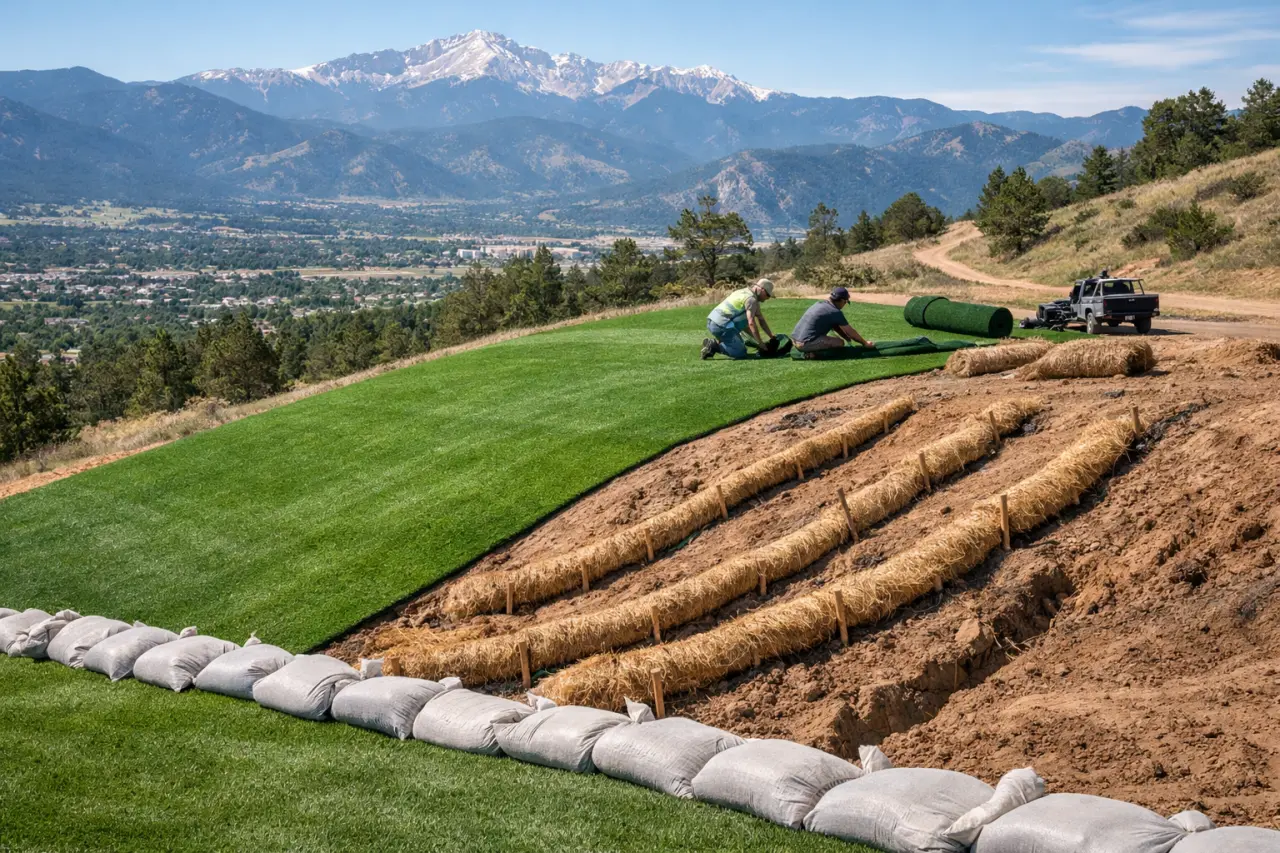
Colorado Springs Artificial Turf for Erosion Control: Local Installers
Colorado Springs homeowners use artificial turf to cut runoff, steady slopes, and simplify yard care. Here are local installers and what to ask before you compare bids.
Editorial Team