Irrigation Solutions
Denver Irrigation Solutions for Artificial Turf Systems
Denver turf owners still need smart water management for cooling, cleaning, and plant borders. Here’s how local irrigation pros and Denver Water rules fit together.
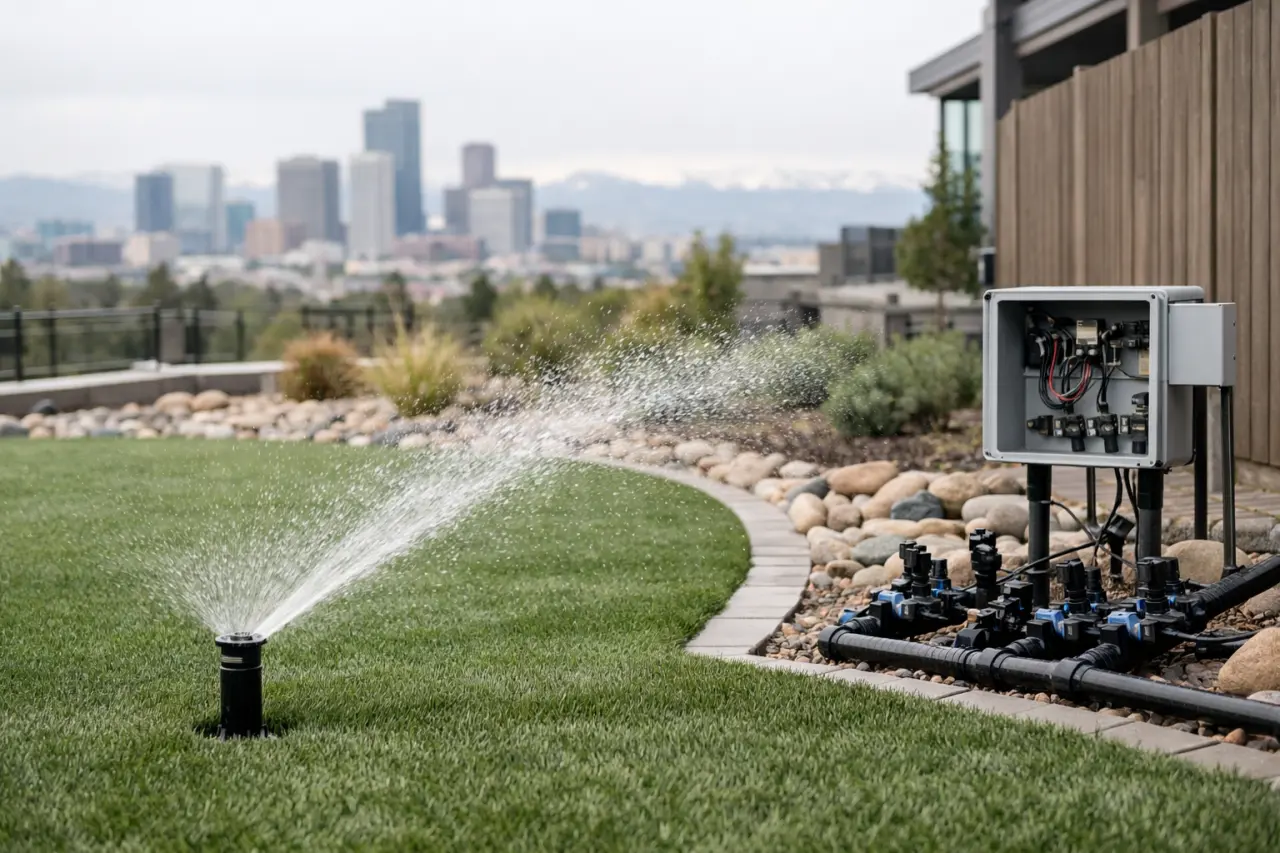
A practical Denver angle on turf irrigation
Artificial turf may cut lawn watering almost to zero, but Denver property owners still run into irrigation questions around the edges: cooling the surface on hot days, keeping adjacent plantings alive, and managing runoff or drainage after storms. Denver Water also notes that watering rules can affect how and when water is applied, including guidance that mentions cooling artificial turf to prevent heat-related injuries and restrictions on wasteful spray onto hard surfaces. (denverwater.org)
That makes irrigation planning less about “watering the turf” and more about water control around it. In Denver, the best-fit provider is often one that understands both sprinkler systems and the way synthetic surfaces change the job.
What to look for in a Denver turf-irrigation pro
A good match should be able to handle the surrounding landscape, not just the synthetic grass itself. That usually means service for sprinkler heads, valves, drip lines, winterization, and repairs to keep water where it belongs. Colorado Cascade Sprinkler & Irrigation says it provides sprinkler installation, repair, and maintenance for residential, commercial, and agricultural locations in the Denver area and beyond, while Apex Irrigation describes Denver service that includes start-up, repair, installation, water features, and winterization. (coloradocascade.com)
For homeowners with turf, that matters because the irrigation system often stays in use for:
- nearby shrubs and flower beds
- perimeter plantings around the turf
- cooling or rinsing synthetic surfaces when needed
- drainage corrections after heavy weather
If you are upgrading a yard to artificial turf, ask whether the company can cap unused zones cleanly, adjust spray patterns away from the turf edge, and protect irrigation efficiency elsewhere in the yard. Denver Water’s conservation materials emphasize irrigation upgrades and efficient water use across landscape changes. (denverwater.org)
Denver businesses that fit this niche
Colorado Cascade Sprinkler & Irrigation
Colorado Cascade is a straightforward option if your project involves both turf and the irrigation system around it. The company highlights sprinkler installation, repair, and maintenance in the Denver area, which is useful when an artificial turf install leaves behind zones that need to be redesigned rather than simply left running. (coloradocascade.com)
CS Sprinklers
CS Sprinklers says Denver residential and commercial communities trust its lawn and garden sprinkler services, and the company has been operating since 2006. That kind of long-running sprinkler focus can be helpful when you want existing irrigation to work efficiently alongside synthetic surfaces rather than be replaced wholesale. (cssprinklers.com)
Apex Irrigation
Apex Irrigation markets Denver sprinkler and water feature services, including start-up, repair, new installation, and winterization. For turf owners, that broader irrigation maintenance background matters because the turf itself may not need watering, but the rest of the landscape still does. (apexirrigationllc.com)
Denver Water
Denver Water is not an installer, but it is the local rulebook many property owners have to work around. The utility’s watering guidance includes rules tied to drought response, establishment permits, and water waste, and it specifically references cooling artificial turf to prevent heat-related injuries. If you are adding any irrigation near synthetic grass, it is smart to know those rules before making changes. (denverwater.org)
The questions worth asking before you hire
A turf project changes how a yard uses water, so the right irrigation conversation is more detailed than a routine sprinkler tune-up. Ask:
- Can you shut off or repurpose zones that no longer need spray?
- Do you handle drip irrigation for plant beds around turf?
- Can you correct overspray so water does not hit artificial grass or sidewalks?
- Will you winterize the remaining irrigation lines?
- Do you coordinate with water-conservation rules that apply in Denver? (denverwater.org)
Those questions are especially useful if your property mixes synthetic grass with native plantings, patio spaces, or narrow landscape strips. That is where inefficient watering usually hides.
Where artificial turf and irrigation still overlap
Even in a mostly synthetic yard, irrigation still serves a few important purposes in Denver. Denver Water’s landscape-conversion materials and conservation programs point to broader irrigation upgrades as part of reducing outdoor water use, and local turf projects often include changes to the entire landscape, not just the grass panel itself. (denverwater.org)
The overlap usually shows up in three places:
1. Plant beds and border zones
Artificial turf often ends at a planting strip, not a blank edge. Drip irrigation is usually the better fit there than spray heads, because it keeps water in the soil and away from the turf backing.
2. Heat management
Denver Water specifically notes cooling artificial turf as a safety issue. If a property needs occasional surface cooling, the irrigation setup should be designed for that purpose rather than left to make-do overspray. (denverwater.org)
3. Drainage and runoff
Synthetic surfaces can reveal drainage problems that were easy to ignore before. If water pools at the turf edge, a sprinkler contractor who understands irrigation layout can often help identify whether the issue is overspray, grading, or a line that should be redirected.
A Denver buyer’s shortcut
If your goal is efficient water use, the best local move is usually not “more irrigation” but smarter irrigation. Denver Water’s conservation guidance, combined with Denver-area sprinkler companies like Colorado Cascade, CS Sprinklers, and Apex Irrigation, gives turf owners a practical path: keep the synthetic surface dry most of the time, and make the remaining water system precise, limited, and easy to maintain. (coloradocascade.com)
For Denver homeowners and property managers, that is the sweet spot: a synthetic lawn that looks good, plus an irrigation setup that only waters the parts of the landscape that still need it.
Related articles
Lakewood Irrigation Solutions for Artificial Turf That Save Water
Lakewood homeowners with synthetic grass still need smart water management around edging, nearby plant beds, and seasonal system checks.
Editorial Team
Denver Irrigation Solutions for Artificial Turf Transitions
Denver turf projects need irrigation plans that fit the swap from bluegrass to synthetic grass. Here’s how local companies handle the water side of the job.
Editorial Team
Lakewood Irrigation Solutions for Artificial Turf: Water-Smart Picks
Lakewood homeowners can pair synthetic grass with smart irrigation, drainage, and seasonal service to keep turf clean, cool, and long-lasting.
Editorial Team