Repair Services
Lakewood Artificial Turf Repair: Choosing the Right Fix
When turf starts to seam, flatten, or separate, Lakewood owners can narrow the fix fast by matching the repair to the damage.
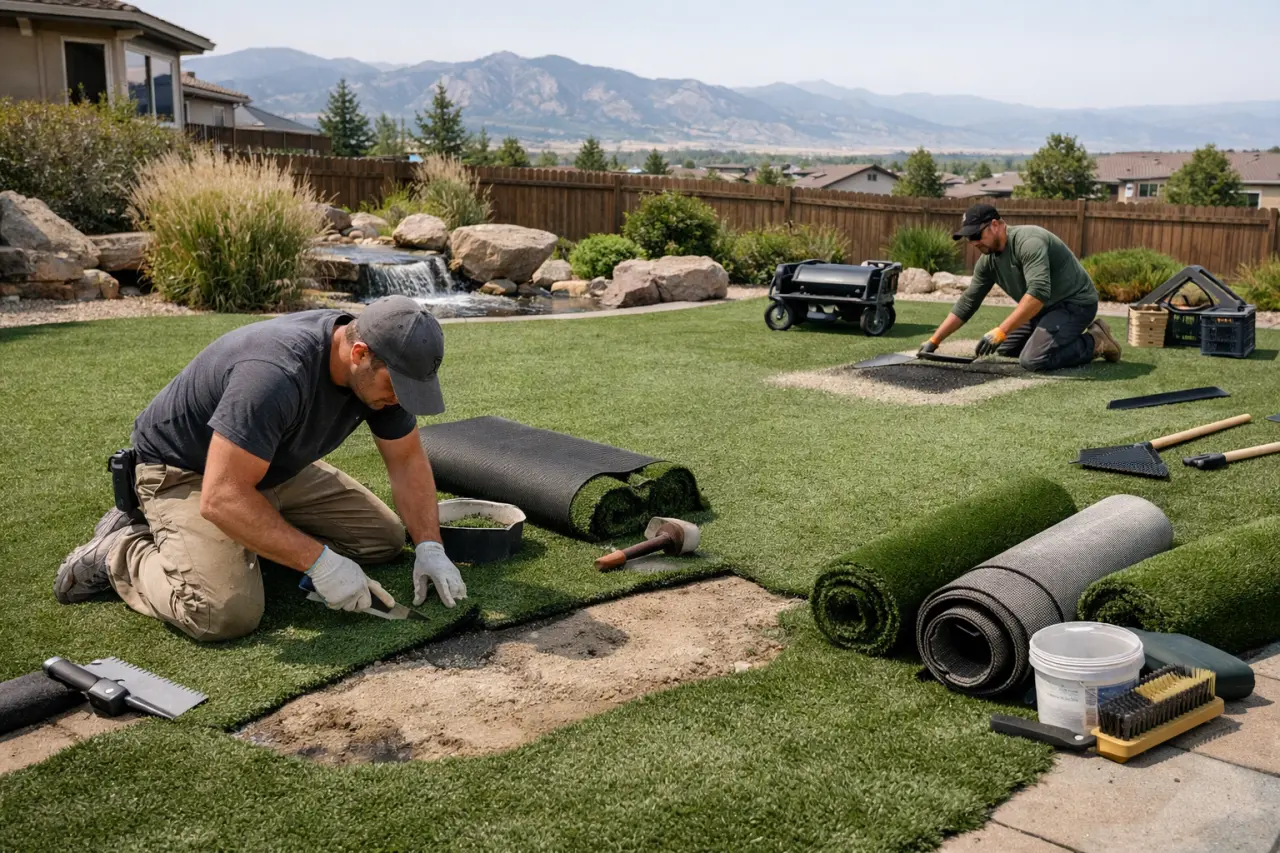
What Lakewood owners should look for first
Artificial turf usually gives warning signs before it fails outright. In Lakewood, the most common repair jobs are the ones that stop a small problem from turning into a bigger one: seam gaps, worn high-traffic areas, loose edging, and infill that has migrated or thinned out. The City of Lakewood’s own athletic field guidance notes that turf can be displaced or dislodged through normal use, which is a useful reminder that synthetic surfaces need periodic attention, not just installation and forget it maintenance (City of Lakewood).
For homeowners, the important question is not just “Is the turf damaged?” It is “What kind of repair will stop the damage from spreading?” A seam that opens up after freeze-thaw cycles calls for a very different fix than a patchy dog run that needs fresh infill and brushing.
The repair types that matter most
Seam repair
Seam failures usually show up where two pieces of turf meet. The edges may lift, separate, or curl. If the backing is still sound, a repair crew can re-bond the seam and restore the transition so it looks and feels even again.
Patching and small-area replacement
If a section is burned, torn, or worn through, patching is often the cleanest option. A good patch is sized carefully so the grain direction matches the surrounding turf and the repaired area blends in rather than standing out.
Infill replacement
Infill helps turf fibers stand upright and keeps the surface playable underfoot. When it gets packed down, spread thin, or contaminated with debris, the whole lawn can start to feel flat. Reworking infill is one of the fastest ways to improve appearance and performance without replacing the full field.
Drainage and base checks
If a turf area keeps developing the same soft spots, the issue may be underneath the surface. That is especially worth checking after heavy use or repeated wet-dry cycles. Lakewood’s weather and seasonal swings make it smart to look below the blade level before paying for repeat cosmetic fixes.
Local crews that can handle Lakewood turf repairs
A few Lakewood-serving businesses are worth noting if you want the work handled by a crew that already does synthetic turf projects in the city.
Colorado Turf Guys lists Lakewood-specific artificial turf services and says it offers turf maintenance and repair, including keeping synthetic grass clean, upright, fresh-smelling, and looking its best longer (Colorado Turf Guys). That makes it a natural fit when you need routine restoration rather than a full replacement.
Xeris Landscaping says its Lakewood work includes artificial turf installation and explains that it serves Lakewood as a home market, with local crews working there regularly (Xeris Landscaping). The company’s Lakewood page also emphasizes drainage and base prep, which matters when a repair needs more than a surface touch-up.
LEM Landscaping appears in a Lakewood contractor profile that lists repairs and maintenance among its common artificial turf services (Turf Install Pros). That kind of service mix is helpful when a repair call turns into a broader restoration visit.
SYNLawn Colorado has a Lakewood page for artificial grass and invites Lakewood residents to schedule a consultation (SYNLawn Colorado). If you are comparing options for a more involved turf refresh, that gives you another local place to start.
When repair is smarter than replacement
Not every worn patch needs to become a full turf project. In Lakewood, repair usually makes sense when:
- The backing is still intact.
- Damage is limited to one area.
- The infill is the problem, not the whole installation.
- The surface has become uneven, but the sub-base is still stable.
- The issue is cosmetic, such as flattening or fading in a traffic lane.
Replacement starts to make more sense when the backing is failing across multiple sections, seams keep reopening, or drainage problems are showing up in more than one place.
What to ask before you book
A useful Lakewood repair conversation is specific. Before you schedule work, ask whether the crew will inspect:
- seam integrity,
- fiber wear in high-traffic zones,
- infill depth and contamination,
- edge restraint,
- drainage after rain or snowmelt,
- and the condition of the base beneath the turf.
Those checks help separate a quick fix from a repair that only looks good for a few months.
How Lakewood owners can stay ahead of repeat damage
The best turf repair is the one you do before the damage spreads. A little brushing, debris removal, and periodic infill top-off can keep a surface stable longer. For athletic fields and busy play areas, Lakewood also schedules field rest and renovation periods to keep surfaces sustainable, which is a good reminder that synthetic turf still benefits from planned downtime and maintenance (City of Lakewood).
If your turf is starting to separate, flatten, or lose its bounce, Lakewood has more than one route to a fix. The best repair choice depends on whether you are dealing with a seam, a patch, or a surface that just needs its infill brought back to life.
Related articles
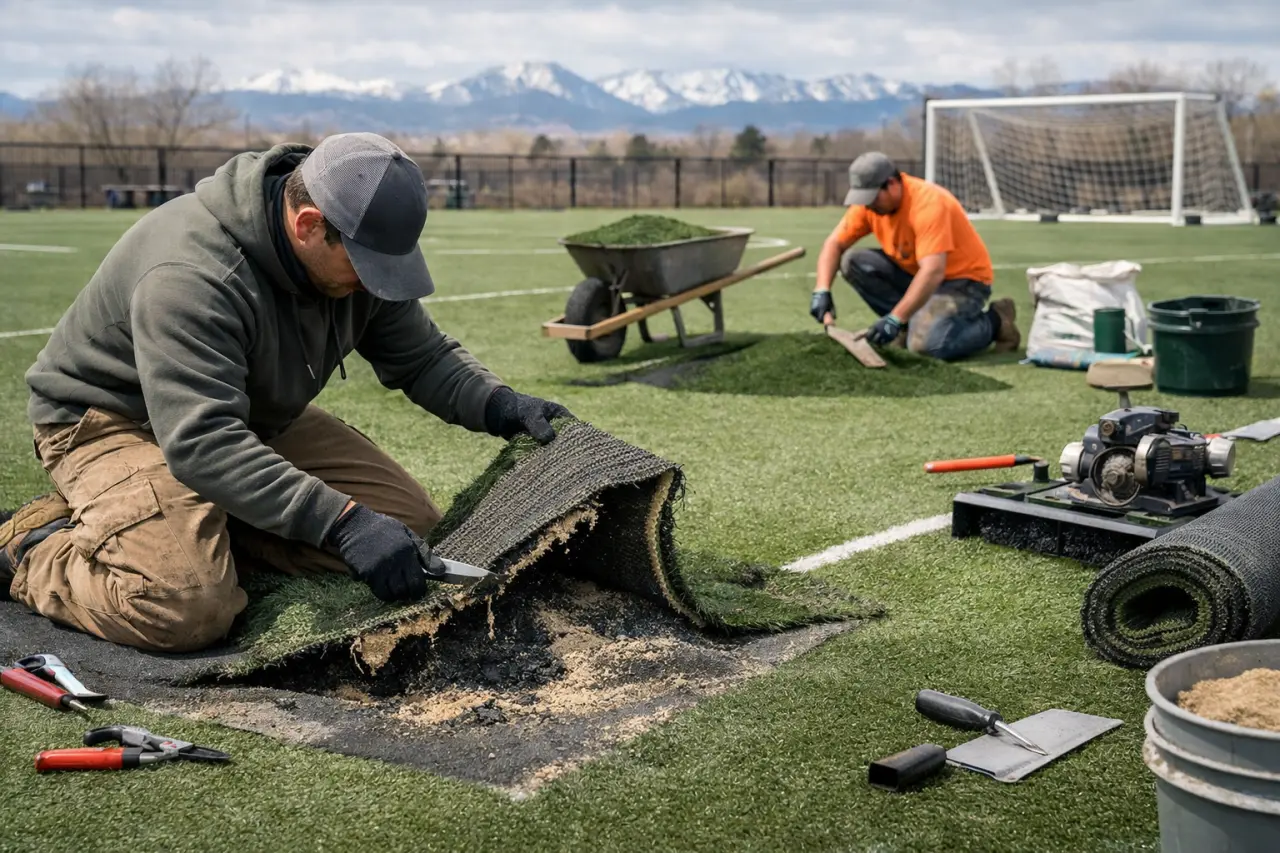
Denver Artificial Turf Repair: Local Fixes for Worn Surfaces
When turf starts lifting, flattening, or shedding infill, Denver owners need repairs that match the surface and the season. Here’s how local pros handle it.
Editorial Team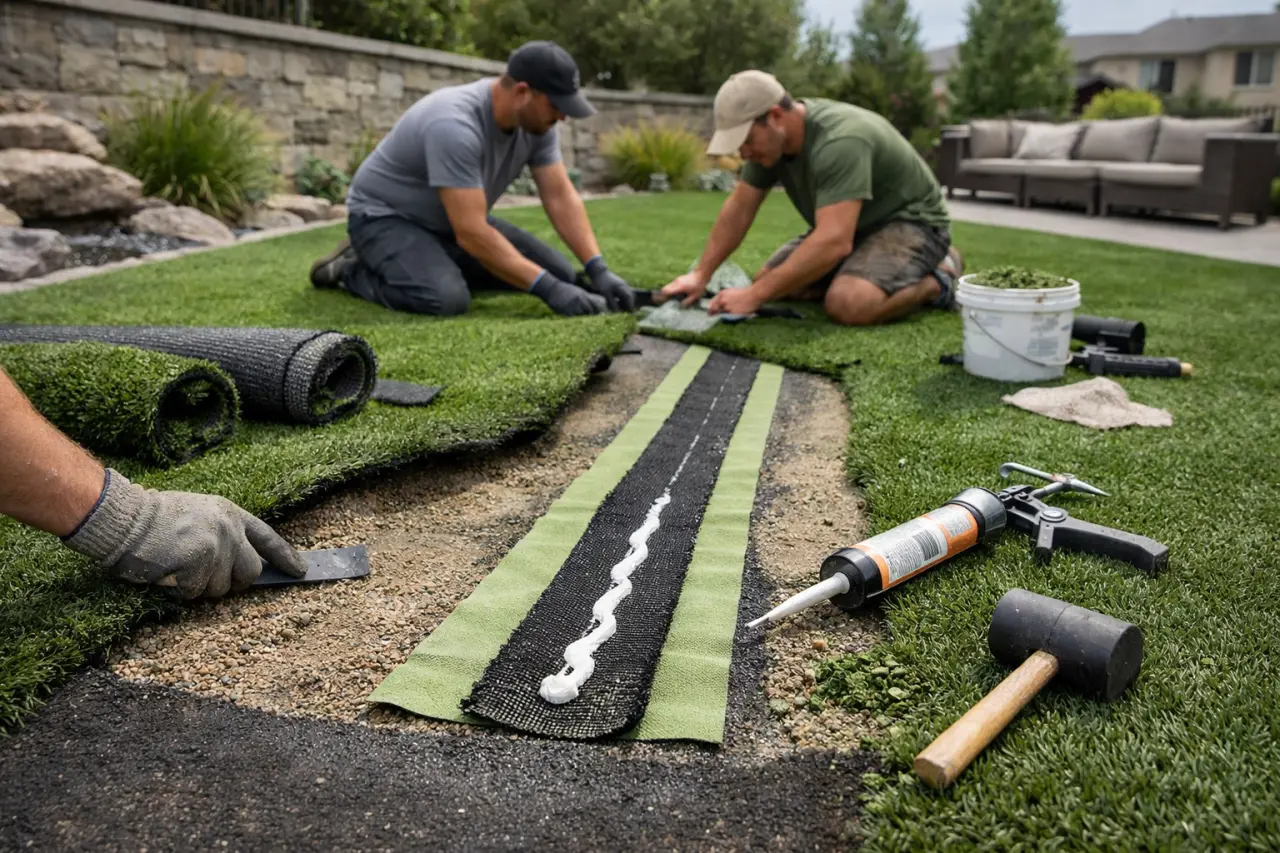
Lakewood Artificial Turf Repair: How Local Fixes Hold Up
Small turf problems can spread fast in Lakewood’s changing weather. Here’s how to spot repair needs and compare local pros before damage grows.
Editorial Team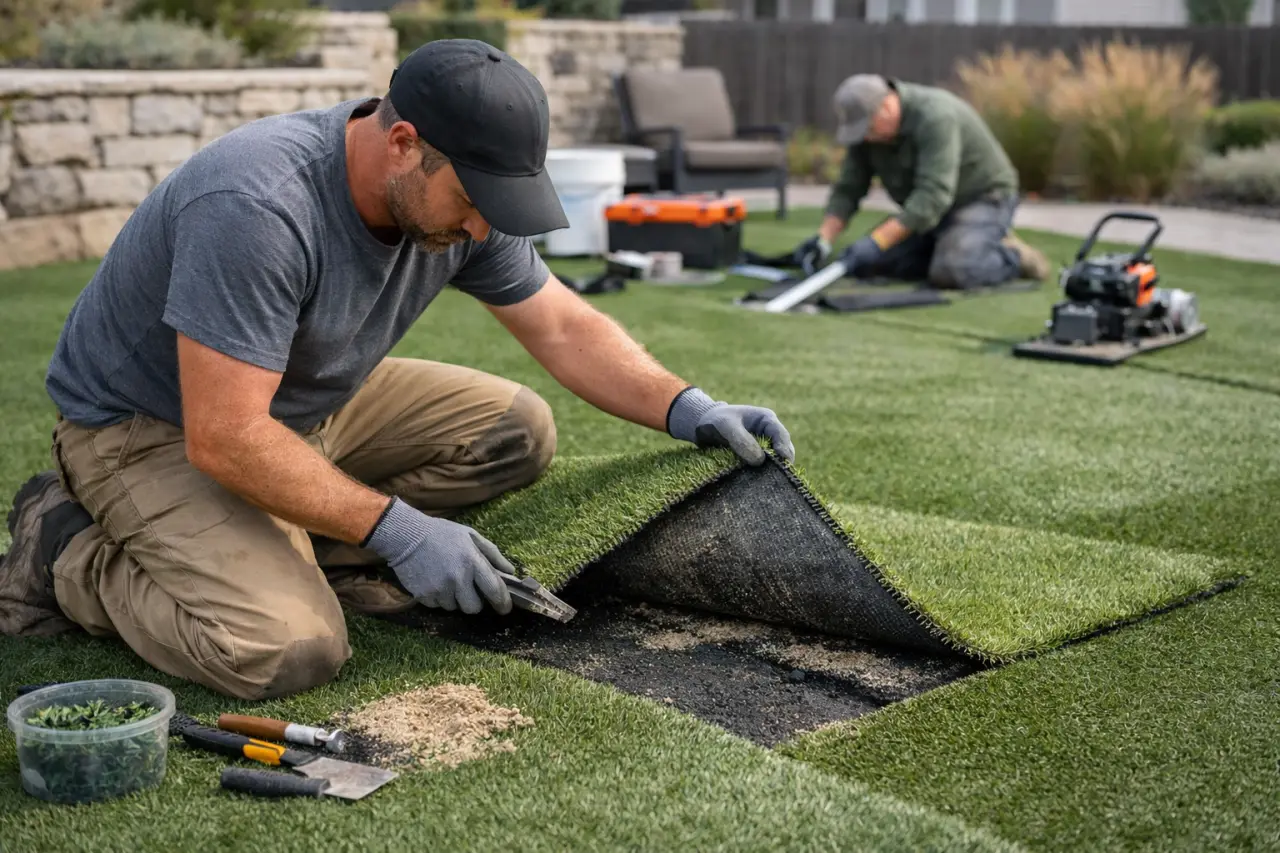
Fort Collins Artificial Turf Repair: What to Fix Before It Spreads
Fort Collins turf repairs often start with seams, thinning infill, or a lifted edge. Here’s how local providers handle the fixes that keep surfaces usable.
Editorial Team