Seam Repair
Fort Collins Seam Repair for Artificial Turf: What to Look For
Fort Collins turf seams fail for a few common reasons. Here’s how local homeowners and property managers can spot trouble early and choose the right fix.
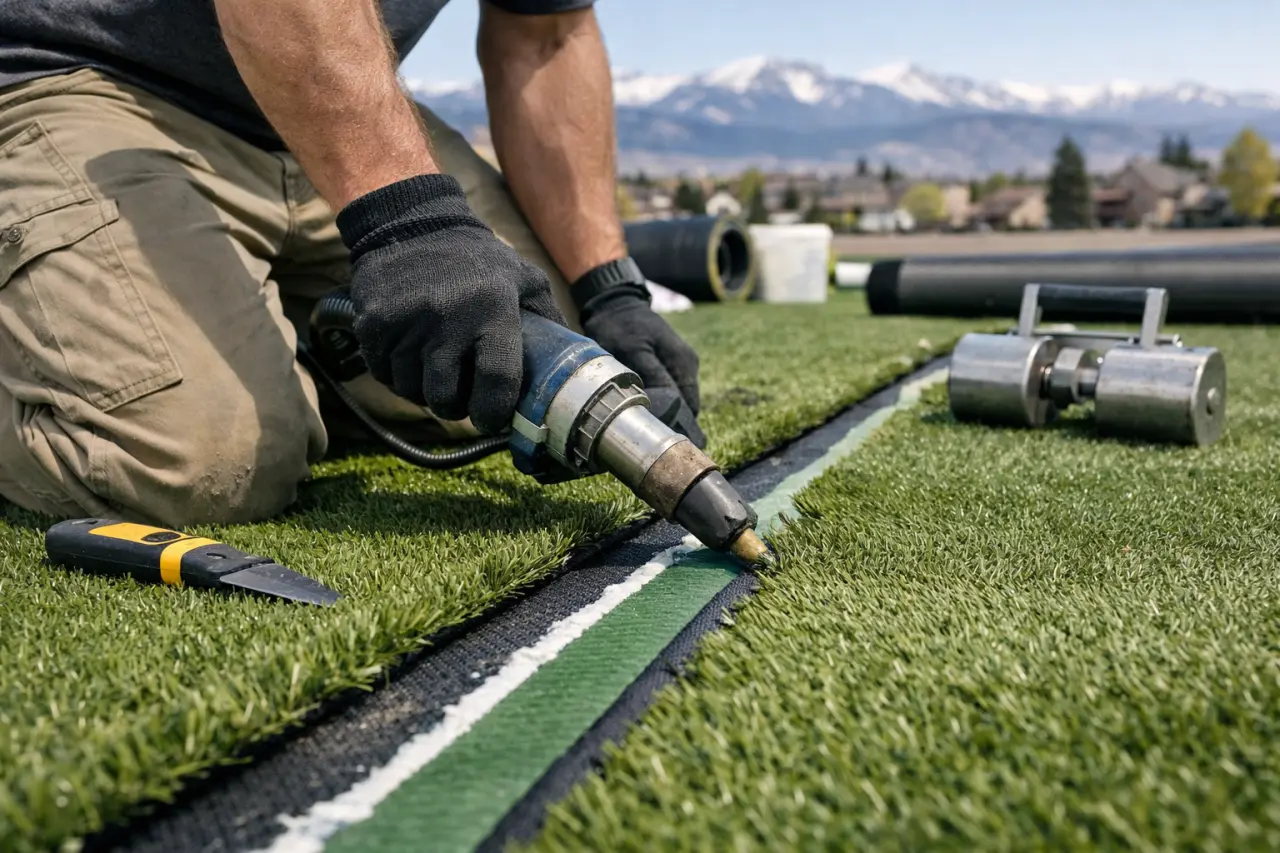
Why seam repair matters in Fort Collins
A turf seam is one of those details you only notice when it starts to fail. In Fort Collins, seams can lift, split, or wrinkle after heavy foot traffic, weather swings, or an install that never fully settled. Once that happens, the turf can start to look uneven fast, and the damage often spreads beyond the first visible gap. Artificial turf is commonly installed in strips that are joined together, and those joins depend on solid seaming methods and adhesives to stay intact over time (Google Patents).
That is why seam repair is usually less about “patching a crack” and more about restoring the bond, alignment, and surface tension across the whole join. A good repair can improve how the turf wears, drains, and looks in everyday use.
What usually goes wrong at the seam
The most common seam issues are easy to spot once you know what to look for:
- Raised edges where two strips no longer sit flush
- A visible line down the middle of the turf
- Wrinkles or bubbles near the join
- Loose infill around a stressed area
- Gaps that collect debris or create a trip hazard
These problems often show up first on high-use areas like pet runs, backyard paths, play zones, and putting greens. The underlying cause is often a mix of installation stress and long-term weathering. Artificial turf manufacturers and installers use adhesives, seam tape, sewing, or fastener systems to join sections, and those connections can weaken if the base shifts or the materials were not set properly to begin with (Google Patents).
Fort Collins businesses to know
Fort Collins homeowners looking at turf work often end up talking with landscape teams, turf suppliers, or hardscape contractors that also handle synthetic grass repairs. A few local names stand out:
Fort Collins Turf
Fort Collins Turf markets premium synthetic turf solutions from its Fort Collins site and focuses on artificial turf products for local projects (Fort Collins Turf). If your seam problem is tied to product condition, color match, or replacing a damaged section, a turf-focused company is a logical first stop.
Summit Turf Supply
Summit Turf Supply says it is family-owned and operated in Fort Collins and offers synthetic grass options designed for high-traffic grass replacement (Summit Turf Supply). For seam repairs, a supplier like this can be useful when the damaged area needs compatible turf, backing, or accessories rather than a quick cosmetic fix.
Purchase Green Artificial Grass of Fort Collins
Purchase Green’s Fort Collins location offers synthetic turf solutions for residential and commercial landscapes, plus playgrounds, sports fields, dog runs, and putting greens (Purchase Green). That breadth matters if the seam issue sits inside a more complex layout where matching the existing turf spec is part of the job.
NexGen Lawns
NexGen Lawns promotes artificial grass and synthetic turf services in Fort Collins (NexGen Lawns). If the seam failure is part of a broader turf renovation, a company that already works on installation can be a practical option for troubleshooting the whole area, not just the visible split.
JT American Landscape & Lawn Maintenance, LLC
JT American Landscape & Lawn Maintenance, LLC, based in Fort Collins, lists landscape installation work that includes synthetic grass for putting greens and play areas (JT American Landscape & Lawn Maintenance, LLC). That kind of scope can be useful when seam repair needs follow-up grading, edging, or cleanup around the repaired strip.
How to choose the right repair approach
Not every seam problem should be treated the same way. In practice, Fort Collins property owners usually need one of three responses:
- Rebond and reset: best when the turf itself is still in good shape but the seam adhesive has failed.
- Partial replacement: best when the seam edge is frayed, stretched, or sun-damaged.
- Full section repair: best when the failure is tied to a wider base or drainage problem.
The key question is whether the seam moved because of surface wear or because something underneath changed. If the base shifted, a cosmetic fix may not last. Synthetic turf strips are joined over a prepared base, and poor support beneath the seam can lead to bowing, puckering, or other seam integrity problems over time (Google Patents).
Questions Fort Collins owners should ask
Before hiring anyone to repair turf seams, ask:
- Do you repair seams only, or do you also replace damaged turf sections?
- Can you match the existing turf product or infill?
- Will you inspect the base under the seam?
- Do you use seam tape, adhesive, sewing, or another method?
- What should the area look like after the repair is complete?
A clear answer matters because a seam repair should be both structural and visual. If the joined strips are misaligned by even a small amount, the repair can stay visible or fail again under traffic.
When a repair is worth it
Seam repair is usually worth doing when the rest of the turf still has life left in it. That is often the case in backyard installations, pet areas, and smaller landscape projects where the damage is concentrated in one line or one corner. If the turf has widespread matting, UV wear, or base failure, the better move may be a broader replacement plan.
For Fort Collins property owners, the best local strategy is simple: get the seam inspected early, compare at least one turf-focused company with one landscape contractor that handles synthetic grass, and make sure the repair plan addresses the base as well as the visible split. That is the difference between a seam that disappears and one that comes back a few months later.
Related articles
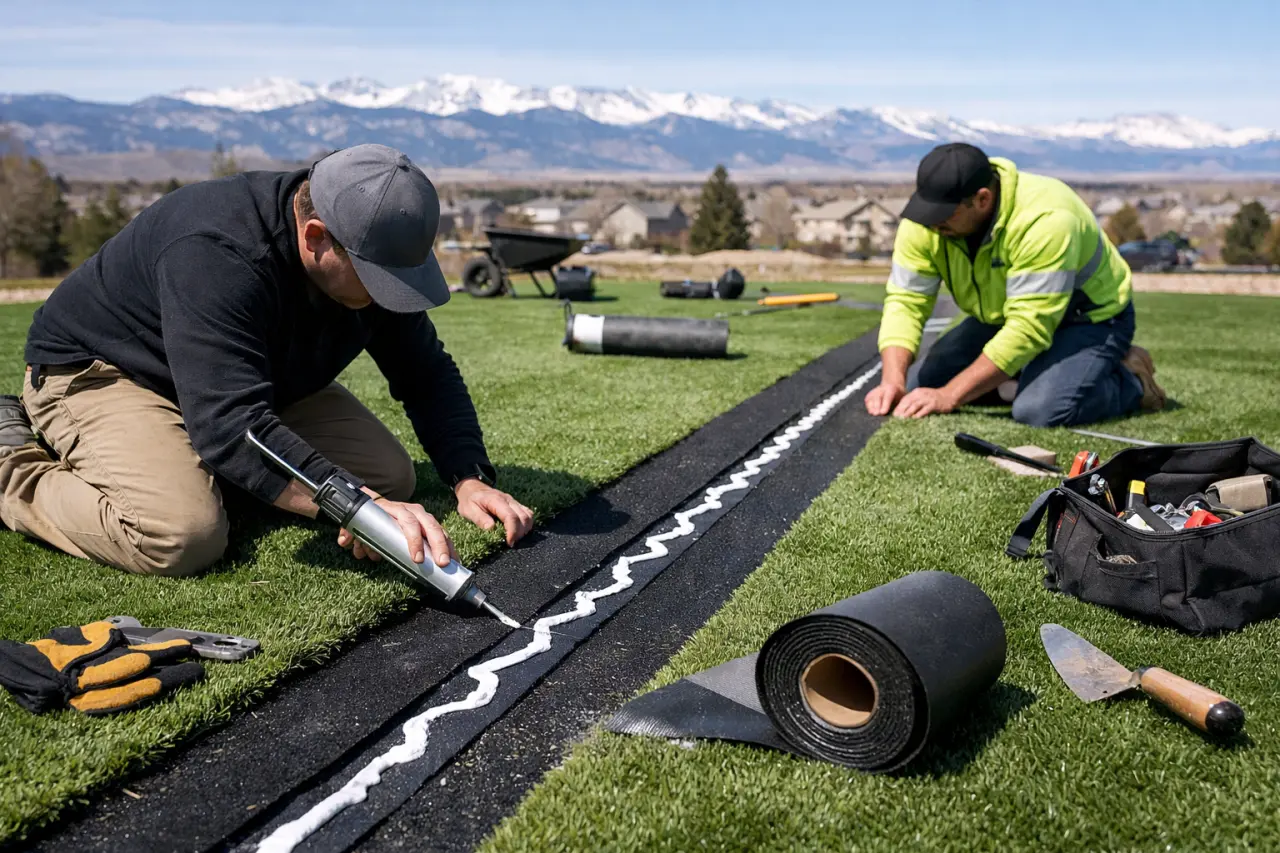
Aurora Seam Repair for Artificial Turf: Local Service Notes
Seam gaps, lifted edges, and worn joints can shorten turf life. Here’s how Aurora property owners can think about repair, upkeep, and timing.
Editorial Team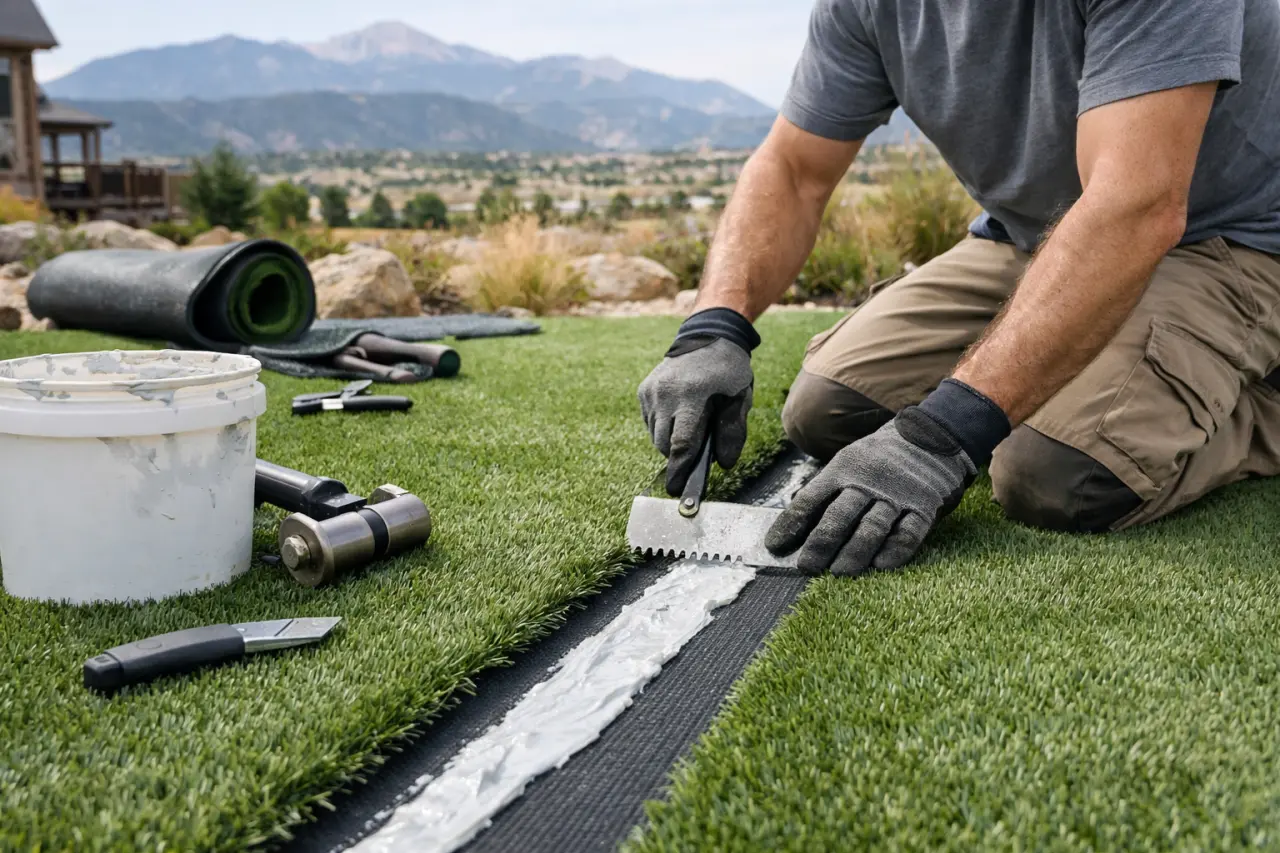
Colorado Springs Seam Repair for Artificial Turf: Local Picks
Colorado Springs homeowners and property managers can keep synthetic grass tight and tidy with seam repair from local turf specialists.
Editorial Team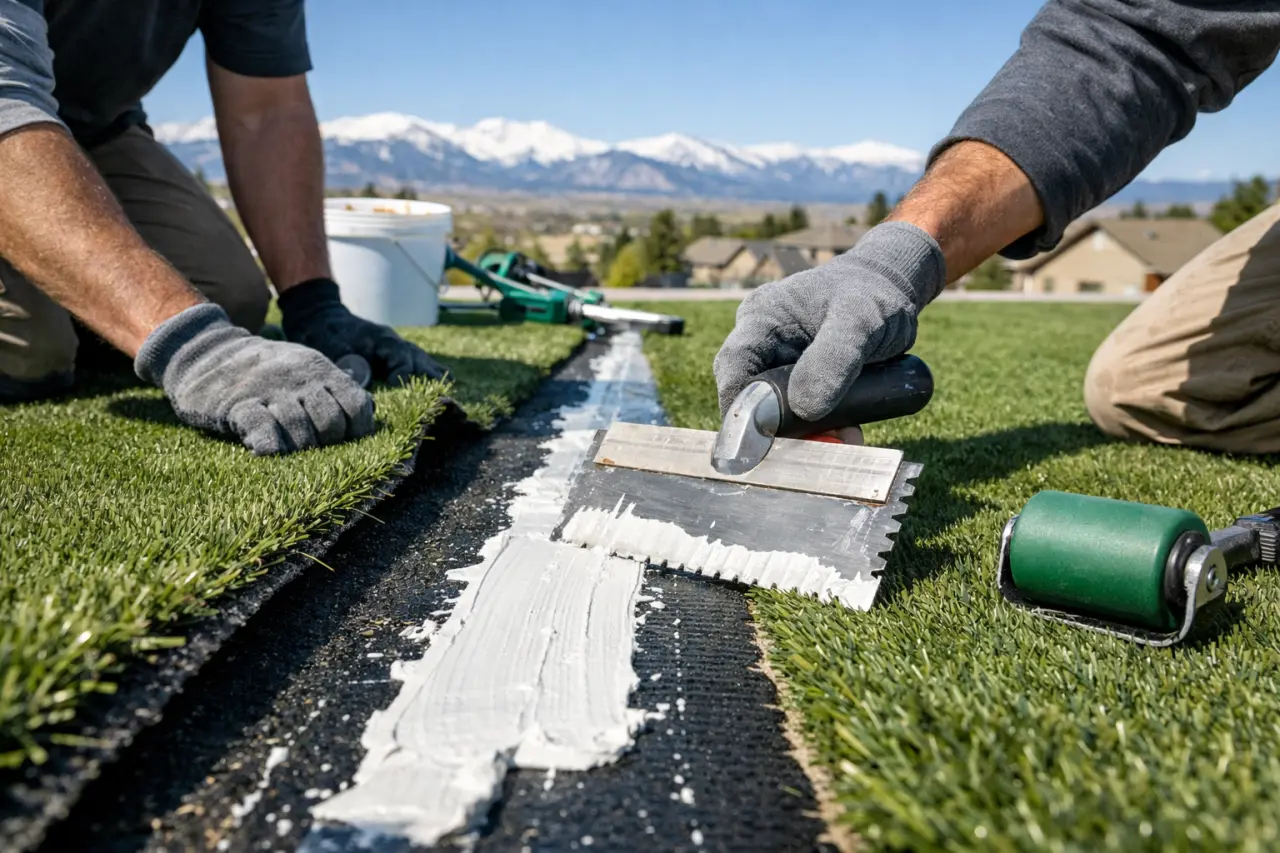
Denver Seam Repair for Artificial Turf: Local Fixes That Last
Denver turf seams loosen for a reason: heat, drainage, traffic, and aging adhesive all play a part. Here’s how local crews approach repairs.
Editorial Team