Repair Services
Denver Artificial Turf Repair: When to Patch, Rejoin, or Refresh
Denver turf problems usually show up at the seams, in the base, or where infill has thinned. Here’s how local companies approach the fix.
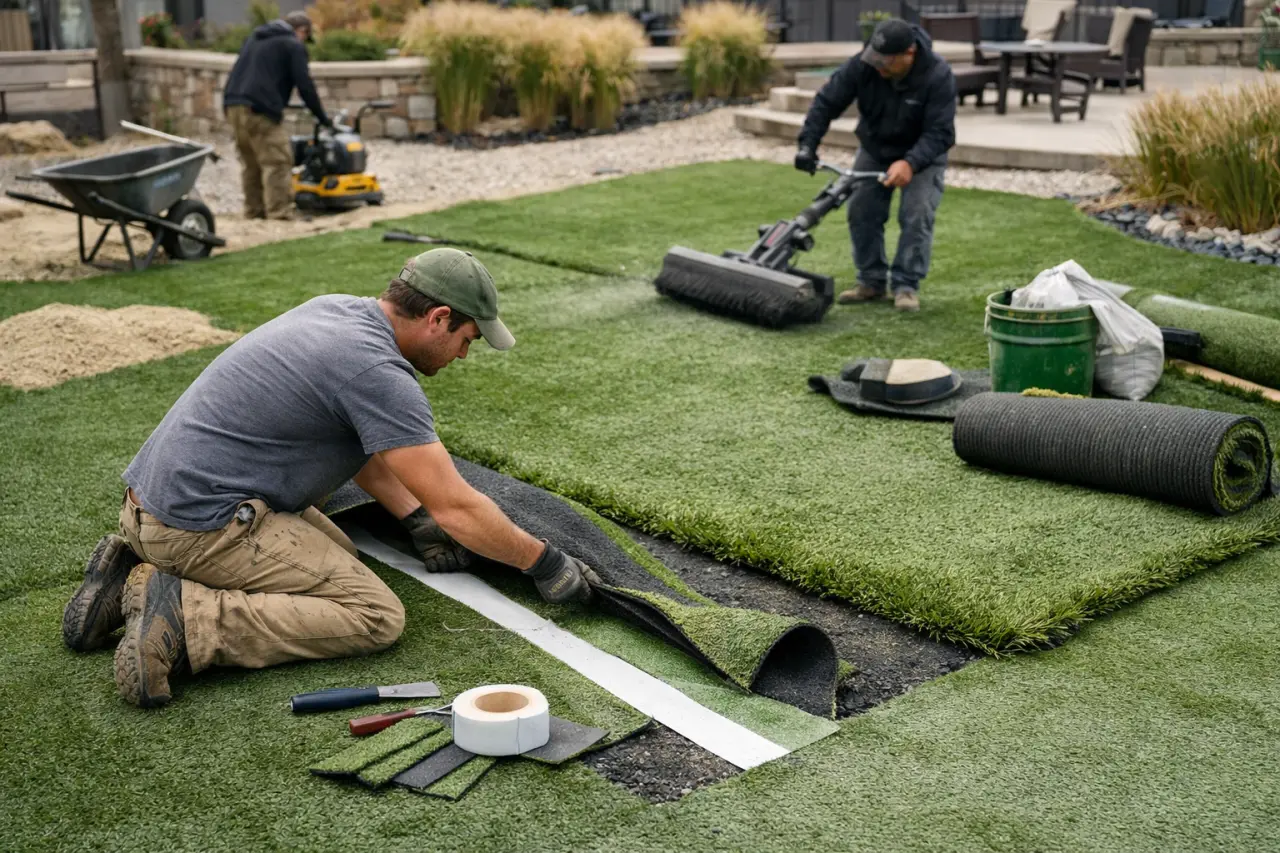
The Denver turf repairs that save a surface
In Denver, artificial turf usually does not fail all at once. It starts with a lifted seam near a high-traffic path, a soft spot where infill has shifted, or a patch that looks flatter and duller than the rest. The good news is that many of those issues can be repaired before they turn into a bigger replacement job.
Local companies that work with synthetic grass often blend repair with installation knowledge. That matters, because fixing turf is rarely just about the visible blade carpet; it also depends on backing, adhesive, drainage, and the base underneath. Purchase Green Artificial Grass in Denver supplies turf for residential and commercial use, while ProGreen Denver focuses on artificial turf systems for residential, commercial, and athletic applications. Big Dog Turf, based in Denver, specializes in artificial turf installation for residential and commercial properties, and RockSolid Turf and Landscape also works with artificial turf solutions for homes, commercial sites, and pet-friendly spaces. (mapquest.com)
What usually needs repair first
The most common call is not for a full tear-out. It is for a targeted fix.
- Seam separation: edges pull apart, often where foot traffic, heat, or a weak adhesive line have taken a toll.
- Infill loss: the turf can feel thin, less supportive, or uneven when sand or crumb rubber has moved away.
- Wrinkling or buckling: this can show up after settling, poor initial stretching, or repeated expansion and contraction.
- Localized damage: burns, tears, pet wear, or a torn corner can often be patched if the surrounding turf is still in good shape.
Those are the problems worth checking early, because they tend to spread. A small lifted edge can collect dirt and moisture, which makes the repair harder later.
Which Denver provider fits which kind of repair?
If you are deciding whom to call, think less about brand names and more about the type of work they do.
Purchase Green Artificial Grass is useful when the repair depends on matching materials or replacing worn sections with compatible turf products. Because the Denver location is primarily a supplier, it can be part of the solution when you need new material to patch a damaged area. (mapquest.com)
ProGreen Denver is a strong place to start when you want a team tied to turf systems and product knowledge. Their Denver location is described as serving residential, commercial, and athletic applications, which suggests a broader understanding of how different surfaces wear over time. (mapquest.com)
Big Dog Turf is a fit when the repair is part of a bigger landscape project. The company works on artificial turf installation in Denver for residential and commercial properties, so a homeowner dealing with worn turf beside patios, walkways, or other hardscape features may find that useful. (mapquest.com)
RockSolid Turf and Landscape is worth a look if the turf issue sits inside a larger outdoor living space. Its Denver location points to turf work for residential, commercial, and pet-friendly spaces, which is a good match for yards that have to balance durability with appearance. (mapquest.com)
A practical repair checklist for Denver homeowners
Before you schedule any work, walk the area slowly and note where the turf actually fails.
Look for edge and seam movement
Run your hand along the seams. If the edge lifts, separates, or feels crunchy with trapped debris, the repair may require cutting back loose material, cleaning the area, and resetting the join.
Check the base beneath the turf
A soft dip usually means the problem is not only on top. The base may need releveling before a patch will sit correctly. If the base is ignored, the repair can look fixed for a while and then fail again.
Test the infill
If the turf feels overly flat in one zone, the infill may need to be brushed and replenished. This is often the difference between a tired-looking lawn and one that feels resilient underfoot.
Inspect for drainage issues
Standing water, muddy runoff, or odor after rain can signal a problem below the turf surface. That kind of issue can turn a simple repair into a more involved correction.
When repair makes more sense than replacement
Repair is usually the better call when the damage is limited to one section and the rest of the turf still drains well, lies flat, and keeps its color. If the seam work is clean and the backing is intact, the surface can often keep going for years.
Replacement starts to make more sense when you see repeated seam failure, widespread fading, or a base that no longer supports the surface evenly. In that case, a patch may only buy a little time.
How to ask the right questions
When you call a Denver turf company, ask direct questions:
- Do you repair seams and patch damaged sections?
- Can you source matching turf or compatible replacement material?
- Will you evaluate the base and drainage before quoting the fix?
- Is infill replacement part of the service?
- Do you handle pet areas, putting greens, or heavy-use zones differently?
Those questions help you separate a surface-level touch-up from a repair that actually lasts.
The bottom line
In Denver, the best artificial turf repair plan is usually the simplest one that solves the real problem. If the issue is a seam, a worn patch, or depleted infill, a focused repair can restore the surface without starting over. The companies working in the city—from suppliers like Purchase Green and ProGreen to installation-focused teams like Big Dog Turf and RockSolid Turf and Landscape—give homeowners a few different ways to approach that fix. (mapquest.com)
Related articles
Colorado Springs Artificial Turf Repair: Patch, Seam, Refresh
Need turf work in Colorado Springs? Here’s how local repair pros handle seams, infill, and worn spots before small issues spread.
Editorial Team
Denver Artificial Turf Repair: Local Fixes for Worn Surfaces
When turf starts lifting, flattening, or shedding infill, Denver owners need repairs that match the surface and the season. Here’s how local pros handle it.
Editorial Team
Lakewood Artificial Turf Repair: Choosing the Right Fix
When turf starts to seam, flatten, or separate, Lakewood owners can narrow the fix fast by matching the repair to the damage.
Editorial Team